

US Ambassador Barrack's 'Monarchy' Remark Draws Fire! Notable 'Erdoğan' Emphasis!
Translated from Turkish, summarized and contextualized by DistantNews.
TLDR
- U.S. Ambassador to Turkey Tom Barrack defended his remarks comparing Israel and Hezbollah, stating they reflect "realism" rather than a policy shift.
- Barrack faced criticism from U.S. media and senators for his comments, which were interpreted as equating the two entities and suggesting only "strong leadership regimes" succeed.
- He also addressed criticism regarding Turkey's F-35 program, calling the impasse "irrational" and suggesting the S-400 issue could be resolved within months.
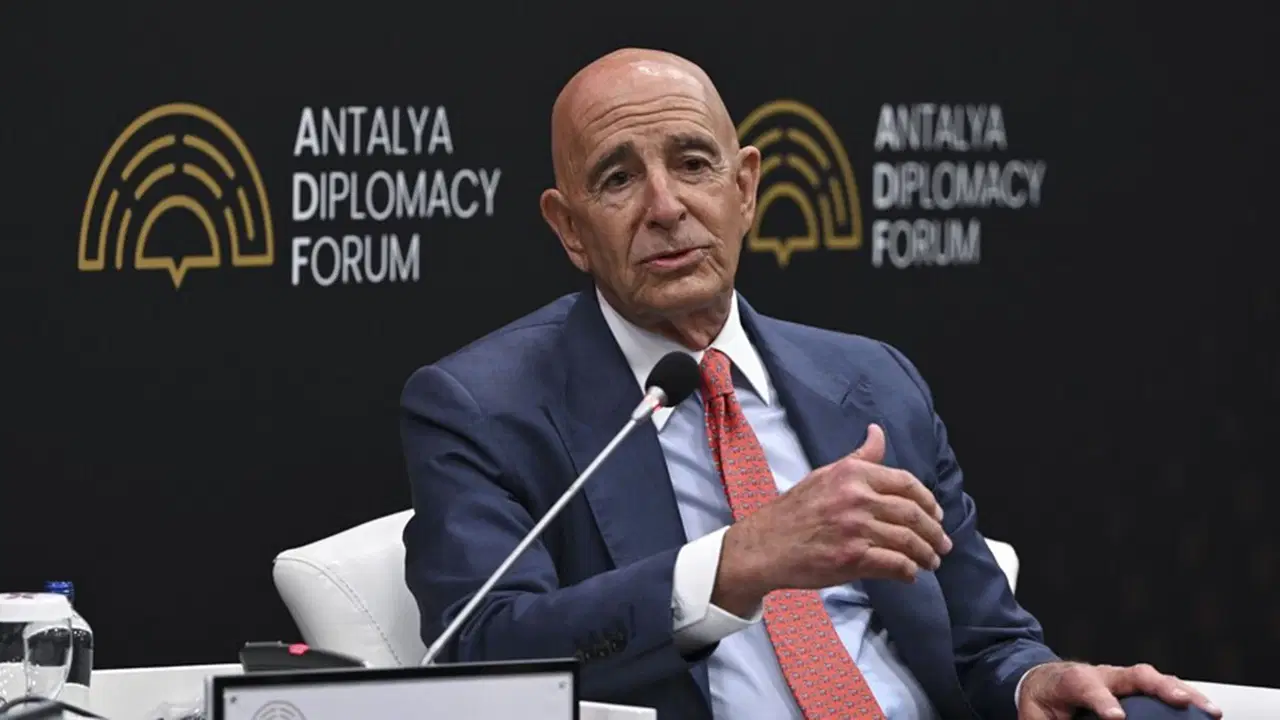
The recent statements by U.S. Ambassador Tom Barrack have ignited a firestorm, not just in Washington but here in Ankara, where we at Cumhuriyet closely monitor every nuance of American foreign policy pronouncements. Barrack's defense of his remarks, which equated Israel and Hezbollah and lauded "strong leadership regimes," is a stark reminder of the often-unsettling perspectives emanating from certain U.S. officials. His insistence that these comments represent "realism" rather than a policy shift does little to assuage concerns about the underlying assumptions guiding U.S. engagement in the region.
My words at the Antalya Diplomacy Forum on April 17 were quite clear. My defining the ceasefire as a 'pause' and saying that the parties were unreliable is an expression of the obvious reality on the ground. This is not a critique, it is realism.
Barrack's attempt to backtrack, or rather, to reframe his controversial statements, highlights a recurring theme: the U.S. tendency to view complex geopolitical landscapes through a simplified lens. His assertion that his remarks were merely an observation of "obvious reality on the ground" and not a critique ignores the deeply sensitive nature of the Israeli-Hezbollah conflict and the diverse political systems in the region. For us, the ambassador's words, regardless of his intent, carry significant weight and can be easily misinterpreted, potentially fueling regional tensions.
We have been in this region for decades; you cannot completely destroy an Iranian-funded militia structure solely through military means. Just 'mowing the grass' has never worked, on the contrary, it has triggered new recruitments.
What is particularly galling is Barrack's continued defense of his stance, even as he faces backlash from U.S. media and senators. His justification, rooted in a belief that "only strong leadership regimes" are successful, echoes a paternalistic approach that often overlooks the agency and aspirations of nations. This perspective fails to acknowledge the complexities of governance and the varied paths to stability that nations forge for themselves. It is this very type of condescending viewpoint that often leads to misunderstandings and friction in diplomatic relations.
Calling this process 'irrational' is a matter of common sense. Turkey is a vital ally hosting critical U.S. assets and contributing to NATO operations.
Furthermore, Barrack's comments on Turkey's F-35 program and the S-400 issue, while perhaps intended to be constructive, also betray a certain U.S.-centric view. His characterization of the F-35 impasse as "irrational" and his suggestion that the S-400 issue can be resolved quickly, provided certain conditions are met, overlooks Turkey's strategic autonomy and its legitimate security concerns. While we appreciate any effort to mend ties, such statements must be made with a full understanding of Turkey's position as a sovereign nation and a key NATO ally, not as pronouncements from a position of perceived superiority. The narrative that the U.S. can simply dictate solutions, even with the best intentions, is one that resonates poorly here.
The S-400 issue can be resolved within months with the strong personal relationship between President Trump and President Erdoğan and the surgical diplomacy of Minister Rubio.
DistantNews Editorial
Originally published by Cumhuriyet in Turkish. Translated, summarized, and contextualized by our editorial team with added local perspective. Read our editorial standards.
More Stories
From Our Blog

What Gets Lost (and Found) When News Is Translated

The Critical Role of Diaspora Media in Global News

What Travellers Should Know About Countries with Restricted Press

A Digital Nomad's Guide to Following Local News

How the Same Story Looks Different in Different Countries
