

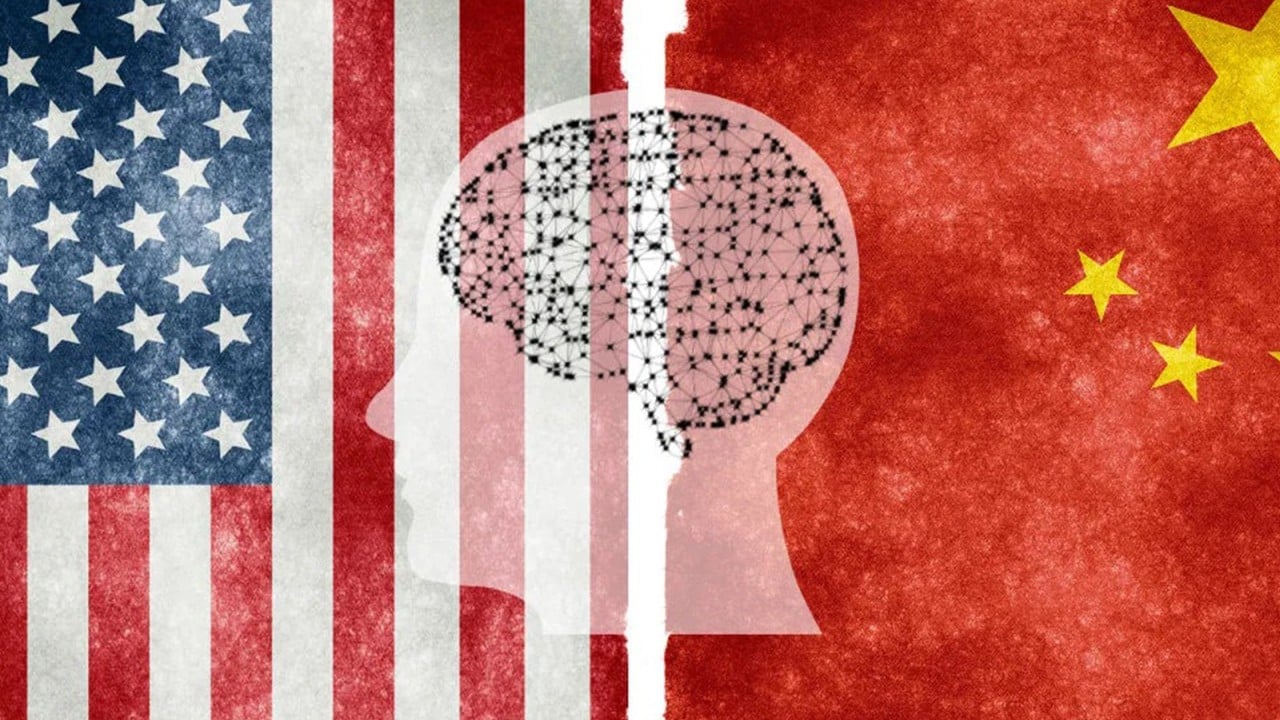

US and China Must Talk to Manage Dangers of AI Contest in a Nuclear Age
Translated from English and summarized by DistantNews. Read the original for the full story.
At a glance
News
Named sources
Context piece
- The China-US relationship is at its most dangerous point since Tiananmen Square, not due to traditional geopolitical friction, but the race for artificial intelligence (AI) supremacy.
- This AI competition transcends technology, representing a contest between distinct institutional systems: state-directed coordination in China versus market-driven approaches in the US.
- The article argues that the US strategy of decoupling and export controls is flawed, as AI's value lies in its integration across enterprise-wide platforms, an area where China holds significant advantages.
The relationship between the United States and China has entered a perilous phase, arguably more dangerous than any time since the Tiananmen Square incident. This heightened risk stems not from the usual suspects like trade disputes, tariffs, or territorial disagreements, but from the intensifying competition over artificial intelligence (AI) supremacy. This technological race is poised to redefine bilateral relations and global dynamics for the foreseeable future.
This is not merely a contest of technological prowess; it is a fundamental clash between competing institutional models. A quarter-century ago, the debate over China's trade relations centered on engagement versus confrontation. Today, AI has become the critical battleground for this strategic question. The prevailing view in Washington, evidenced by measures like semiconductor technology export controls, suggests that technological competition renders engagement obsolete, pushing towards economic, technological, and institutional decoupling.
However, this framing is fundamentally flawed. AI's unique characteristic lies in its power of integration, not just isolated applications. The most advanced AI systems function as enterprise-wide platforms, seamlessly connecting diverse functions such as finance, logistics, manufacturing, and intelligence. Their true value is unlocked through this interconnectedness, generating synergistic and exponential gains that are simultaneously economic, political, and military.
China possesses distinct advantages in deploying enterprise AI at scale. Its state apparatus can effectively align private firms, state-owned enterprises, and regulatory policies for rapid, coordinated action. Capital can be strategically directed towards key sectors, and data can be aggregated across institutions. These capabilities facilitate the widespread deployment of enterprise AI across entire systems, yielding advantages that Western nations, with their more fragmented and market-driven approaches, struggle to replicate. The South China Morning Post, reflecting a perspective often attuned to the complexities of China's strategic environment, highlights how these integrated systems offer China a potent edge in the AI race, a dynamic that demands a nuanced understanding beyond simple technological competition.
About this summary
Originally published by South China Morning Post in English. Translated, summarized, and contextualized automatically by DistantNews, with a note on how the source frames the story. Not individually reviewed before publishing. How this works.
More Stories
From Our Blog

Countries Without a Free Press: The 2026 List and What It Means for Readers

What Press Freedom Means for the News You Read

News in Translation: What Gets Lost, and How We Keep the Framing

Diaspora Media: How Communities Abroad Follow Home

Traveling Where the Press Is Not Free: How to Read the News There
