


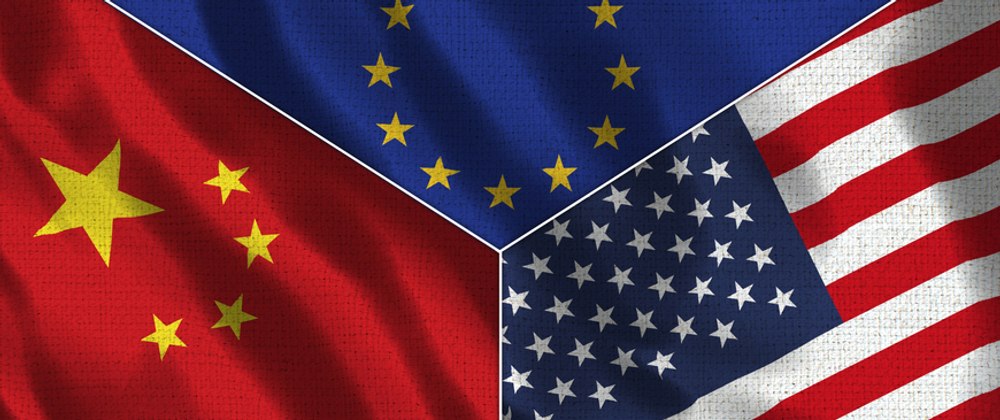
US and the world order built by Washington are undergoing a structural crisis, warns Financial Times
Translated from Romanian, summarized and contextualized by DistantNews.
At a glance
Analysis
Named sources
Context piece
- The United States' hegemony, defining the post-Cold War global balance, is rapidly eroding due to economic, technological, and political shifts reconfiguring the international system, according to a Financial Times analysis.
- The U.S. was the "winner" of the 20th century, dominating geopolitics and economics after the Soviet Union's collapse and promoting a governance model based on constitutionalism and individual liberties.
- Three major transformations, China's rise, technological advancements, and populism, are accelerating this shift, leading traditional allies to look toward Europe for a new world order.
The global order shaped by the United States since the Cold War is undergoing a structural crisis, marked by the accelerated erosion of American hegemony, according to a commentary by Martin Wolf in the Financial Times.
Wolf argues that the U.S. emerged as the dominant power of the 20th century, particularly after the Soviet Union's 1991 collapse. This era saw America not only lead geopolitically and economically but also champion a model of governance rooted in constitutionalism and individual freedoms. This perceived success story, however, is now facing significant challenges.
The analysis traces America's ascent from the 19th century, noting how the "second industrial revolution" shifted economic gravity towards the U.S. even before World War I. Despite playing a central role in European security post-WWI, American isolationism and domestic crises contributed to pre-WWII instability. Post-1945, however, the U.S. became deeply engaged globally, leading the Western bloc during the Cold War and fostering a regulated capitalism in Western Europe.
The period following the Soviet Union's fall, often termed the "unipolar moment," saw the U.S. as the sole superpower. Yet, Wolf contends that the subsequent 35 years have witnessed a gradual decline in America's role as the guarantor of international order, drawing parallels to Great Britain's diminishing influence in the early 20th century.
This paradigm shift is driven by three major transformations: the rise of China as a global economic and political power, rapid technological advancements that are reshaping industries and societies, and the surge of populism in various countries, challenging established political norms. These forces are prompting traditional U.S. allies to explore new alliances and potentially a new world order, with some looking towards Europe.
DistantNews Editorial
Originally published by Adevărul in Romanian. Translated, summarized, and contextualized by our editorial team with added local perspective. Read our editorial standards.
More Stories
From Our Blog

What Gets Lost (and Found) When News Is Translated

The Critical Role of Diaspora Media in Global News

What Travellers Should Know About Countries with Restricted Press

A Digital Nomad's Guide to Following Local News

How the Same Story Looks Different in Different Countries
