


US Army: Ulchi Freedom Shield to modernize alliance, project power in Northeast Asia
Translated from Korean, summarized and contextualized by DistantNews.
At a glance
News
Named sources
New plan
- The U.S. Eighth Army stated that the upcoming Ulchi Freedom Shield (UFS) exercise will focus on modernizing the ROK-U.S. alliance and shaping the security environment in Northeast Asia.
- The exercise aims to demonstrate the alliance's ability to rapidly project power and secure key terrain within the first island chain, enhancing ROK's defense capabilities.
- North Korea criticized the UFS drills as an "invasion war practice," while South Korea's Defense Minister reiterated the importance of reclaiming wartime operational control.
The U.S. Eighth Army announced that the upcoming Ulchi Freedom Shield (UFS) joint military exercise, scheduled from August 17 to 27, will prioritize the modernization of the South Korea-U.S. alliance and the establishment of a robust security environment in Northeast Asia. This annual, defensive exercise is designed to bolster combined defense readiness.
Establishing theater-wide logistics and sustainment systems remains the Eighth Army’s top priority.
A key objective of UFS is to enhance the alliance's strategic flexibility and reinforce South Korea's responsibility for defending the Korean Peninsula. Analysts suggest the drills will assess the U.S. military's capacity to respond to regional crises, such as a potential Chinese invasion of Taiwan, while South Korea takes the lead in defending against North Korean threats. The U.S. Eighth Army highlighted the establishment of theater-wide logistics and sustainment systems as a top priority.
The alliance's ability to rapidly project combat power and secure key terrain within the first island chain will be demonstrated.
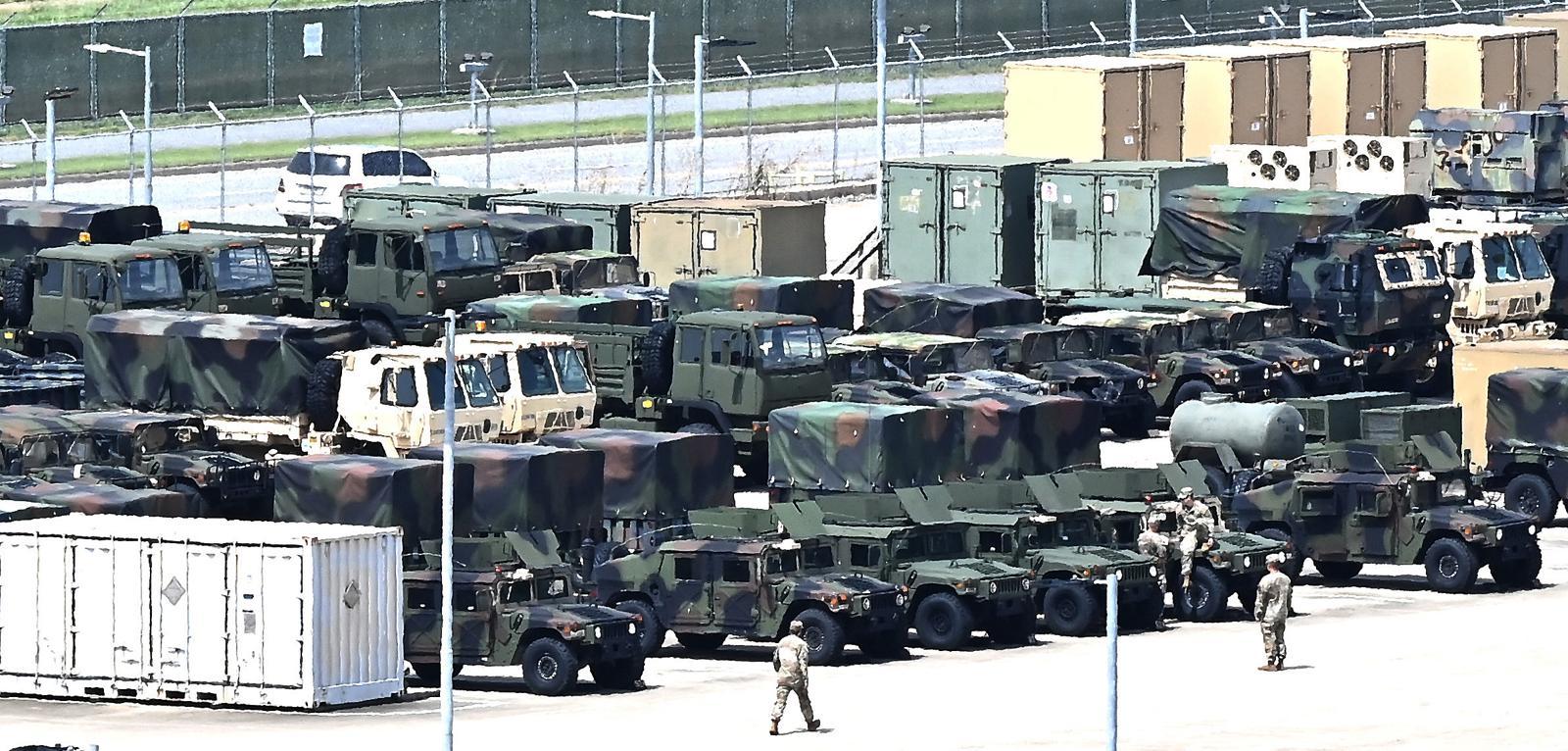
The exercise will include procedures for the rapid distribution and readiness of Army Prepositioned Stocks-4 (APS-4), demonstrating the alliance's capability to quickly project combat power and secure critical terrain within the first island chain. APS-4 comprises war materiel like tanks, armored vehicles, and fuel pre-positioned by the U.S. in key potential conflict zones, including Camp Carroll in South Korea. Connecting the rapid distribution of these supplies to the first island chain, stretching from Japan's Kyushu to Taiwan and the Philippines, underscores South Korea's role as a vital logistics hub in the Indo-Pacific.
The severe confrontation situation created by the enemy nations' invasion war practice will not be tolerated in the slightest.
In response to the drills, North Korea's Foreign Ministry issued a statement labeling UFS as an "invasion war practice" and declared that the escalating military confrontation would not be tolerated. This condemnation follows recent ballistic missile provocations by Pyongyang. Meanwhile, South Korean Defense Minister reiterated the nation's commitment to reclaiming wartime operational control, emphasizing it as a crucial objective to be pursued through procedures like the upcoming Security Consultative Meeting (SCM) later this year.
The recovery of wartime operational control toward self-reliant defense is the most important, urgent task.
DistantNews Editorial
Originally published by Dong-A Ilbo in Korean. Translated, summarized, and contextualized by our editorial team with added local perspective. Read our editorial standards.
More Stories


From Our Blog

What Gets Lost (and Found) When News Is Translated

The Critical Role of Diaspora Media in Global News

What Travellers Should Know About Countries with Restricted Press

A Digital Nomad's Guide to Following Local News

How the Same Story Looks Different in Different Countries
