


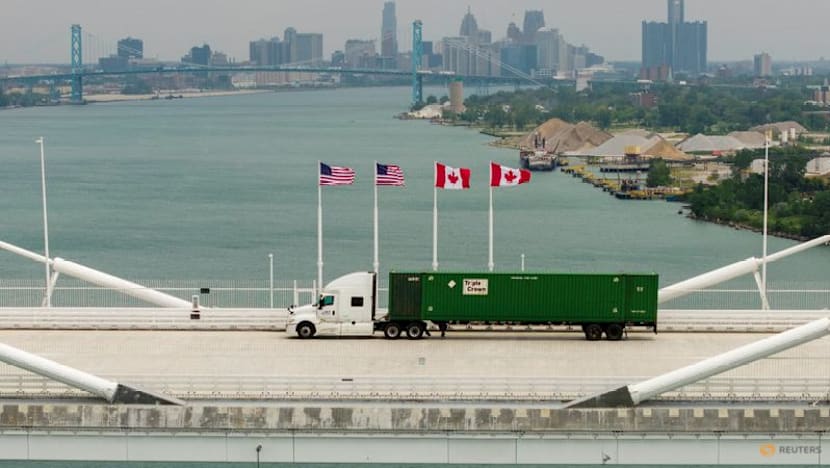
US, Canada deepen trade war as sides fail to reach tariff deal
Summarized and contextualized by DistantNews.
At a glance
News
Sources not specified
New plan
- The U.S. and Canada failed to secure a trade agreement, prompting the U.S. to implement 50% tariffs on specific Canadian imports.
- These tariffs, covering about $20 billion in Canadian goods, were slated to begin just after midnight Saturday, escalating bilateral tensions.
- Canada's Prime Minister suspended trade talks and vowed reciprocal tariffs, citing unfair and uneconomic U.S. proposals.
Trade relations between the United States and Canada soured Friday as negotiations for a new trade deal collapsed, leading to the U.S. announcing 50% tariffs on certain Canadian imports. This move marks a significant escalation in tensions between the two long-standing allies.
I have decided to suspend trade negotiations with the US and have directed Canada’s negotiators to return to Ottawa.
A senior Trump administration official stated that Section 338 tariffs, targeting approximately $20 billion of Canadian goods, would take effect shortly after midnight on Saturday. The decision followed three days of intense discussions in Washington between Canada's Minister for Trade with the U.S., Dominic LeBlanc, and U.S. Trade Representative Jamieson Greer.
Canadian Prime Minister Mark Carney declared the suspension of trade negotiations, directing Canadian negotiators to return home. He characterized the U.S. proposals as "unfair, uneconomic, and called into question the reliability of any deal." Carney pledged that Canada would retaliate with equivalent tariffs, aiming for a dollar-for-dollar response.
They (negotiators) have worked hard, in good faith, to defend the interests of Canadians throughout these negotiations up until the very last minute.
While the newly imposed tariffs affect a relatively small portion of Canada's exports, they compound existing U.S. duties on steel, lumber, and automobiles. The measures could jeopardize Canada's fragile economic recovery and influence future engagement on broader trade agreements, including the U.S.-Mexico-Canada trade pact, which had previously shielded much of Canadian industry from earlier U.S. tariffs.
However, last-minute changes in the US proposed terms were unfair, uneconomic, and called into question the reliability of any deal.
DistantNews Editorial
Originally published by CNA. Summarized and contextualized by our editorial team with added local perspective. Read our editorial standards.
More Stories



From Our Blog

What Gets Lost (and Found) When News Is Translated

The Critical Role of Diaspora Media in Global News

What Travellers Should Know About Countries with Restricted Press

A Digital Nomad's Guide to Following Local News

How the Same Story Looks Different in Different Countries
