


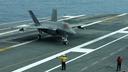
US carrier move from Pacific to Middle East sparks concern over China's opportunity
Translated from Croatian, summarized and contextualized by DistantNews.
At a glance
News
Sources not specified
Context piece
- The US has moved its last aircraft carrier from the Western Pacific to the Middle East.
- Security experts express concern this creates an opportunity for increased Chinese military pressure in the Asia-Pacific region.
- The move raises questions about the US strategy shift towards the Middle East versus its stated focus on China.
The United States' decision to reposition its final aircraft carrier from the Western Pacific to the Middle East is raising alarms among security experts, who fear it creates a strategic opening for China to increase its military pressure in the Asia-Pacific. The USS George Washington is heading to the Middle East to replace the USS Abraham Lincoln, which has been engaged in operations related to the conflict with Iran for over 240 days.
This prolonged deployment strains the crew and presents logistical challenges for the U.S. Navy. While experts do not anticipate an immediate Chinese attack on Taiwan, they caution that Beijing could exploit the temporary reduction in U.S. military presence. Security analyst Thomas Jäger suggested on X that this move could signal the beginning of a long-term U.S. lag behind China.
The carrier's relocation coincides with the Trump administration's increasing focus on the Middle East. This shift prompts questions about its alignment with the previously announced strategy emphasizing the Indo-Pacific region. U.S. Admiral Frank Bradley attempted to reassure regional allies during a visit to the Philippines, stating that American forces can project power globally and redeploy after threats in the Middle East subside.
Bradley's upcoming visit to Japan is expected to further affirm U.S. commitments to Asian alliances. The U.S. Navy operates 11 aircraft carriers, typically with two or three deployed at any given time. Extended use of carriers strains the fleet due to necessary maintenance and major overhauls, which can only be performed at a limited number of shipyards. Defense expert Bryan Clark warns this could lead to significant maintenance delays, creating competition for shipyard availability. The U.S. faces a dual challenge: maintaining its presence in the Middle East while assuring Asian allies that its carrier redeployment does not diminish its commitment to countering Chinese influence.
DistantNews Editorial
Originally published by Večernji List in Croatian. Translated, summarized, and contextualized by our editorial team with added local perspective. Read our editorial standards.
More Stories


From Our Blog

What Gets Lost (and Found) When News Is Translated

The Critical Role of Diaspora Media in Global News

What Travellers Should Know About Countries with Restricted Press

A Digital Nomad's Guide to Following Local News

How the Same Story Looks Different in Different Countries
