


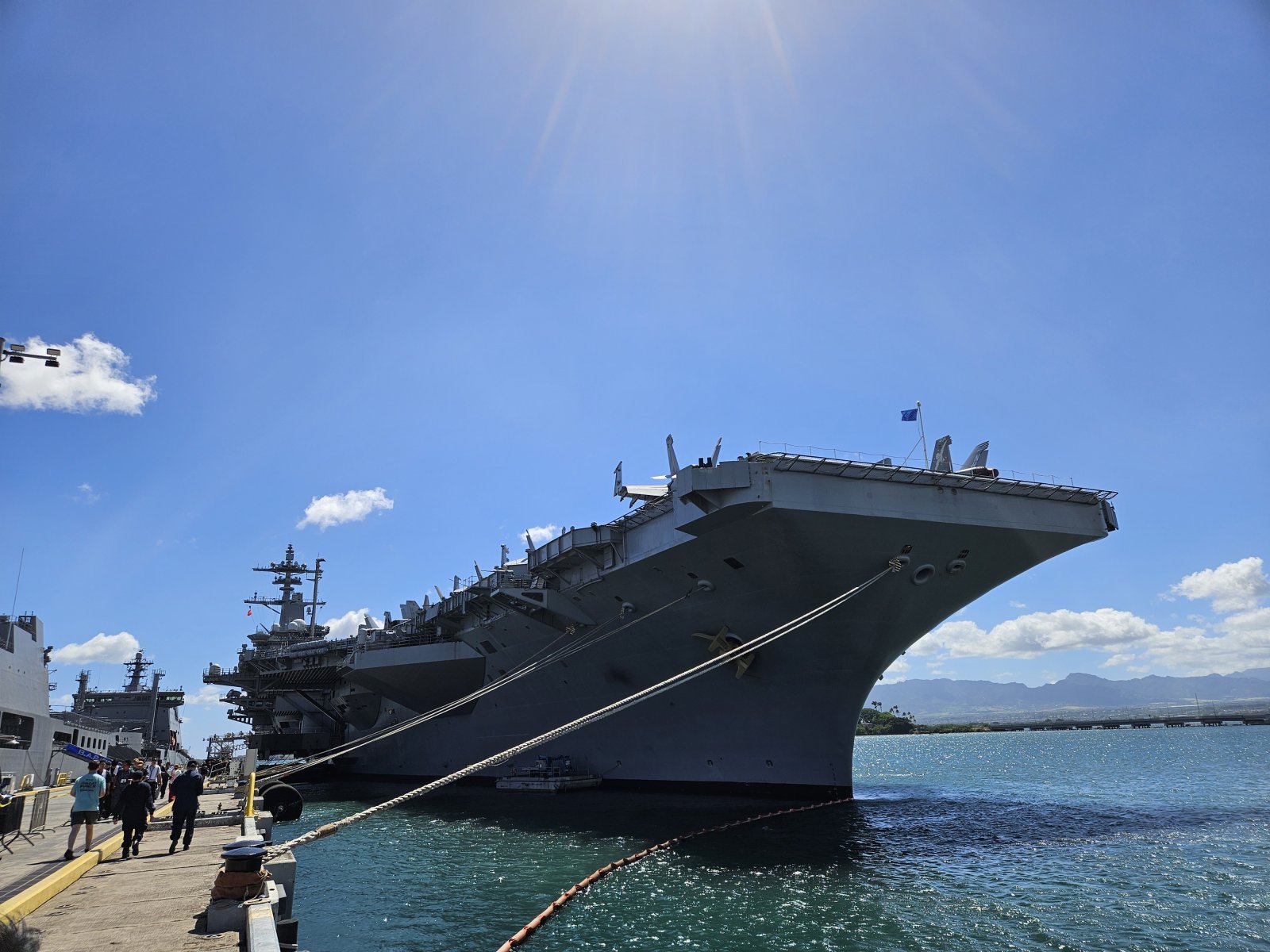
US Carrier Roosevelt Heads to Middle East for Extended Deployment
Translated from Korean and summarized by DistantNews. Read the original for the full story.
At a glance
News
Named sources
Ongoing story
- The U.S. Navy is deploying the aircraft carrier USS Theodore Roosevelt and 5,000 crew members to the Middle East.
- The deployment is expected to last at least seven months, with potential for longer.
- The carrier will replace the USS George Washington, which recently arrived in the region.
The U.S. Navy is preparing to send the aircraft carrier USS Theodore Roosevelt and its crew of roughly 5,000 personnel to the Middle East for an extended deployment. The carrier strike group is expected to be operational in the region for a minimum of seven months, potentially longer, as tensions persist.
This strategic deployment underscores the ongoing commitment of U.S. naval power in the Middle East. The USS Theodore Roosevelt will relieve the USS George Washington, which recently arrived to take over duties from the USS Abraham Lincoln. The rotation highlights the continuous presence required in the volatile region.
According to John Perryman, the senior enlisted leader of the U.S. Navy, the crew of the Roosevelt is anticipating a deployment exceeding seven months. Perryman informed reporters at the Hampton Roads Naval Support Activity in Virginia that commanders are briefing the crew to plan for up to eight months. This extended mission reflects the dynamic security environment and the need for sustained naval operations.
The USS Theodore Roosevelt strike group will depart from San Diego for its journey to the Middle East. This deployment is part of a larger strategy to maintain maritime security and project power in a critical geopolitical area. The prolonged presence of carrier strike groups is a significant factor in regional deterrence and response capabilities.
They know they are going to be there for longer than seven months. The commander is giving them eight months to plan.
About this summary
Originally published by Dong-A Ilbo in Korean. Translated, summarized, and contextualized automatically by DistantNews, with a note on how the source frames the story. Not individually reviewed before publishing. How this works.
More Stories


From Our Blog

What Gets Lost (and Found) When News Is Translated

The Critical Role of Diaspora Media in Global News

What Travellers Should Know About Countries with Restricted Press

A Digital Nomad's Guide to Following Local News

How the Same Story Looks Different in Different Countries
