


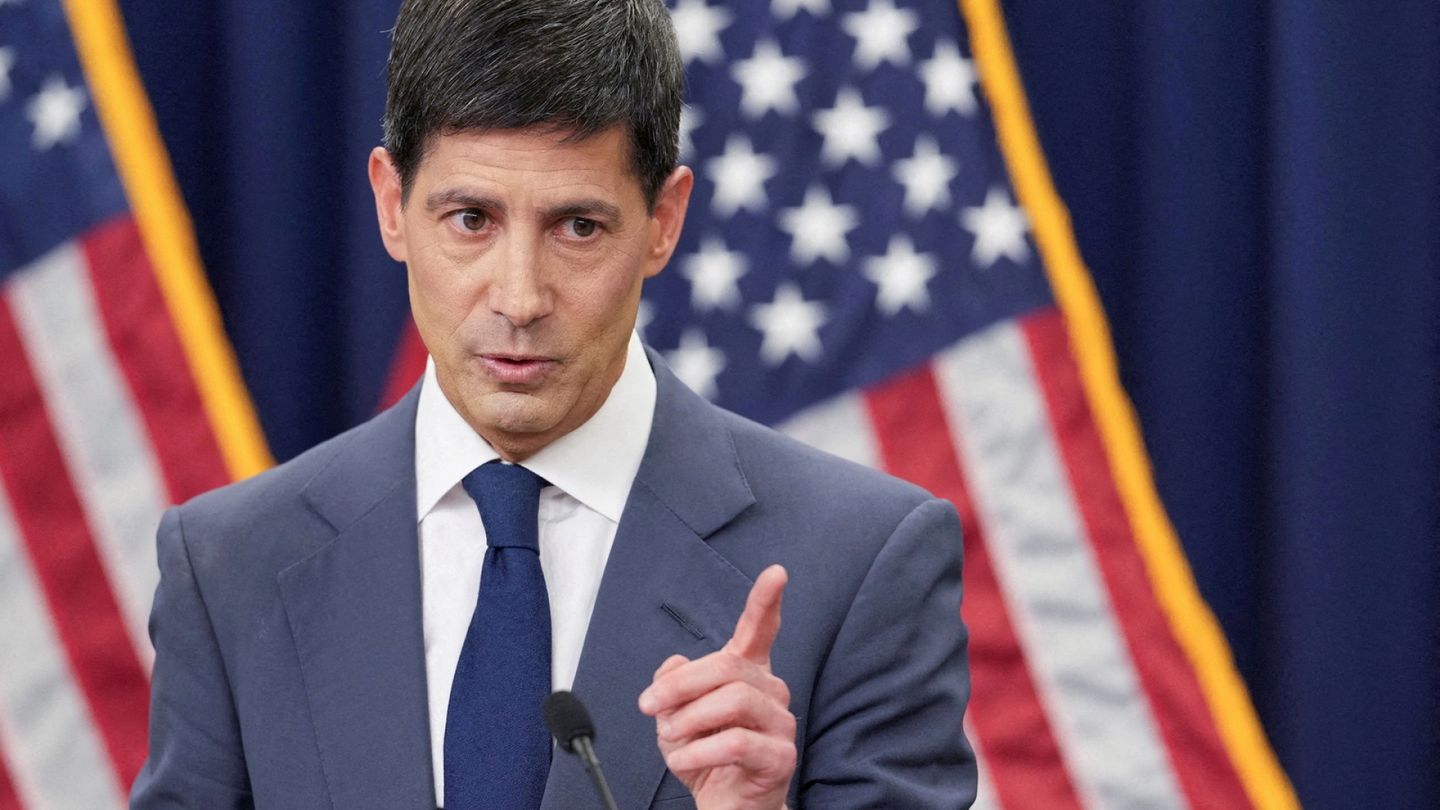
US central bank holds interest rates steady amid inflation concerns
Translated from Finnish, summarized and contextualized by DistantNews.
At a glance
News
Named sources
Context piece
- The U.S. Federal Reserve's Federal Open Market Committee (FOMC) decided to keep its key interest rate unchanged at 3.50–3.75 percent.
- The committee cited persistently high price pressures as the reason for maintaining the current rate.
- Three members favored a 0.25 percentage point rate hike, suggesting a potential increase in September.
The U.S. Federal Reserve's Federal Open Market Committee (FOMC) has decided to maintain its benchmark interest rate at the 3.50–3.75 percent range, a move widely anticipated by markets. The committee's decision hinges on the continued presence of elevated price pressures, which it aims to curb.
Economic activity is growing steadily despite increased uncertainty, partly due to the conflict in the Middle East. Productivity growth and capital investment are at a strong level.
Despite the consensus to hold rates steady, the decision was not unanimous. Three committee members, Beth Hammack, Neel Kashkari, and Lorie Logan, advocated for a 0.25 percentage point increase. This internal division signals a growing sentiment within the committee that a rate hike may be necessary in the near future, potentially as early as September.
The FOMC's statement noted that economic activity is growing steadily, even amidst increased uncertainty partly due to the conflict in the Middle East. The committee also observed strong productivity growth and capital investment. However, inflation remains a concern, with June's consumer price increase at 3.5 percent, significantly above the Fed's 2 percent target, though down from May's 4.2 percent.
The Open Market Committee's statement was almost identical compared to the June statement. Three members of the committee would have already raised the key interest rate by 0.25 percentage points, which suggests that a rate hike in September is even closer.
Analysts suggest that the committee's cautious approach is understandable given the global economic uncertainties, particularly stemming from the Middle East conflict and potential new tariffs. The risk remains that inflation may not slow sufficiently if demand is not adequately controlled. Incoming Fed Chair Kevin Warsh has expressed commitment to controlling inflation, but his stance on the timing and extent of further monetary tightening remains to be seen.
I think it is justified that the central bank now waits and sees how the economy develops in the near future.
DistantNews Editorial
Originally published by Helsingin Sanomat in Finnish. Translated, summarized, and contextualized by our editorial team with added local perspective. Read our editorial standards.
More Stories

From Our Blog

What Gets Lost (and Found) When News Is Translated

The Critical Role of Diaspora Media in Global News

What Travellers Should Know About Countries with Restricted Press

A Digital Nomad's Guide to Following Local News

How the Same Story Looks Different in Different Countries
