

US Coal Miners Suffer Resurgence of 'Black Lung Disease'
Translated from Spanish, summarized and contextualized by DistantNews.
At a glance
News
Named sources
New plan
- A growing number of coal miners in the U.S. are contracting "black lung disease," a potentially fatal respiratory illness.
- A recent study found one in three miners in Appalachia with over 25 years in the industry suffer from the disease, reaching levels not seen since the 1970s.
- Increased exposure to silica dust, released when miners drill deeper for coal, is blamed for the resurgence, leading to faster and more severe illness.
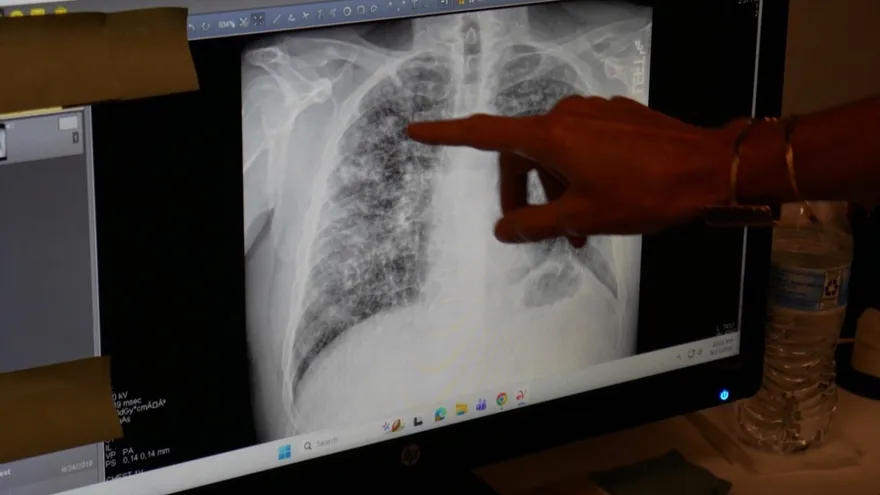
John, a former coal miner from West Virginia, struggles to breathe at just 45 years old, a stark consequence of two decades spent working in the industry. He suffers from coal workers' pneumoconiosis, commonly known as "black lung disease," a condition that causes progressive shortness of breath and respiratory failure. John, who requested anonymity due to a lawsuit against his former employer, is not alone; the disease is increasingly affecting miners in the Appalachian region.
I can't breathe, and that has changed everything.
A recent study by the National Institute for Occupational Safety and Health (NIOSH) revealed alarming statistics: one in three miners in Appalachia with over 25 years of experience has pneumoconiosis. Scott Laney, a co-author of the study, described the situation as "quite alarming" and noted that prevalence rates have not been this high since the 1970s. This resurgence is attributed to increased exposure to silica, a substance up to 20 times more toxic than coal.
The situation had not been this serious since the 1970s, it is quite alarming.
As easily accessible coal reserves dwindle, miners are forced to drill deeper, releasing fine silica particles into the air. This heightened exposure leads to miners developing the disease more rapidly and severely than in the past, according to Laney. At a specialized clinic in Oak Hill, directed by Lisa Emery, the youngest patient diagnosed with the most severe form of "black lung" was only 30 years old. Emery emphasizes that "it's no longer your grandfather's disease. It's your husband's. It's your son's."
It's no longer your grandfather's disease. It's your husband's. It's your son's.
Some patients in their early forties are awaiting double lung transplants, the only option for the most critical cases, as there is no cure, only symptom management. In response, the Mine Safety and Health Administration (MSHA) implemented a new standard in 2024 to reduce silica exposure limits. However, mining associations challenged this rule in court, deeming the government's measurement standards too strict. A federal appeals court has since suspended the regulation, and MSHA has indefinitely postponed its implementation. The National Mining Association stated it supports efforts to improve miner health but has not commented further on the suspended regulation.
We can treat the symptoms, but there is no cure.
DistantNews Editorial
Originally published by TVN Panamá in Spanish. Translated, summarized, and contextualized by our editorial team with added local perspective. Read our editorial standards.
More Stories

From Our Blog

What Gets Lost (and Found) When News Is Translated

The Critical Role of Diaspora Media in Global News

What Travellers Should Know About Countries with Restricted Press

A Digital Nomad's Guide to Following Local News

How the Same Story Looks Different in Different Countries
