


US Concludes New Strikes on Iran; Claims Tehran Doesn't Control Strait of Hormuz
Translated from Polish, summarized and contextualized by DistantNews.
At a glance
News
Official statement
New plan
- The US has concluded another wave of strikes against Iran, targeting anti-aircraft systems, radar, and naval assets.
- Iran condemned the US attacks, accusing Washington of violating agreements and undermining peace efforts in the region.
- The US stated the strikes aim to degrade Iran's ability to attack ships in the Strait of Hormuz, which it asserts Iran does not control.
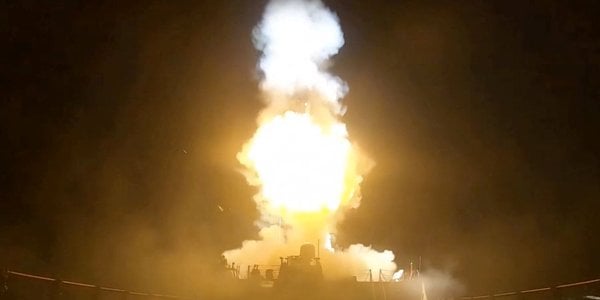
The United States has completed a new series of strikes against Iran, targeting military assets including anti-aircraft systems, radar installations, and small naval vessels. These actions are part of an ongoing effort to curb Iran's capacity to threaten shipping in the vital Strait of Hormuz.
Iran has strongly condemned the American attacks, with its foreign ministry issuing a statement accusing Washington of "destroying all efforts" to restore peace in the region and openly violating prior agreements. Tehran also claims these actions have reintroduced "uncertainty" into the Strait of Hormuz.
The U.S. Central Command (CENTCOM) announced the latest strikes, emphasizing that they were carried out on President Donald Trump's orders to hold Iranian forces accountable. This marks at least the fourth wave of U.S. strikes since Iran resumed attacks on vessels in the Strait of Hormuz.
Iranian state media reported explosions in the country's south, particularly in the port city of Bandar Abbas. The U.S. military stated that the strikes, conducted using aviation, ships, and both aerial and maritime drones, aimed to degrade Iran's capabilities against civilian mariners and commercial ships. The U.S. maintains that the Strait of Hormuz, a critical global trade route, is not under Iran's control.
pociągnąć Iran do odpowiedzialności
DistantNews Editorial
Originally published by Rzeczpospolita in Polish. Translated, summarized, and contextualized by our editorial team with added local perspective. Read our editorial standards.
More Stories


From Our Blog

What Gets Lost (and Found) When News Is Translated

The Critical Role of Diaspora Media in Global News

What Travellers Should Know About Countries with Restricted Press

A Digital Nomad's Guide to Following Local News

How the Same Story Looks Different in Different Countries
