


US conducts military operations against drug trafficking in northern Ecuador
Translated from Spanish, summarized and contextualized by DistantNews.
At a glance
News
Sources not specified
Ongoing story
- The United States is conducting military operations against drug trafficking in northern Ecuador, near the Colombian border.
- Joint operations between the U.S. and Ecuador aim to combat illegal groups amid a wave of violence.
- Ecuador's government has issued a decree allowing U.S. military personnel to stay in the country for up to 180 days without a visa and granting them migratory immunity.
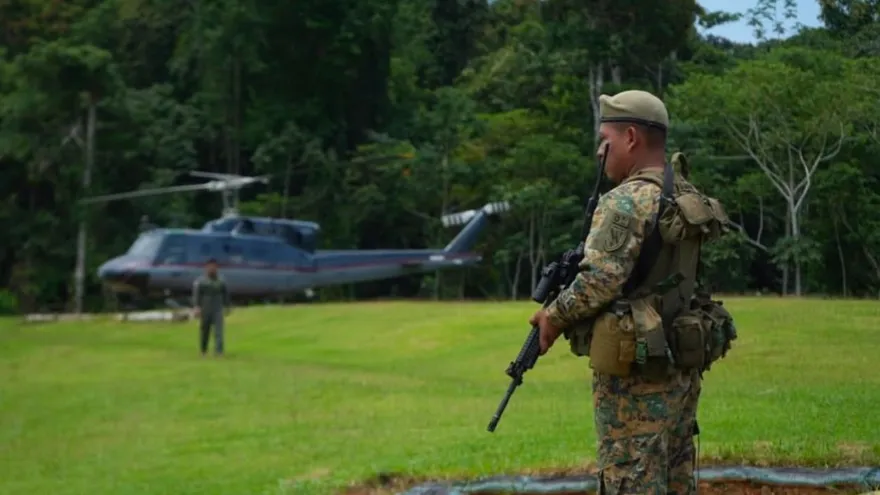
The United States is actively engaged in military operations targeting drug trafficking in Ecuador's northern region, close to the border with Colombia. These joint efforts between Washington and Quito have been ongoing for months, aiming to dismantle illegal groups that have fueled a significant surge in violence across the South American nation.
Juan Jaramillo, the governor of Esmeraldas province, confirmed the presence of a seventh U.S. Army contingent working in collaboration on "the fight against narcoterrorism." While he declined to specify the exact number of U.S. military personnel deployed or the duration of their presence, the operations are being conducted with a high degree of secrecy. They are part of the "Shield of the Americas" initiative, an anti-drug coalition involving approximately twenty Latin American and Caribbean countries, spearheaded by U.S. President Donald Trump.
We are with the seventh group of the United States army (...) we are working together in the fight against narcoterrorism
Esmeraldas, a coastal province, has been particularly hard-hit by drug cartel-related violence, including murders, kidnappings, and extortion. Traffickers utilize Pacific ports to export drugs to the United States and Europe. In response, Ecuador's Defense Minister Gian Carlo Loffredo announced the deployment of two U.S. warships and three Black Hawk helicopters to bolster maritime interdiction efforts along the coast and in cities like Manta. President Daniel Noboa, who took office in 2023, has pursued a tough-on-crime policy, but homicide rates remain alarmingly high, reaching a record 52 per 100,000 inhabitants last year.
Adding to the U.S. involvement, Ecuador's government recently published a decree permitting U.S. military personnel to remain on Ecuadorian soil for up to 180 days without requiring a visa and granting them migratory immunity. This move comes as Trump, an ally of Noboa, promotes an aggressive anti-drug policy across the Americas. Despite these efforts, a 2025 referendum saw Ecuadorians vote against the establishment of U.S. military bases in the country. Human Rights Watch and international media have raised concerns about alleged U.S. bombings of fishing boats in Ecuador, which have reportedly resulted in several disappearances. The U.S. Department of State also announced sanctions against ten Ecuadorian fishing vessels and fifteen individuals linked to an Ecuadorian drug trafficking network.
We are going to triple our interdiction capabilities in the maritime zone
DistantNews Editorial
Originally published by TVN Panamá in Spanish. Translated, summarized, and contextualized by our editorial team with added local perspective. Read our editorial standards.
More Stories
From Our Blog

What Gets Lost (and Found) When News Is Translated

The Critical Role of Diaspora Media in Global News

What Travellers Should Know About Countries with Restricted Press

A Digital Nomad's Guide to Following Local News

How the Same Story Looks Different in Different Countries
