

US Congress members urge blocking Turkey's F-35 return over S-400 purchase
Translated from Greek, summarized and contextualized by DistantNews.
At a glance
News
Named sources
Context piece
- 18 members of the U.S. Congress urged House leadership to block Turkey's reintegration into the F-35 program.
- They cited Turkey's purchase of Russian S-400 missile systems as the reason for ongoing restrictions.
- The lawmakers warned that any attempt to sell or transfer F-35s to Turkey would conflict with U.S. law, including CAATSA sanctions.
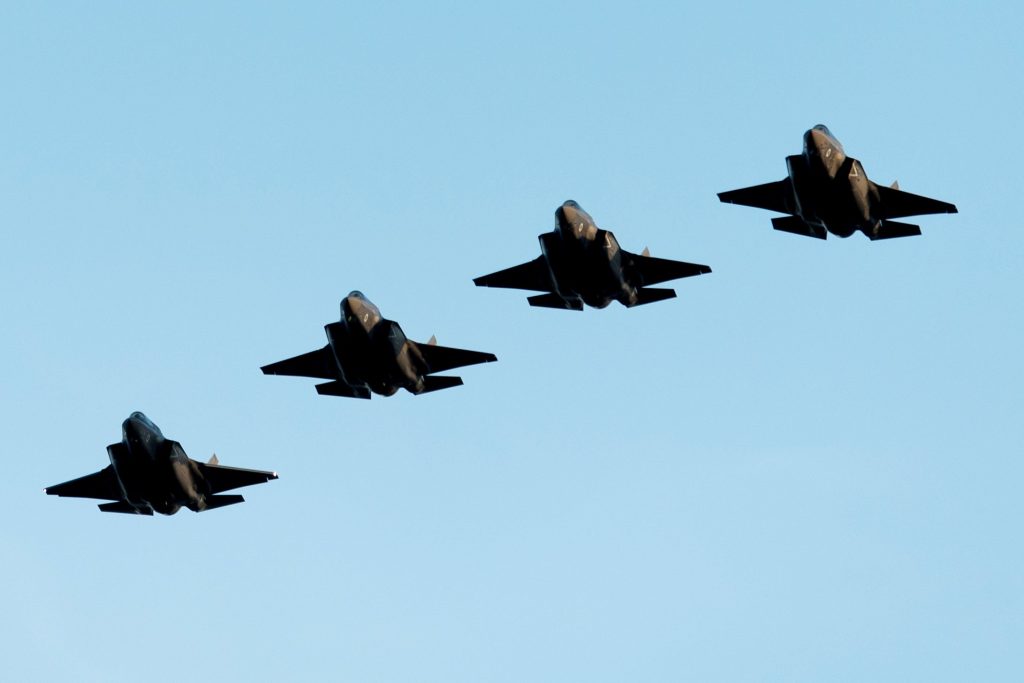
A group of 18 U.S. Congress members has called on House leadership to prevent Turkey's return to the F-35 fighter jet program. The lawmakers argue that Turkey's acquisition of Russian S-400 missile systems continues to impose restrictions that should preclude its re-entry.
to block any attempt to reintegrate Turkey into the F-35 program
In a letter addressed to House Majority Leader Steve Scalise and Minority Leader Hakeem Jeffries, the Democratic representatives urged leadership to be prepared to use legislative powers if the Trump administration attempts to sell or transfer F-35 aircraft to Turkey. This initiative, spearheaded by Democratic Representative Dina Titus, comes ahead of the NATO summit in Ankara on July 7-8 and amid reports that the U.S. government is exploring ways to reinstate Turkey in the fifth-generation fighter program.
to be ready to exercise the powers provided by legislation, should the Trump administration attempt to proceed with a sale or transfer of American fighter jets to Turkey.
The legislators referenced recent statements by President Donald Trump, suggesting he intended to offer a "big gift" to Turkish President Recep Tayyip Erdoğan, and Vice President JD Vance's comment about an ongoing assessment of how to legally proceed with such a sale. The letter reminds that the U.S. excluded Turkey from the F-35 program in 2019 due to the S-400 purchase, fearing that the Russian system's coexistence with the American jet could compromise sensitive aircraft information. Furthermore, in December 2020, the Trump administration imposed CAATSA sanctions on Turkey's Defense Industry Presidency for the S-400 acquisition, sanctions that remain legally binding.
the United States excluded Turkey from the F-35 program in 2019, after the purchase of the S-400 from Russia, as Washington had judged that the coexistence of the Russian anti-aircraft system with the American fighter could compromise sensitive information about the aircraft's capabilities.
Legally, the signatories invoked both CAATSA and the National Defense Authorization Act for Fiscal Year 2020. The latter prohibits the transfer of F-35s to Turkey as long as Ankara possesses the S-400 system and has not provided assurances against reacquiring it. Publicly available information, according to the letter, does not indicate that Turkey has removed, ceased operational use of, or otherwise rectified the cause for the sanctions. The lawmakers contend that reintegrating Turkey into the F-35 program under these circumstances would place the administration in violation of its legal obligations. They cited testimony from Secretary of State Marco Rubio before the House Foreign Affairs Committee on June 3, 2026, where he reportedly acknowledged the government's legal obligation to maintain sanctions against Turkey.
the government is bound by law to maintain sanctions against Turkey and cannot
DistantNews Editorial
Originally published by Ta Nea in Greek. Translated, summarized, and contextualized by our editorial team with added local perspective. Read our editorial standards.
More Stories

From Our Blog

What Gets Lost (and Found) When News Is Translated

The Critical Role of Diaspora Media in Global News

What Travellers Should Know About Countries with Restricted Press

A Digital Nomad's Guide to Following Local News

How the Same Story Looks Different in Different Countries
