


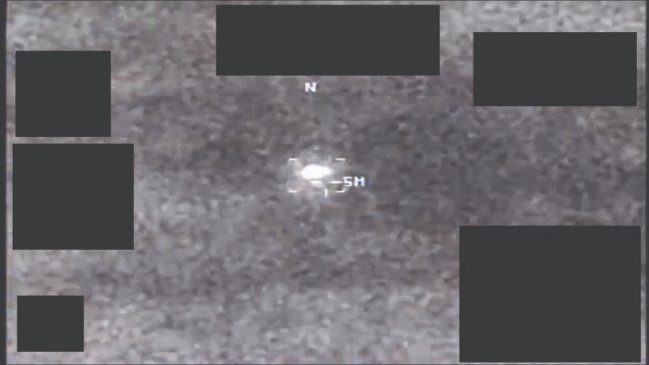
US Declassifies Second Batch of UFO Files, Including Apollo 12 Accounts and Soviet Sightings
Translated from Spanish, summarized and contextualized by DistantNews.
At a glance
News
Named sources
Context piece
- The U.S. Department of Defense has released a second batch of declassified documents related to Unidentified Anomalous Phenomena (UAP).
- The newly released files include details from the Apollo 12 mission, a 1973 CIA intelligence report from the USSR, and investigations near a nuclear weapons development base.
- The Pentagon stated that the website hosting these declassified materials has received over a billion visits, indicating significant public interest.
The United States continues its unprecedented push for transparency regarding Unidentified Anomalous Phenomena (UAP), with the Department of Defense unveiling a second tranche of declassified documents. This latest release, following an initial batch in May, underscores a commitment to shedding light on phenomena that have long captured public imagination and scientific curiosity. The Pentagon’s war.gov/ufo portal has already seen over a billion visits, a figure that speaks volumes about the global fascination with the unknown.
flashes of light or 'luminous streaks'
This new collection delves into intriguing historical accounts. Among the most compelling are the medical interview transcripts of the Apollo 12 astronauts—Charles Conrad, Richard Gordon, and Alan Bean—who reported observing "flashes of light" during their 1969 lunar mission. While NASA ultimately attributed these phenomena to potential effects of cosmic ray exposure on their vision, the astronauts' firsthand accounts remain a significant part of the UAP narrative.
an unidentified aerial object, luminous and bright green
Further broadening the scope, the declassified materials include a 1973 CIA intelligence report detailing an incident in the Soviet Union where an operative witnessed a "luminous, bright green aerial object." The report describes the object forming concentric circles before dissipating, offering a glimpse into UAP observations from behind the Iron Curtain. Additionally, a 116-page dossier connected to the U.S. military's Special Weapons Program and the Air Force reveals numerous sightings and investigations conducted between 1948 and 1950 near Sandia Base in New Mexico, a key site for nuclear weapons development.
green orbs, discs' and 'fireballs'
These newly released documents, featuring reports of "green orbs, discs" and "fireballs" performing "maneuvers, vanishing, or exploding" near the military base, add layers to the historical record of UAP encounters. While some critics argue that such disclosures do not offer definitive proof of extraterrestrial life and may serve as distractions during politically turbulent times, the sheer volume of interest and the ongoing nature of these releases suggest a deliberate effort by the U.S. administration to engage with these complex questions. From our perspective, these releases are not just about historical curiosities; they represent a significant shift in how governments are addressing phenomena that transcend conventional explanations, prompting a global conversation about our place in the universe.
the levels of unprecedented interest both in this topic and in the Administration’s historic transparency effort
DistantNews Editorial
Originally published by Cooperativa in Spanish. Translated, summarized, and contextualized by our editorial team with added local perspective. Read our editorial standards.
More Stories



From Our Blog

What Gets Lost (and Found) When News Is Translated

The Critical Role of Diaspora Media in Global News

What Travellers Should Know About Countries with Restricted Press

A Digital Nomad's Guide to Following Local News

How the Same Story Looks Different in Different Countries
