


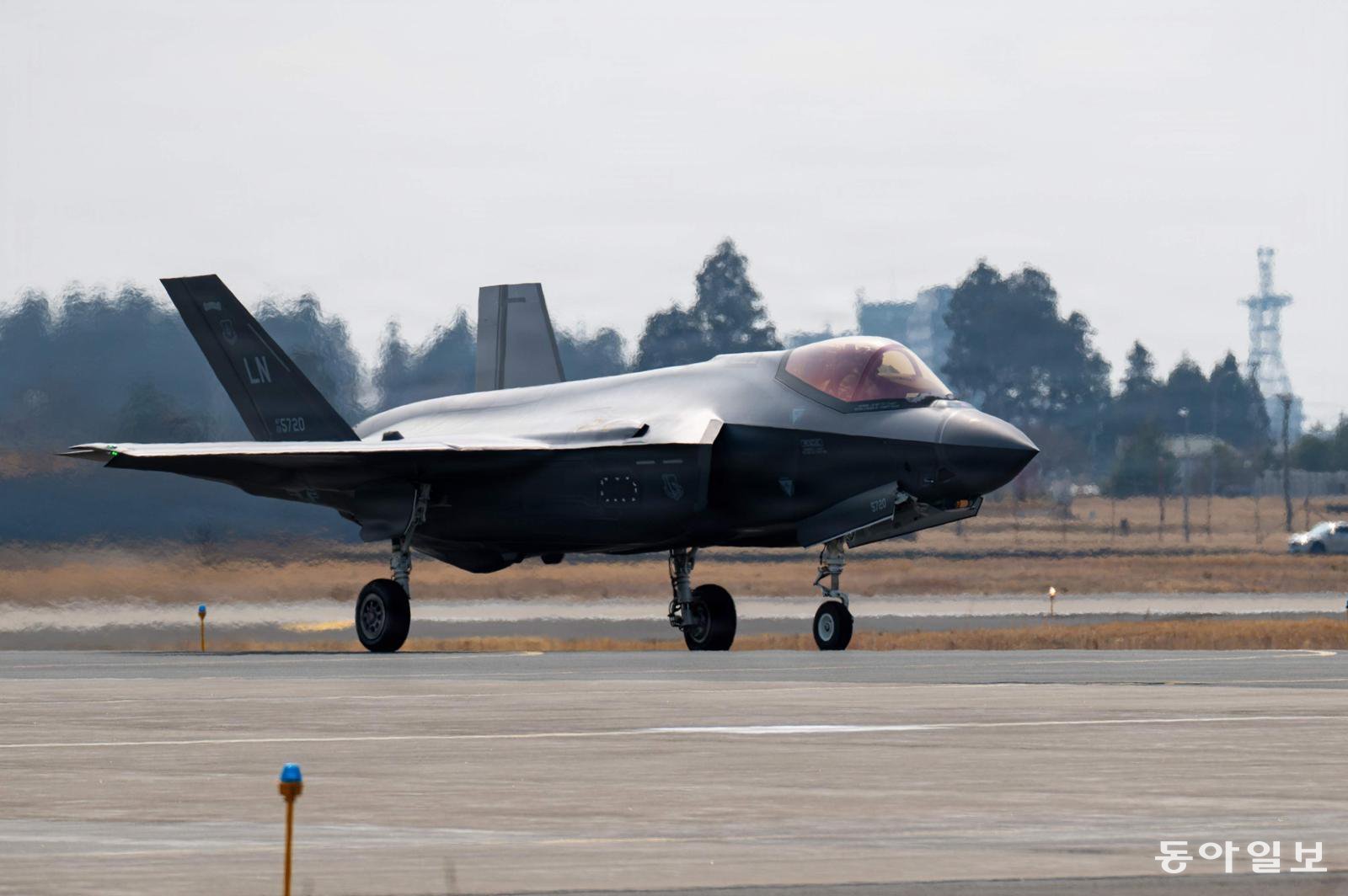
US F-35 pilots conduct virtual Guam defense drills from Japan
Translated from Korean and summarized by DistantNews. Read the original for the full story.
At a glance
News
Named sources
Ongoing story
- US F-35 pilots stationed in Japan participated in virtual drills simulating combat scenarios in Guam during a recent US-Japan joint exercise.
- This marks the first time US Forces Japan has used simulators to engage in virtual combat missions for Guam's defense.
- The exercise is seen as a strategic move to enhance US Forces Japan's capability to project power across the Indo-Pacific, potentially countering threats from China.
Pilots of US Forces Japan's F-35 stealth fighters recently participated in virtual drills simulating combat scenarios in Guam, utilizing simulators instead of physically deploying to the island. This innovative approach was part of the "Valiant Shield 26" joint exercise conducted between June 22 and July 1.
This marks a significant first, as it is the initial instance of US Forces Japan leveraging F-35 simulators to engage in virtual combat missions for Guam's defense. The exercise connected F-35 simulators at the Misawa Air Base in Aomori Prefecture, Japan, with units and control personnel in Guam, operating under the US Air Force's "Simulator Common Architecture Requirements and Standards" (SCARS).
The US military did not disclose specific training details, but the exercise is widely interpreted as a strategic measure to bolster the operational capabilities of US Forces Japan. It is believed to simulate potential threats, such as Chinese missile threats against Guam during a Taiwan contingency, thereby strengthening the US military's ability to respond across the Indo-Pacific region.
Colonel John Widmer, commander of the 13th Fighter Squadron, highlighted the value of this networked training. "The fighters deployed from Misawa Air Base are part of the frontline defense against attacks on the United States and regional allies," he stated. "Because the pilots at Misawa Air Base can conduct simulation training with units in Guam, they can receive necessary training while reducing other burdens."
This networked training approach also holds implications for future interoperability among the air forces of the United States, Japan, and South Korea. Given that both the South Korean Air Force and the Japan Air Self-Defense Force operate F-35 stealth fighters, there is speculation that the US may expand these virtual and live-fire training networks beyond connecting US Forces Japan's F-35s and Guam's assets to include trilateral F-35 capabilities, thereby enhancing joint deterrence against China.
The fighters deployed from Misawa Air Base are part of the frontline defense against attacks on the United States and regional allies. Because the pilots at Misawa Air Base can conduct simulation training with units in Guam, they can receive necessary training while reducing other burdens.
About this summary
Originally published by Dong-A Ilbo in Korean. Translated, summarized, and contextualized automatically by DistantNews, with a note on how the source frames the story. Not individually reviewed before publishing. How this works.
More Stories
From Our Blog

What Gets Lost (and Found) When News Is Translated

The Critical Role of Diaspora Media in Global News

What Travellers Should Know About Countries with Restricted Press

A Digital Nomad's Guide to Following Local News

How the Same Story Looks Different in Different Countries
