

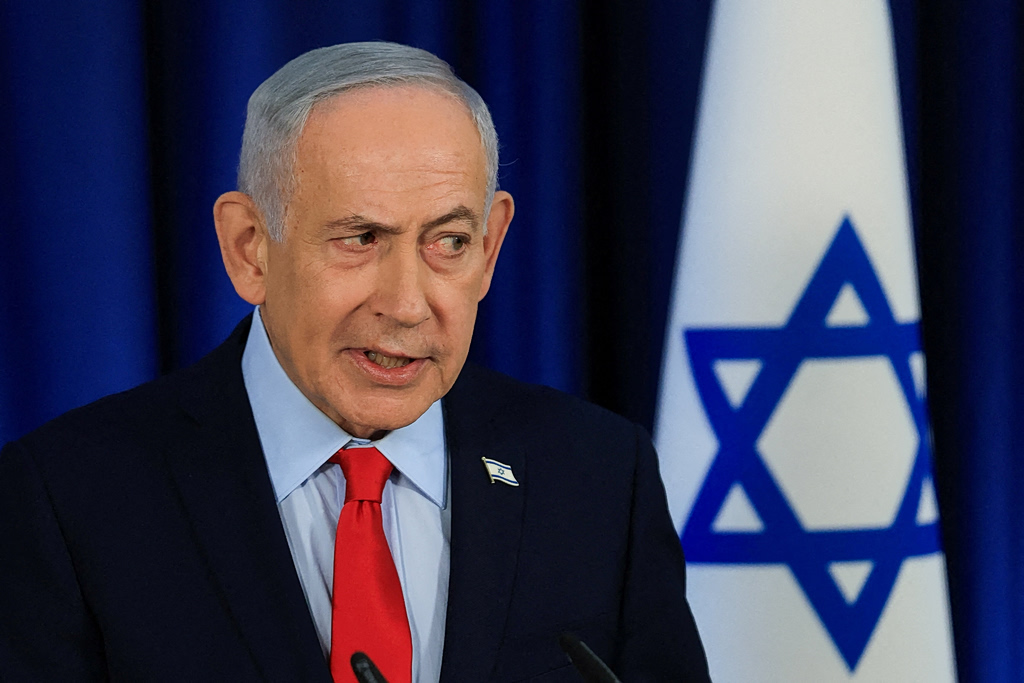

US-Iran Deal: A Strategic Shift in the Middle East, Irking Netanyahu
Translated from Greek, summarized and contextualized by DistantNews.
At a glance
Analysis
Sources not specified
Context piece
- A framework agreement between the US and Iran, signed remotely, was met with relief by Washington's allies in Europe and the Gulf.
- Israeli Prime Minister Netanyahu, who has long warned of Iran's nuclear ambitions, was the primary figure displeased by the development.
- The article contrasts the strategic, economically-minded approach of US President Trump with Netanyahu's perceived maximalist ambitions, suggesting Trump aims to reshape Middle Eastern security with less Israeli leadership.
The framework agreement signed remotely between the presidents of the US and Iran, intended to de-escalate a critical conflict, was met with considerable relief by Washington's allies in Europe and the Gulf region. The article notes that no agreement ending a war or setting a timeline for resolving crucial issues can be perfect unless one side is utterly defeated, making the US-Iran accord the only logical outcome under the circumstances.
No agreement that ends a war or even sets a time frame for resolving critical problems is perfect or final, unless the complete defeat of one of the two opponents has preceded it.
Notably, Israeli Prime Minister Benjamin Netanyahu emerged as the sole significant figure expressing dissatisfaction. Netanyahu has consistently warned about Iran's potential acquisition of nuclear weapons since a 1992 Knesset speech, a stance not shared by US intelligence agencies or successive US presidents. The article points out that only President Donald Trump became convinced and engaged in a war against Iran, initially expecting a swift regime change and uprisings among various ethnic groups.
The only one dissatisfied with the turn of events was the Prime Minister of Israel, Bibi Netanyahu, who since 1992... had repeatedly repeated his warnings.
President Trump appears to be attempting to establish a new security system in the Middle East, one where Israel does not play a leading role. While acknowledging Trump's idiosyncratic approach to foreign policy, the author characterizes him as a leader with a Western orientation. For Trump, war is viewed as a strategic game with rules and significant economic considerations, rather than an eschatological mission or a holy war aimed at crushing the opponent. He is described as a "contractor" focused on immediate profit, not driven by a belief in America's divine destiny.
It seems that President Trump is trying to shape a new security system in the Middle East, with Israel not playing a guiding role.
The article draws a parallel between Trump and Netanyahu, suggesting both suffer from "megalomania." Trump's "MAGA" ideology aims to solidify America's global standing against China's rapid rise, while Netanyahu's ambitions are rooted in the biblical concept of a United Kingdom of Israel under figures like Saul, David, and Solomon. Regardless of Netanyahu's motivations for involving the US in the conflict with Iran, Trump seems intent on forging a new regional security order prioritizing "America First."
The common point between these two leaders of the USA and Israel is that they suffer incurably from megalomania.
DistantNews Editorial
Originally published by Kathimerini in Greek. Translated, summarized, and contextualized by our editorial team with added local perspective. Read our editorial standards.
More Stories

From Our Blog

What Gets Lost (and Found) When News Is Translated

The Critical Role of Diaspora Media in Global News

What Travellers Should Know About Countries with Restricted Press

A Digital Nomad's Guide to Following Local News

How the Same Story Looks Different in Different Countries
