


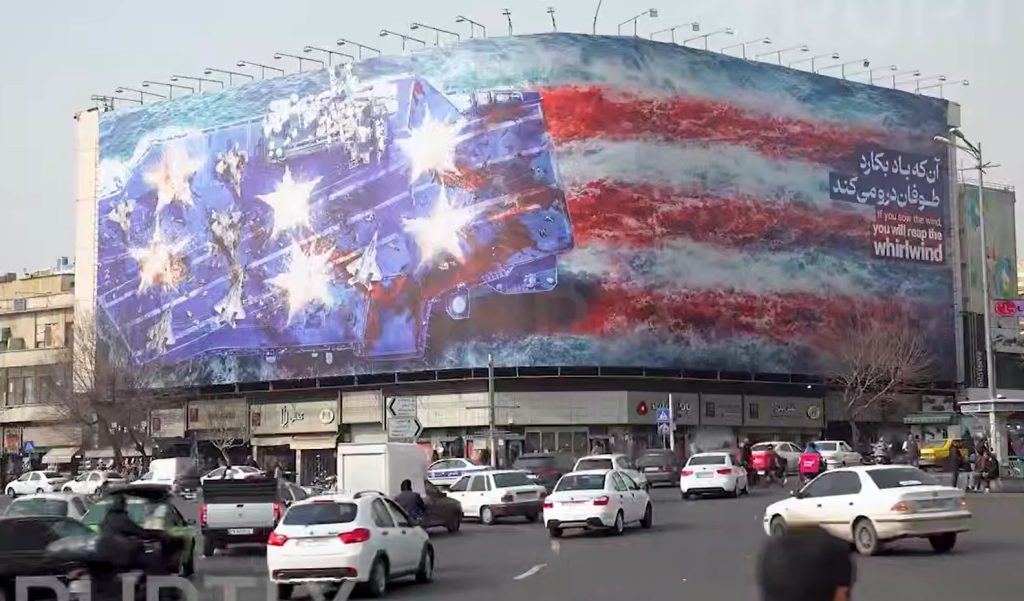
US-Iran economic war escalates with 'harshest sanctions in history' looming
Translated from Greek, summarized and contextualized by DistantNews.
At a glance
News
Sources not specified
New plan
- The United States is preparing to announce its harshest-ever sanctions against Iran, potentially impacting its trade partners like China.
- Iran's Foreign Ministry spokesperson called the planned U.S. economic pressure a violation of international law and the UN Charter.
- Iranian officials expressed mixed sentiments, with the military vowing retaliation and the president suggesting it's time to end the conflict while in a position of strength.
The United States is poised to impose what it describes as the "harshest sanctions in history" on Iran, with Treasury Secretary Scott Bessent scheduled to announce the measures. Washington has also called on China to cooperate, signaling the potential impact on Iran's trade partners.
The planned U.S. economic war against Tehran violates international law.
Iran's Foreign Ministry spokesperson, Ismail Baghaei, condemned the impending sanctions as a violation of international law and the UN Charter. He argued that forcing countries to abandon legitimate trade with a third nation constitutes an "internationally illegal act." This stance highlights Iran's rejection of what it terms "economic coercion."
Economic coercion designed to force a sovereign state to alter its legal policy choices constitutes a completely internationally illegal act.
Amidst the escalating tensions, Iranian officials have presented differing views. General Ali Abdolahi of the armed forces vowed "devastating responses" to perceived threats. However, President Masoud Pezeshkian suggested it was time to end the conflict with the U.S. while Iran holds a strong position, citing global recognition of Iran's dignity and alleged U.S. aggression.
It would be better to end the war today, when we are strong and have dignity, and the whole world recognizes our victory and emphasizes that America, despite all regulations, attacked our schools, hospitals, and infrastructure and is hated in the world.
Parliament Speaker Mohammad Bagher Ghalibaf acknowledged the severe economic challenges facing Iran. He emphasized that military strength alone is insufficient for survival without economic activity, growth, and national production, underscoring the critical need for economic stability.
No matter how much military power we have, we will not survive if people are hungry and we do not have economic turnover, economic growth, and national production.
DistantNews Editorial
Originally published by Ta Nea in Greek. Translated, summarized, and contextualized by our editorial team with added local perspective. Read our editorial standards.
More Stories


From Our Blog

What Gets Lost (and Found) When News Is Translated

The Critical Role of Diaspora Media in Global News

What Travellers Should Know About Countries with Restricted Press

A Digital Nomad's Guide to Following Local News

How the Same Story Looks Different in Different Countries
