


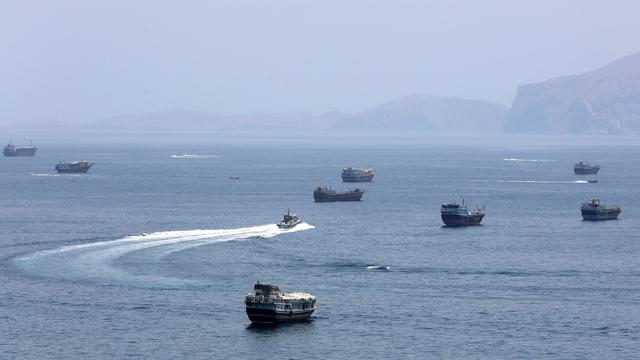
US, Iran to pause Strait of Hormuz actions for dialogue
Translated from German, summarized and contextualized by DistantNews.
At a glance
News
Named sources
Ongoing story
- The US and Iran have agreed to pause further actions in the Strait of Hormuz dispute, aiming for dialogue.
- Technical talks are scheduled to continue, with potential meetings in Doha, Qatar.
- This de-escalation follows recent attacks attributed to Iran and retaliatory strikes by the US against Iranian targets.
The United States and Iran have reportedly agreed to temporarily halt further military actions in their dispute over the Strait of Hormuz, opting instead to pursue dialogue. Informed sources in Washington indicated that both sides will refrain from additional measures for the time being, allowing for unimpeded shipping while technical discussions on a framework agreement continue.
These technical talks are planned for the coming days, and conflict-prevention channels are reportedly established and operational. According to the US news portal 'Axios,' both nations intend to meet in Doha, Qatar, this Tuesday to resolve their differences regarding the crucial waterway. While an official confirmation is pending, US Secretary of State Marco Rubio had previously suggested technical discussions might take place in Switzerland.
Both sides will refrain from further measures for the time being.
The recent escalation saw the US military conduct strikes within Iran, following attacks on ships in the Strait of Hormuz that Washington attributed to Tehran. In response, Iran's Revolutionary Guards targeted locations in Kuwait and Bahrain, allies of the US. These actions stem from differing interpretations of a framework agreement signed two weeks prior, particularly concerning the Strait of Hormuz, a vital chokepoint for global trade.
The Strait of Hormuz will be fully under the administration of Iran within the next 30 days.
Iran asserts its control over maritime traffic in the Strait. Foreign Minister Abbas Araghtschi stated on Sunday in Baghdad that the Strait of Hormuz would be fully under Iranian administration within the next 30 days, emphasizing that responsibility for the strait rests solely with Iran. The waterway has become a significant leverage point for the Islamic Republic during the war.
Analysts note Iran's reluctance to relinquish this strategic advantage. "Iran has little interest in watching its political leverage diminish with every ship diverted to Omani waters," said Ali Vaez of the International Crisis Group. He suggested the framework agreement deliberately used flexible language, likely as the only viable path to reaching a consensus.
Iran has little interest in watching its political leverage diminish with every ship diverted to Omani waters.
DistantNews Editorial
Originally published by Die Zeit in German. Translated, summarized, and contextualized by our editorial team with added local perspective. Read our editorial standards.
More Stories


From Our Blog

What Gets Lost (and Found) When News Is Translated

How the Same Story Looks Different in Different Countries

The Critical Role of Diaspora Media in Global News

What Travellers Should Know About Countries with Restricted Press

A Digital Nomad's Guide to Following Local News
