


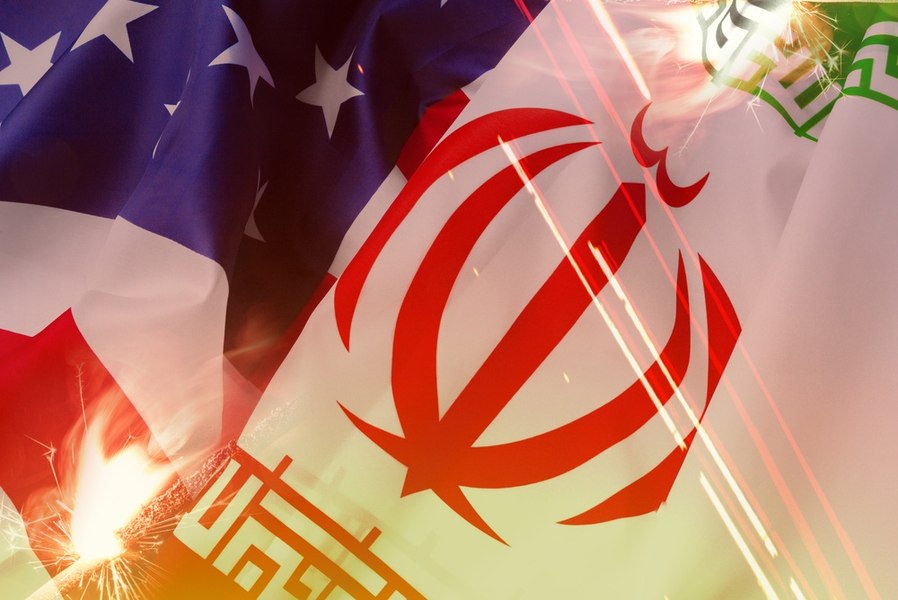
US launches new attacks on Iran after drone hits commercial ship
Translated from Romanian, summarized and contextualized by DistantNews.
At a glance
News
Named sources
Ongoing story
- The U.S. launched new attacks on Iran, targeting missile and drone depots and radar facilities, in response to Iran's drone attack on a commercial vessel.
- The U.S. Central Command stated Iran's actions undermine freedom of navigation in a vital trade corridor.
- The exchange of attacks raises questions about a fragile U.S.-Iran memorandum of understanding signed on June 17, which aimed for a ceasefire.
The United States has launched fresh strikes against Iran, retaliating for a drone attack on a commercial vessel the previous day. U.S. Central Command (CENTCOM), responsible for American military operations in the Middle East, announced a "strong response to yesterday's attack." U.S. aircraft targeted Iranian missile and drone depots, along with coastal radar installations, according to a CENTCOM statement. "Iran's dangerous behavior undermines freedom of navigation at a time when more international trade is transiting this vital commercial corridor," the statement read.
Shortly after the announcement, strikes were reported near the Iranian port of Sirik in the country's south. Subsequently, Iran's Islamic Revolutionary Guard Corps (IRGC) announced it had retaliated with attacks on U.S. military installations in the region. In a statement to the official IRNA agency, the IRGC warned, "Should there be new acts of aggression, our response will be broader than this."
Iran's dangerous behavior undermines freedom of navigation at a time when more international trade is transiting this vital commercial corridor.
The exchange of attacks casts doubt on the future of a fragile memorandum of understanding (MoU) signed between the United States and Iran on June 17. Both sides accuse each other of violating the agreement's provisions, which included a ceasefire. The document stipulated a "permanent" cessation of "military operations on all fronts, including in Lebanon," effectively suspending the conflict initiated by the United States and Israel against Iran on February 28. However, the MoU was intended as a preliminary step before further negotiations, including on transit through the Strait of Hormuz, a critical maritime route for global trade.
Since the war's outbreak, Iran has disrupted traffic through the strait, leading to sharp increases in prices for fuel, fertilizers, and other commodities. Thursday's attack on the Singapore-registered commercial vessel Ever Lovely reignited tensions between Washington and Tehran. U.S. President Donald Trump had previously warned that the Ever Lovely incident constituted a "violation" of the memorandum. The agreement stipulated a 60-day period for Iran to make "every effort" to allow commercial vessels free passage through the Strait of Hormuz. However, maintaining the ceasefire proved difficult, especially as Israel continued its bombardments in Lebanon, thereby breaching the memorandum's terms. In reaction, Iran announced last week it would close the Strait of Hormuz again due to the attacks in Lebanon. On Thursday, the Ever Lovely was transiting the Strait of Hormuz near Oman's coast when it was hit.
Should there be new acts of aggression, our response will be broader than this.
DistantNews Editorial
Originally published by Adevărul in Romanian. Translated, summarized, and contextualized by our editorial team with added local perspective. Read our editorial standards.
More Stories



From Our Blog

What Gets Lost (and Found) When News Is Translated

The Critical Role of Diaspora Media in Global News

What Travellers Should Know About Countries with Restricted Press

A Digital Nomad's Guide to Following Local News

How the Same Story Looks Different in Different Countries
