


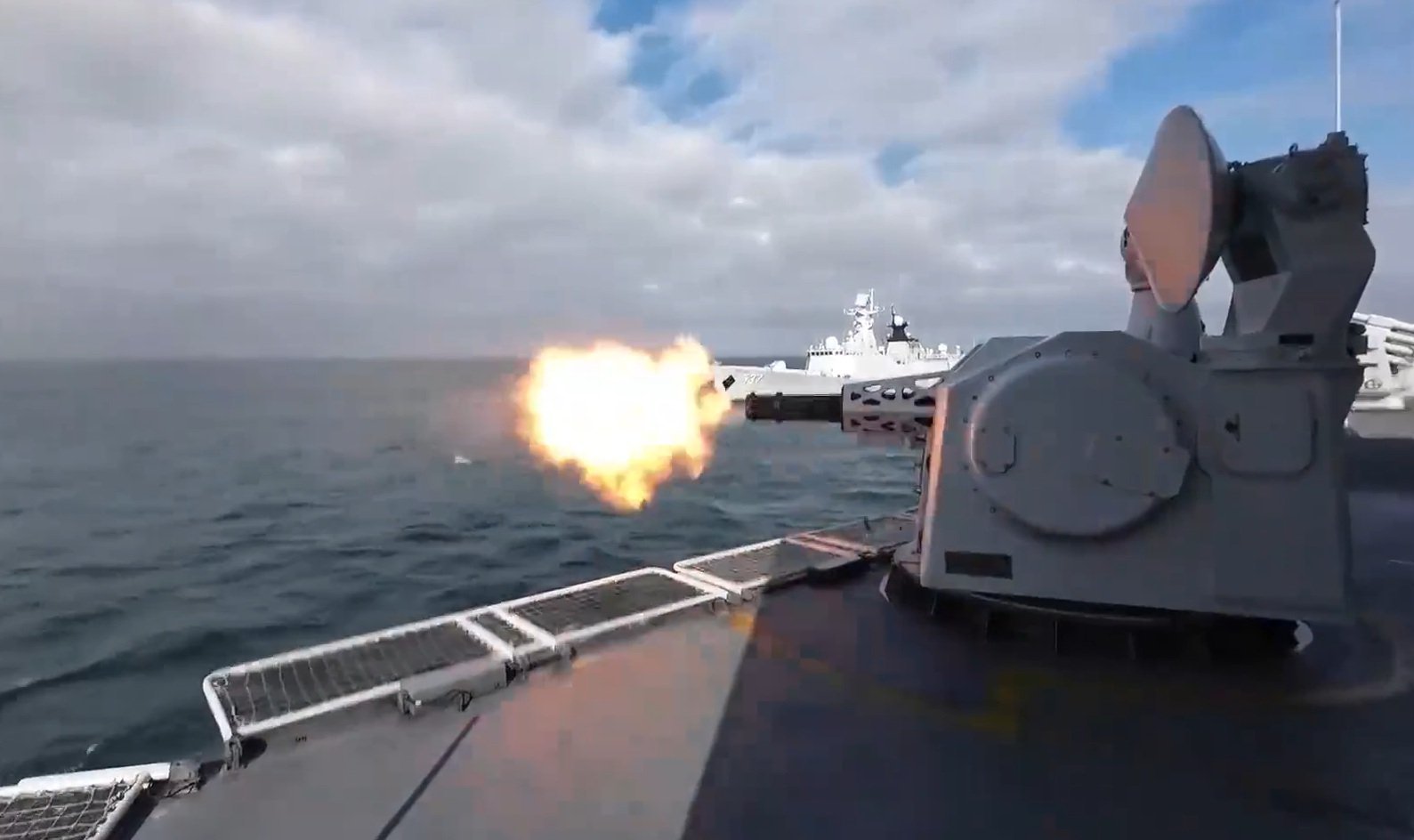
US Missile Stockpile Depletion Raises Concerns Over Response to China-Taiwan Conflict
Translated from Korean, summarized and contextualized by DistantNews.
TLDR
- The U.S. faces a potential military readiness gap due to the extensive use of precision-guided munitions in the conflict with Iran, potentially taking up to six years to replenish.
- This depletion raises concerns about the U.S. ability to respond to potential conflicts, such as a Chinese invasion of Taiwan.
- U.S. defense officials are reportedly adjusting operational plans, including those for a Taiwan scenario, given China's growing military capabilities.
Recent reports, citing The Wall Street Journal and high-level officials, indicate a significant concern within U.S. defense circles regarding the depletion of critical missile stockpiles. The extensive use of precision-guided munitions, including over 1,000 Tomahawk missiles and substantial numbers of Patriot and THAAD interceptors during operations against Iran, has led to projections that replenishing these stocks could take as long as six years.
This extended replenishment timeline creates a potential 'readiness gap,' raising alarms about the U.S. military's capacity to respond effectively to simultaneous or near-simultaneous threats. The most pressing concern highlighted is the potential impact on U.S. deterrence and response capabilities in the event of a Chinese invasion of Taiwan. Experts at the Center for Strategic and International Studies (CSIS) estimate that the conflict with Iran consumed approximately 27% of the total Tomahawk inventory, two-thirds of Patriot interceptor missiles, and over 80% of THAAD interceptor missiles.
In light of these concerns, U.S. defense officials are reportedly re-evaluating operational plans, specifically those related to a potential conflict in the Taiwan Strait. China's rapid military modernization, including its expanding nuclear arsenal, intercontinental ballistic missile program, drone capabilities, and formidable navy and ground forces, presents a significantly greater challenge than Iran. The strategic implications for U.S. defense planning are profound, as a conflict over Taiwan would necessitate a massive stockpile of missiles to counter China's anti-access and area denial strategies.
From a South Korean perspective, this situation underscores the precarious geopolitical landscape of Northeast Asia. While the article focuses on U.S. capabilities, the potential for a U.S. military drawdown or delayed response in the region due to resource constraints could have direct implications for regional security. The article's emphasis on China's growing power and its ambitions regarding Taiwan serves as a stark reminder of the complex security challenges faced by South Korea and its allies in maintaining stability.
DistantNews Editorial
Originally published by Dong-A Ilbo in Korean. Translated, summarized, and contextualized by our editorial team with added local perspective. Read our editorial standards.
More Stories


From Our Blog

What Gets Lost (and Found) When News Is Translated

The Critical Role of Diaspora Media in Global News

What Travellers Should Know About Countries with Restricted Press

A Digital Nomad's Guide to Following Local News

How the Same Story Looks Different in Different Countries
