


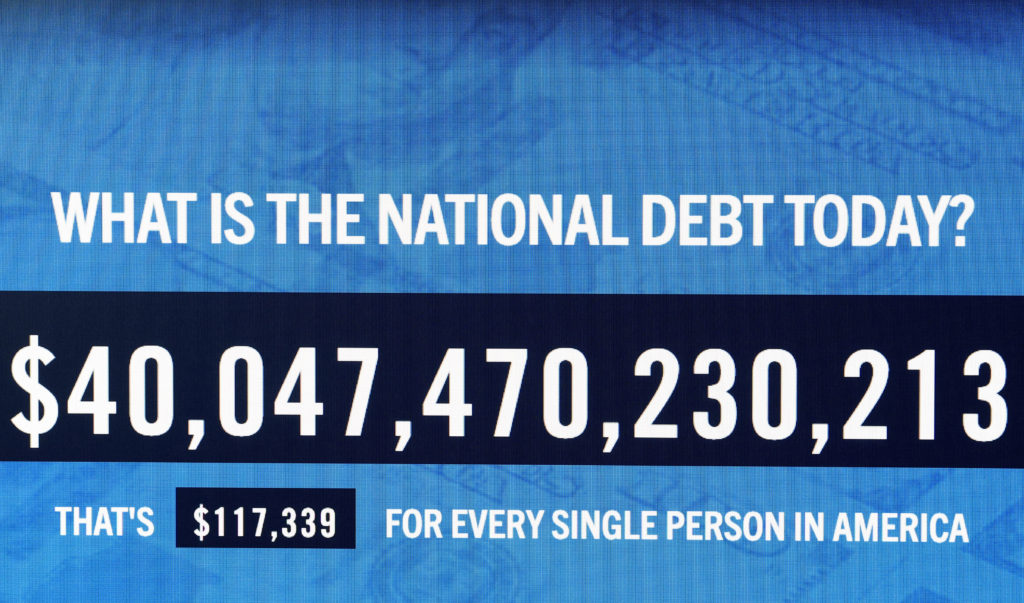
US national debt surpasses $40 trillion amid rising costs
Translated from English, summarized and contextualized by DistantNews.
At a glance
News
Named sources
New plan
- The U.S. national debt surpassed $40 trillion for the first time on Wednesday, a milestone reached just five months after hitting $39 trillion.
- The escalating debt is attributed to defense costs, social programs like Social Security and Medicare, and interest payments on the deficit.
- Experts warn the debt is increasing borrowing costs for consumers and businesses, potentially impacting wages and the cost of goods and services.
The U.S. national debt has crossed the $40 trillion mark, reaching a new record high just five months after surpassing $39 trillion. This staggering milestone underscores the growing financial challenges facing the nation, driven by significant spending on defense, social programs such as Social Security and Medicare, and the mounting interest on the national deficit.
The Trump administration stated its focus on reducing waste and fraud while accelerating economic growth to improve the debt-to-GDP ratio. However, economists and policy experts express concern that the ballooning debt is already affecting Americans' finances. They point to rising borrowing costs for mortgages and cars, reduced business investment leading to lower wages, and increased prices for goods and services.
The Trump administration "has been focused on slashing waste, fraud, and abuse in federal spending while accelerating economic growth to get America's debt-to-GDP ratio trending in the right direction."
Advocates for fiscal responsibility warn that the current trajectory of increased borrowing and interest payments will necessitate difficult financial choices for Americans in the future. Margaret Spellings, president and CEO of the Bipartisan Policy Center, stated that the federal debt is raising the cost of living and hindering economic growth, describing the current fiscal path as unsustainable. She cautioned that events like AI disruption, recession, or global conflict could rapidly escalate the situation from a challenge to a full-blown crisis.
The U.S. operates under a statutory debt limit, which Congress can adjust. The Bipartisan Policy Center projects that the U.S. will likely reach the current debt limit of $41.1 trillion between late winter and mid-summer of 2027, requiring another congressional vote to raise or suspend it. Recent data analysis from the OECD indicates that the U.S. fiscal position is the weakest among other developed countries.
The federal debt is already raising the cost of living and choking out other spending and investment, threatening our economy and Americans' long-term prosperity. Our current fiscal trajectory is plainly unsustainable, and that's the best-case scenario. AI disruption, a recession, global war, or any number of other events could quickly push us over the edge from a challenge into a full-blown crisis.
DistantNews Editorial
Originally published by PBS NewsHour in English. Translated, summarized, and contextualized by our editorial team with added local perspective. Read our editorial standards.
More Stories


From Our Blog

How the Same Story Looks Different in Different Countries

What Gets Lost (and Found) When News Is Translated

The Critical Role of Diaspora Media in Global News

What Travellers Should Know About Countries with Restricted Press

A Digital Nomad's Guide to Following Local News
