

US Political Arena Debates After Trump's H-1B Visa Fee Ruling
Translated from Vietnamese, summarized and contextualized by DistantNews.
At a glance
News
Named sources
Outcome reported
- A US federal judge blocked a $100,000 fee on new H-1B visas for high-skilled foreign workers, imposed by former President Donald Trump.
- The judge ruled the fee was a tax, not an administrative penalty, and thus beyond the president's unilateral authority under current immigration law.
- The Trump administration plans to appeal, arguing the judge lacks jurisdiction and that the policy aimed to reform immigration to benefit American citizens and workers.
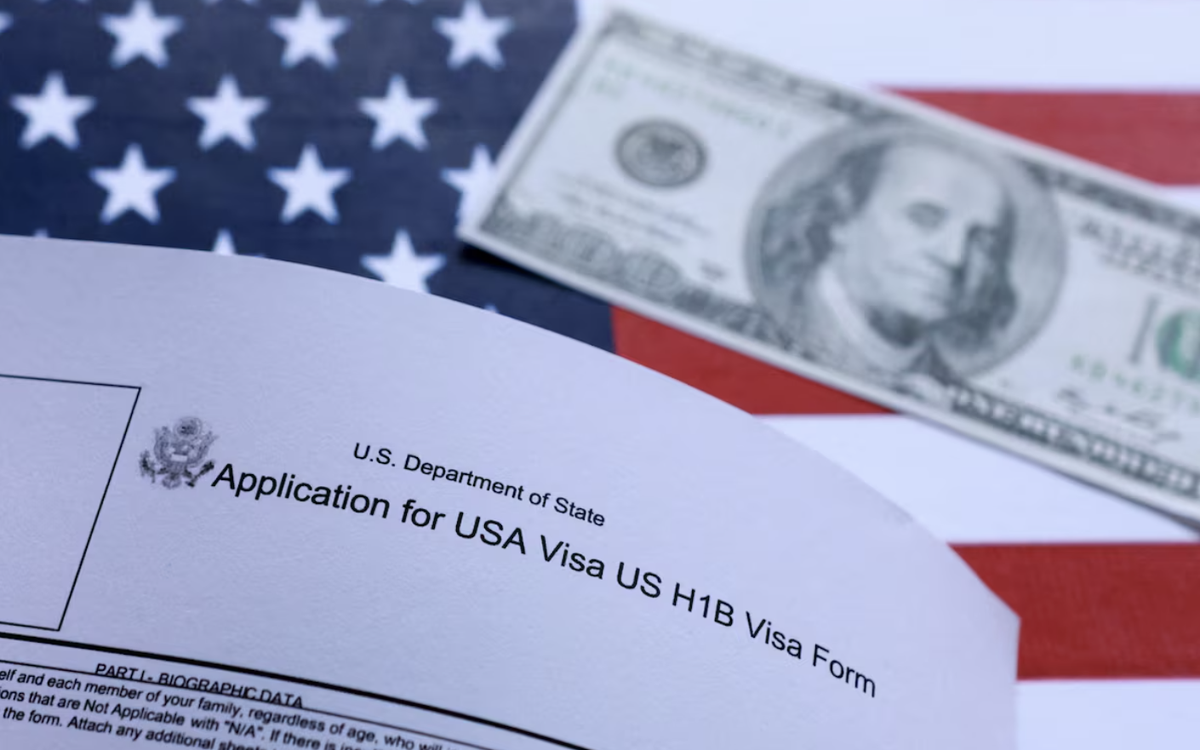
A federal judge in Boston has overturned a $100,000 fee on new H-1B visas for highly skilled foreign workers, a policy enacted by former President Donald Trump. U.S. District Judge Leo Sorokin ruled on June 8 that the fee was effectively a tax, not an administrative penalty as the Trump administration had argued. Therefore, Sorokin determined, the president lacked the unilateral authority to impose it under existing immigration law.
The fee was not an administrative penalty as argued by the Trump administration, but in reality a type of tax. Therefore, the President does not have the authority to unilaterally impose it under current immigration law.
The policy, announced in September of the previous year, drastically increased the cost of applying for an H-1B visa, from the typical $2,000-$5,000 range to $100,000. Court documents indicated that this new fee led to a significant drop in H-1B applications.
We disagree with this action as it undermines President Trump's historic immigration reform efforts. Under President Trump, our immigration system is being reformed to serve American citizens, American workers, and American families, as well as to preserve our national identity.
The Trump administration reacted strongly, asserting that Judge Sorokin overstepped his authority by intervening in a dispute over visa fees. The U.S. Department of Justice stated that presidential actions are not subject to judicial review and that the lawsuit by the states should be dismissed. "We disagree with this action as it undermines President Trump's historic immigration reform efforts. Under President Trump, our immigration system is being reformed to serve American citizens, American workers, and American families, as well as to preserve our national identity," the Department of Homeland Security said in a statement. The White House announced its intention to appeal the ruling, with spokesperson Taylor Rogers affirming, "President Trump has clear legal authority to restrict the entry of any group of foreigners he determines is not serving the best interests of the United States."
President Trump has clear legal authority to restrict the entry of any group of foreigners whom he determines is not serving the best interests of the United States.
Conversely, New York Attorney General Letitia James praised the court's decision, stating, "Every day, thousands of H-1B visa holders serve the people of New York as doctors, teachers, and other skilled workers." She commended the court for ending the Trump administration's "illegal attempt to destroy this vital program and the countless jobs it creates." Massachusetts Attorney General Andrea Campbell echoed this sentiment, calling the ruling a "victory" that protects the integrity of the H-1B visa program as a tool to address critical labor shortages in essential sectors like education, healthcare, and medical research. "In Massachusetts, this victory will ensure we can fill open positions and recruit world-class faculty and researchers at colleges and universities across the state," Campbell added. The decision also offers relief to Silicon Valley, which relies heavily on the H-1B program, with approximately 85,000 new H-1B visas issued annually for foreign workers.
Every day, thousands of H-1B visa holders serve the people of New York as doctors, teachers, and other skilled workers.
DistantNews Editorial
Originally published by Tuổi Trẻ in Vietnamese. Translated, summarized, and contextualized by our editorial team with added local perspective. Read our editorial standards.
More Stories

From Our Blog

What Gets Lost (and Found) When News Is Translated

The Critical Role of Diaspora Media in Global News

What Travellers Should Know About Countries with Restricted Press

A Digital Nomad's Guide to Following Local News

How the Same Story Looks Different in Different Countries
