


US President: Absolutely No King
Translated from German, summarized and contextualized by DistantNews.
At a glance
News
Sources not specified
Outcome reported
- George Washington voluntarily relinquished his military command in 1783, setting a precedent for presidential power.
- His decision to step down, rather than seize power like historical figures Caesar or Cromwell, reassured delegates.
- This act established a model for future U.S. presidents regarding the limits of executive authority.
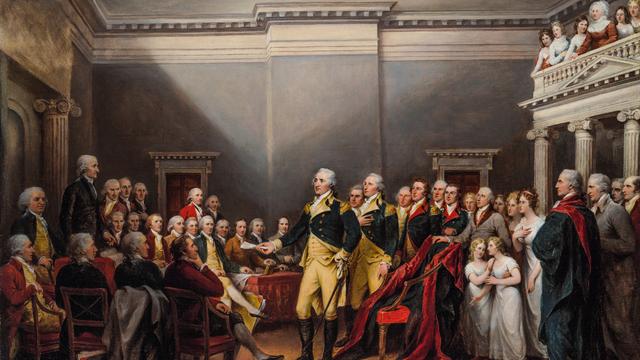
In the Senate Chamber of Annapolis on December 23, 1783, delegates awaited General George Washington's appearance. Many were uneasy, fearing history might repeat itself. They wondered if a victorious general would truly surrender his absolute power. Would he hand over his sword to representatives of the people, as history suggested was unlikely?
Memories of figures like Caesar and, more recently, Cromwell, who transitioned from military leaders to absolute rulers, loomed large. The delegates' apprehension stemmed from the historical tendency for powerful military figures to consolidate authority. Washington's impending act of relinquishing command was therefore a significant departure from established patterns.
Washington's decision to step down after leading the Continental Army to victory was a pivotal moment. It established a crucial precedent for the nature of presidential power in the United States. By voluntarily ceding his command, Washington set a powerful example that would influence nearly all his successors. His actions reassured those who feared the concentration of power in a single individual, laying the groundwork for a republic where civilian authority would prevail over military might.
Or has any victorious general ever voluntarily laid down his essentially absolute power? Has he returned the sword to men like them, representatives of the people, without hesitation?
DistantNews Editorial
Originally published by Die Zeit in German. Translated, summarized, and contextualized by our editorial team with added local perspective. Read our editorial standards.
More Stories


From Our Blog

What Gets Lost (and Found) When News Is Translated

How the Same Story Looks Different in Different Countries

The Critical Role of Diaspora Media in Global News

What Travellers Should Know About Countries with Restricted Press

A Digital Nomad's Guide to Following Local News
