


US Schools Deploy 'Defense Drones' to Counter Gunmen
Translated from Korean and summarized by DistantNews. Read the original for the full story.
At a glance
News
Sources not specified
Context piece
- US schools are increasingly deploying defense drones to combat school shootings, with states like Florida, Georgia, Colorado, and Louisiana adopting the technology.
- Developed by Missile Defense, the 'Campus Guardian Angel' drone can locate shooters, deploy deterrents like pepper spray, and even physically confront them, aiming to neutralize threats within a minute.
- While proponents argue drones offer a cost-effective and rapid response, critics raise concerns about student safety, ethical implications, and the need for preventative measures over reactive technology.
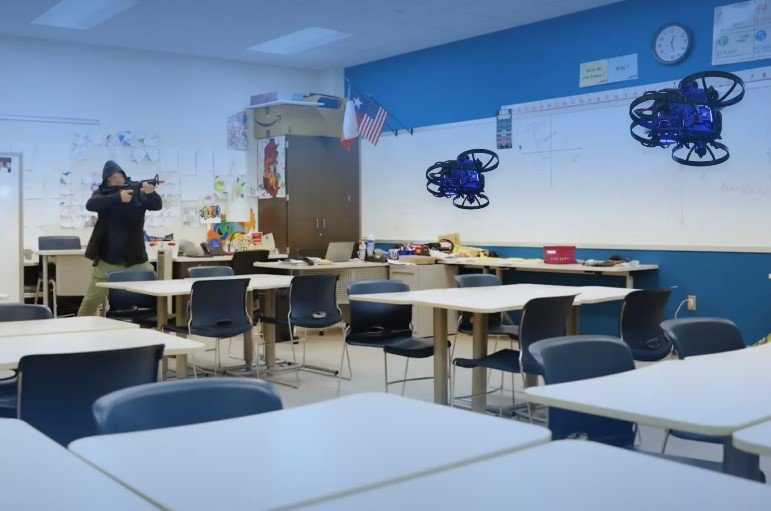
In response to the persistent threat of school shootings, American schools are turning to advanced technology, with defense drones emerging as a controversial new tool. States like Florida, Georgia, Colorado, and Louisiana are actively implementing or considering the deployment of drones designed to locate and neutralize active shooters before law enforcement can intervene.
The "Campus Guardian Angel" drone, developed by defense startup Missile Defense, is engineered for rapid deployment. Upon activation, it can navigate school grounds, breach locked classrooms by breaking windows, and communicate with authorities. The drone aims to identify a shooter within 15 seconds and can deploy a strong light and pepper spray to disorient them. In a final resort, it is designed to physically charge the assailant at high speed, with the company targeting a neutralization time of under one minute from the initial report.
The market for school security in the U.S. has ballooned to an estimated $3 to $4 billion annually since the 2018 Parkland school shooting. Despite significant investments in systems like gun detection and metal detectors, their effectiveness has been questioned, with shootings occurring even in equipped schools. This has created an opening for innovative solutions like defense drones, with several schools in Florida and Georgia already equipped, and more in Colorado and Louisiana exploring adoption.
If the drone sprays pepper spray incorrectly and a student gets hurt, what then? There are too many legal and ethical issues.
However, the introduction of armed drones in schools is not without significant opposition. Parents express concerns about potential accidental harm to students from pepper spray or the drone itself, alongside broader legal and ethical questions. Survivors of school shootings advocate for prioritizing funding for gun violence prevention policies over reactive technologies. Experts also question the unproven effectiveness of such systems, suggesting that resources might be better allocated to mental health support and fostering trust within school communities.
Proponents, however, believe the mere presence of these drones could act as a deterrent. Justin Masson, CEO of Missile Defense, envisions a future where schools without such security systems are seen as unsafe, comparing it to sending a child to a school without sprinklers. The annual operating cost for a drone system in a typical school is estimated at around $20,000, which is presented as a more economical alternative to maintaining a constant police presence.
In five years, you won't send your kids to a school that doesn't have a shooting response system, just like you wouldn't send them to a school without sprinklers.
About this summary
Originally published by Dong-A Ilbo in Korean. Translated, summarized, and contextualized automatically by DistantNews, with a note on how the source frames the story. Not individually reviewed before publishing. How this works.
More Stories


From Our Blog

What Gets Lost (and Found) When News Is Translated

The Critical Role of Diaspora Media in Global News

What Travellers Should Know About Countries with Restricted Press

A Digital Nomad's Guide to Following Local News

How the Same Story Looks Different in Different Countries
