

US stocks fall, dollar rallies as Fed raises inflation forecast
Summarized and contextualized by DistantNews.
At a glance
News
Named sources
Context piece
- The Federal Reserve raised its inflation forecast and signaled a potential interest rate hike by year-end, causing Wall Street stocks to fall and the dollar to rally.
- Fed Chair Kevin Warsh announced plans to review monetary policy protocols, with a focus on delivering price stability as inflation reaches a three-year high.
- Markets shifted bets toward interest rate hikes, with yields on US Treasury bonds also rising, while oil prices saw modest gains amid anticipation of a peace accord with Iran.
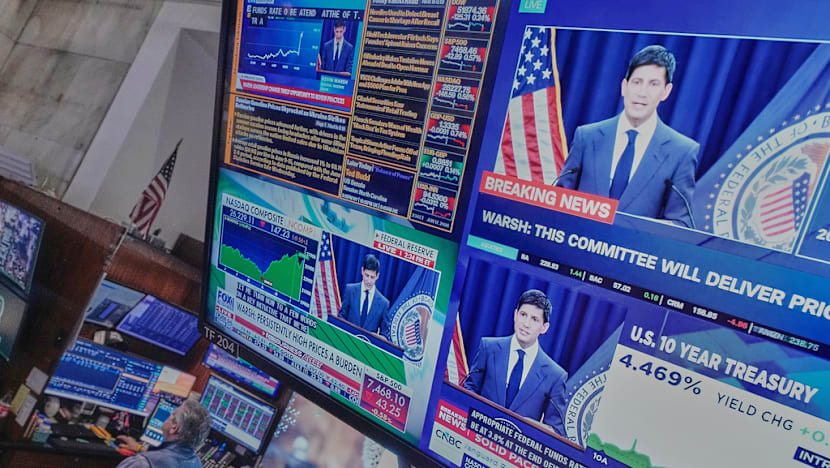
Wall Street stocks closed significantly lower Wednesday, and the dollar strengthened after the Federal Reserve increased its inflation forecast and indicated a possible interest rate hike before the end of the year. The US central bank maintained its interest rates, as anticipated, during a press conference where newly appointed Fed Chairman Kevin Warsh outlined a broad review of the institution's monetary policy protocols.
deliver price stability
Warsh, appointed by President Donald Trump, has overseen a period of rising prices. US inflation hit a three-year high in April, partly attributed to surging energy prices stemming from Trump's actions regarding Iran. At the press conference, Warsh committed the central bank to "deliver price stability," as the Fed revised its year-end PCE inflation expectations upward to 3.6 percent from 2.7 percent. Projections accompanying the statement suggested policymakers foresee one interest rate increase by the close of 2026.
more hawkish
Analysts noted the projections were "more hawkish" than expected. Art Hogan of B. Riley Wealth Management observed that Warsh's press conference concentrated heavily on inflation, with less emphasis on the Fed's full employment mandate. Angelo Kourkafas of Edward Jones commented that the meeting's tone indicates "employment is not a concern at the moment, while inflation is." He added, "The bar for rate hikes, which was thought to be very high, is not as high anymore."
that employment is not a concern at the moment, while inflation is. The bar for rate hikes, which was thought to be very high, is not as high anymore.
Futures markets reflected a substantial shift in expectations, with over 60 percent now anticipating higher interest rates at the Fed's September meeting, a significant increase from less than 30 percent before Wednesday's decision. The dollar advanced against major currencies, and yields on 10-year US Treasury bonds climbed. Earlier, oil prices experienced modest gains as markets awaited the finalization of a peace accord between Washington and Tehran, which is expected to reopen the Strait of Hormuz.
major, major win
DistantNews Editorial
Originally published by CNA. Summarized and contextualized by our editorial team with added local perspective. Read our editorial standards.
More Stories


From Our Blog

What Gets Lost (and Found) When News Is Translated

The Critical Role of Diaspora Media in Global News

What Travellers Should Know About Countries with Restricted Press

A Digital Nomad's Guide to Following Local News

How the Same Story Looks Different in Different Countries
