


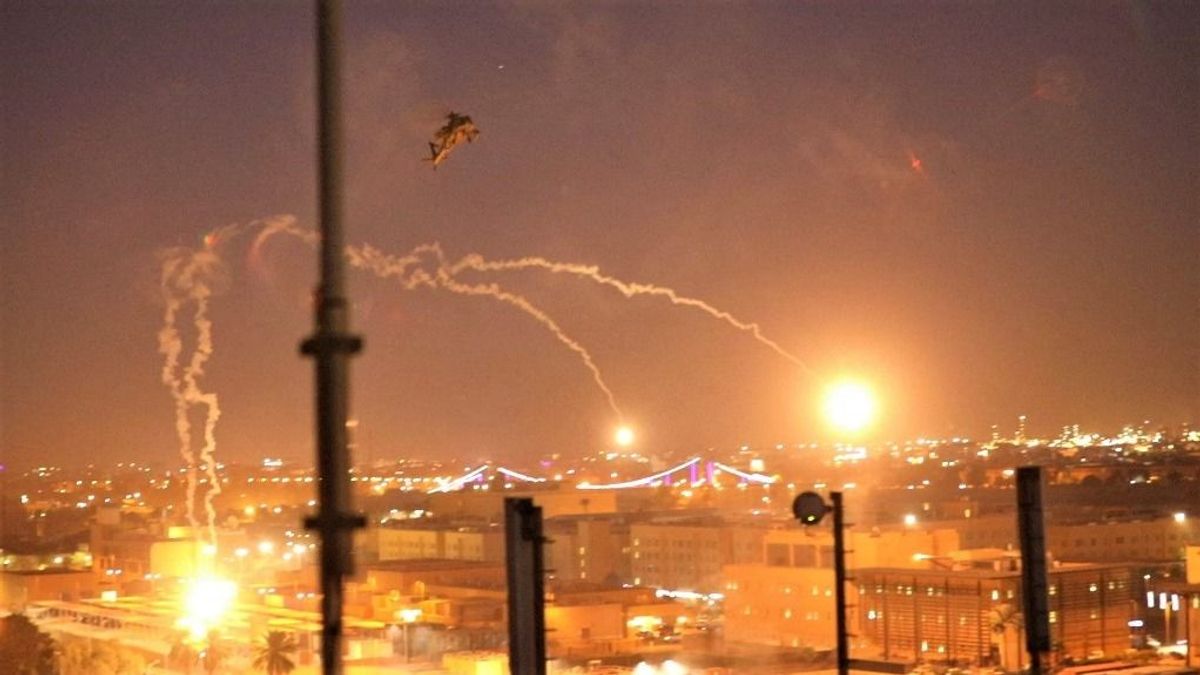
US strikes Iran after helicopter downing; Tehran warns of retaliation
Translated from Hungarian, summarized and contextualized by DistantNews.
At a glance
News
Named sources
Ongoing story
- The U.S. military conducted self-defense strikes against Iran in response to the downing of an Apache helicopter, targeting Iranian air defenses and radar near the Strait of Hormuz.
- Iran's Foreign Minister warned that Tehran would not leave any attack unanswered and urged the U.S. to leave the region.
- Iranian media reported missile attacks on U.S. bases in Jordan and Kuwait, though official confirmation from the U.S. military is pending.
The U.S. military announced self-defense strikes against Iran on June 9, responding to the previous day's downing of a U.S. Army Apache helicopter. The strikes, ordered by the Commander in Chief, targeted Iranian air defenses, ground control stations, and surveillance radars near the Strait of Hormuz. U.S. Central Command (CENTCOM) stated that these were proportional responses to "unjustified Iranian aggression" and affirmed readiness to defend against further Iranian actions.
Following the U.S. strikes, Iranian Foreign Minister Abbas Araghchi issued a stern warning via social media. He asserted that Iran would not leave any attack or threat unanswered, claiming the U.S. had "opted to test our determination" despite previous "defeats on the battlefield." Araghchi also advised the U.S. to "leave our region if you want to be safe," referencing historical precedents for "intruding outsiders."
The U.S. Central Command (CENTCOM) forces began launching self-defense strikes against Iran at 5 p.m. ET today at the Commander in Chief’s direction, in response to yesterday’s downing of a U.S. Army Apache helicopter. The mission is a proportional response to unjustified Iranian…
Iranian state media reported that U.S. forces attacked Iran's Keshm Island in the Strait of Hormuz, with confirmed hits in the port city of Sirik. Explosions were heard near Bandar Abbas and in the Jask region. Additionally, Iranian media claimed the Revolutionary Guard launched missile attacks targeting U.S. bases in Jordan, including F-35 hangars and command centers, and that Kuwaiti air defense systems intercepted hostile aerial targets near a U.S. base. Official confirmation of these Iranian claims from U.S. military sources was not immediately available.
Despite its defeats on the battlefield, the U.S. opted to test our determination.Our Powerful Armed Forces will leave no attack or threat unanswered.Leave our region if you want to be safe. History of the Persian Gulf has many chapters on dire fates of intruding outsiders.
DistantNews Editorial
Originally published by Magyar Nemzet in Hungarian. Translated, summarized, and contextualized by our editorial team with added local perspective. Read our editorial standards.
More Stories


From Our Blog

Countries Without a Free Press: What You Need to Know

What Press Freedom Means for the News You Read

What Gets Lost (and Found) When News Is Translated

The Critical Role of Diaspora Media in Global News

What Travellers Should Know About Countries with Restricted Press
