


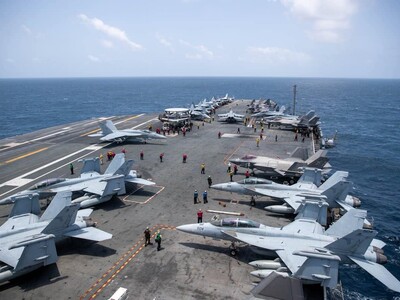
US Strikes on Iran’s Larak Island Prompt Threat of Retaliation
Translated from Spanish and summarized by DistantNews. Read the original for the full story.
At a glance
Newswire
Named sources
Ongoing story
- Iran’s Revolutionary Guards said US drones struck Larak Island near the Strait of Hormuz, causing deaths and injuries, although it did not provide numbers.
- The Guards called the operation a “terrorist aggression” and a “strategic and fatal mistake,” while a US military official said the targets were two Iranian rocket launchers.
- The reported strikes followed the collapse of peace talks, the expiration of a ceasefire and a US announcement of tougher sanctions against Tehran.
Iran’s Revolutionary Guards said US drones struck Larak Island near the Strait of Hormuz, reporting deaths and injuries but giving no figures. The Guards vowed that the operation would be punished.
In a statement carried by the Iranian agencies Fars and Tasnim, which are linked to the Revolutionary Guards, its spokesman described the attack as “terrorist aggression.” A later statement called it a “strategic and fatal mistake.”
terrorist aggression
Larak lies close to the Strait of Hormuz, a major route for global oil transit and a longstanding point of dispute between Iran and the United States during the conflict. Al Jazeera had earlier cited a US Army official as saying Washington targeted two Iranian rocket launchers positioned on the island.
strategic and fatal mistake
The reported operation marked the first known attack since late July, when media reports said dozens of Iranian Revolutionary Guard military targets had been bombed. It came after peace talks collapsed, a ceasefire expired and a 60-day period for reaching a negotiated settlement ended.
Washington subsequently announced a new, tougher package of sanctions against Tehran, indicating that its administration would rely mainly on economic pressure. US Secretary of War Pete Hegseth later said the Pentagon had not ruled out further “kinetic attacks” if necessary.
kinetic attacks
About this summary
Originally published by Diario Libre in Spanish. Translated, summarized, and contextualized automatically by DistantNews, with a note on how the source frames the story. Not individually reviewed before publishing. How this works.
More Stories
From Our Blog

What Gets Lost (and Found) When News Is Translated

The Critical Role of Diaspora Media in Global News

What Travellers Should Know About Countries with Restricted Press

A Digital Nomad's Guide to Following Local News

How the Same Story Looks Different in Different Countries
