

US Supreme Court Invalidates Trump Decree on Birthright Citizenship
Translated from French, summarized and contextualized by DistantNews.
At a glance
News
Sources not specified
Outcome reported
- The US Supreme Court has ruled a presidential decree restricting birthright citizenship unconstitutional.
- The decree, issued by Donald Trump, aimed to deny citizenship to children of temporary residents or undocumented immigrants born in the US.
- Trump plans to pursue the measure through legislative means, sending it to Congress.
The U.S. Supreme Court has delivered a blow to Donald Trump's efforts to restrict birthright citizenship. In a ruling that echoes the principle of jus soli, the court declared unconstitutional a presidential decree aimed at denying citizenship to children born in the United States to temporary residents or undocumented immigrants.
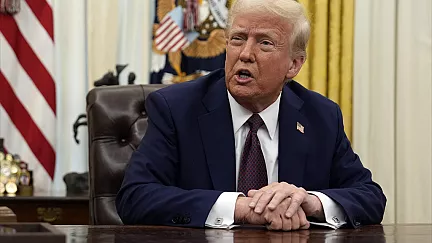
The Supreme Court has delivered another slap in the face to the 47th President of the United States.
This decision marks a significant moment, with the court asserting the strength of American institutions and their independence from political desires. The decree, which had sparked global outcry and was criticized as arbitrary, directly challenged a long-standing constitutional tenet. The court's judgment reaffirms that any child born on U.S. soil automatically receives citizenship.
The Supreme Court has ruled the controversial decree restricting birthright citizenship unconstitutional, thus rejecting Donald Trump.
However, the fight over birthright citizenship is far from over. Donald Trump, known for his resilience, has vowed to push the measure through Congress. With a Republican-majority Congress, the outcome remains uncertain, potentially leading to restrictions or annulment of birthright citizenship for certain groups. The Supreme Court's rejection of the decree, however, offers a glimmer of hope for immigrants seeking refuge in the U.S., reinforcing the nation's historical tradition of welcoming those fleeing their home countries.
The Supreme Court gives proof that institutions in the United States are strong and equidistant from political factions, content to simply apply the law independently.
DistantNews Editorial
Originally published by Le Pays in French. Translated, summarized, and contextualized by our editorial team with added local perspective. Read our editorial standards.
More Stories



From Our Blog

What Gets Lost (and Found) When News Is Translated

The Critical Role of Diaspora Media in Global News

What Travellers Should Know About Countries with Restricted Press

A Digital Nomad's Guide to Following Local News

How the Same Story Looks Different in Different Countries
