


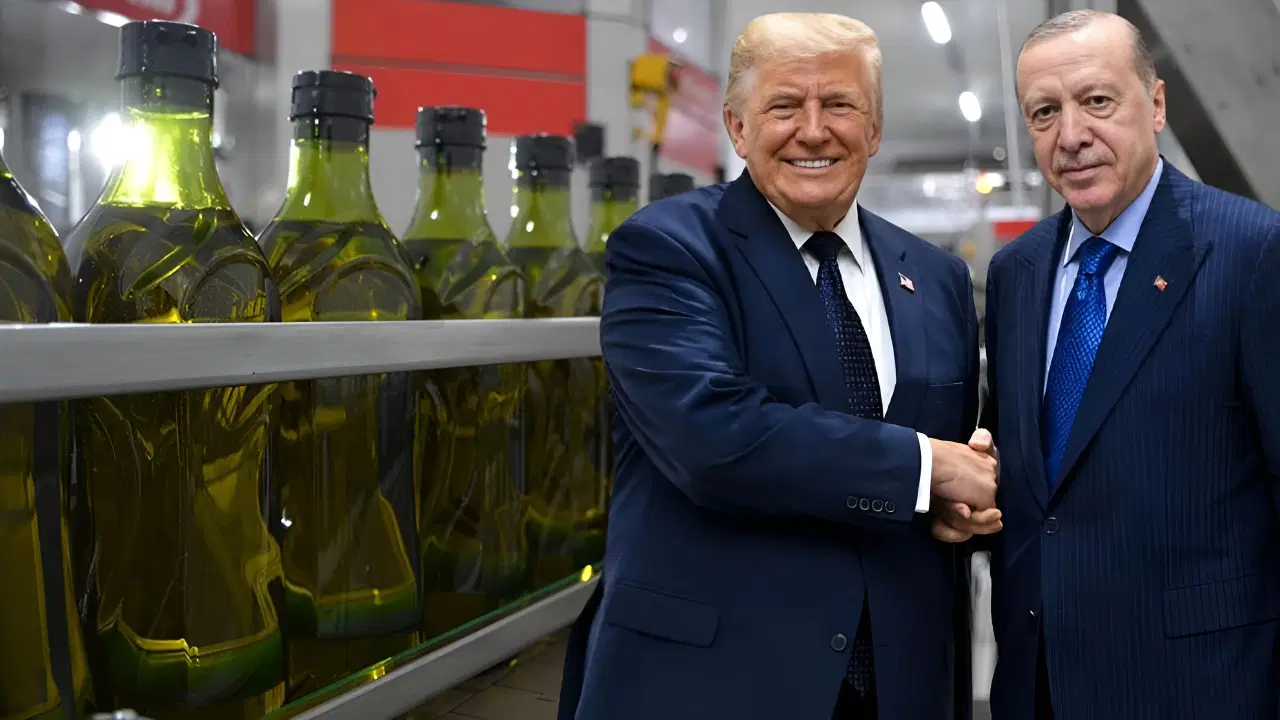
US Tariff on Turkish Olive Oil Deemed a 'Blow' Amidst Producer Struggles
Translated from Turkish, summarized and contextualized by DistantNews.
At a glance
News
Sources not specified
Context piece
- Turkish olive oil producers face difficulties due to low prices, rising costs, and removed subsidies, despite expectations of a record harvest.
- The U.S. has imposed a 12.5% additional tariff on Turkish olive oil, significantly weakening its competitiveness against countries like Tunisia, which faces no such tariff.
- A politician criticized the U.S. tariff and the Turkish government's handling of trade relations, questioning the 'friendship' between leaders.
Turkish olive oil producers are struggling despite an anticipated record harvest, facing a triple threat of plummeting prices, escalating production costs, and the removal of government subsidies. Ahmet Vehbi Bakırlıoğlu, a Member of Parliament for the New Party, highlighted these issues from an olive grove in Akhisar, a region known as the capital of olives.
The trees are magnificent this season. We expect a bountiful harvest of 450,000 to 500,000 tons. Normally, producers would be celebrating before such a fruitful season. But today, our producers are deeply worried. Olive prices are at rock bottom, olive oil prices are at rock bottom, and costs are rising daily.
"The trees are magnificent this season. We expect a bountiful harvest of 450,000 to 500,000 tons," Bakırlıoğlu stated. "Normally, producers would be celebrating before such a fruitful season. But today, our producers are deeply worried. Olive prices are at rock bottom, olive oil prices are at rock bottom, and costs are rising daily."
Adding to their woes, producers are now grappling with a new 12.5% U.S. tariff on Turkish olive oil. Bakırlıoğlu pointed out the stark disparity with Tunisia, which faces zero tariffs. "Tunisia has zero tax, but Turkey faces an additional 12.5% tax. How can Turkish olive oil compete under these conditions?" he questioned, warning of the risk of losing a crucial export market.
Tunisia has zero tax, but Turkey faces an additional 12.5% tax. How can Turkish olive oil compete under these conditions?
Bakırlıoğlu also criticized the Turkish government's trade policies, particularly in light of the relationship between President Erdoğan and former U.S. President Donald Trump. "President Erdoğan calls Trump 'my friend.' Trump calls Erdoğan 'a wonderful person, a very important partner.' But what is the result? While Turkey makes concession after concession, one of the first steps Trump took upon returning to his country was to impose a 12.5% additional tax on Turkish olive oil. What kind of friendship is this? What kind of partnership?" he asked, deeming the situation unacceptable where Turkish farmers bear the cost of political concessions.
President Erdoğan calls Trump 'my friend.' Trump calls Erdoğan 'a wonderful person, a very important partner.' But what is the result? While Turkey makes concession after concession, one of the first steps Trump took upon returning to his country was to impose a 12.5% additional tax on Turkish olive oil. What kind of friendship is this? What kind of partnership?
DistantNews Editorial
Originally published by Cumhuriyet in Turkish. Translated, summarized, and contextualized by our editorial team with added local perspective. Read our editorial standards.
More Stories

From Our Blog

What Gets Lost (and Found) When News Is Translated

The Critical Role of Diaspora Media in Global News

What Travellers Should Know About Countries with Restricted Press

A Digital Nomad's Guide to Following Local News

How the Same Story Looks Different in Different Countries
