


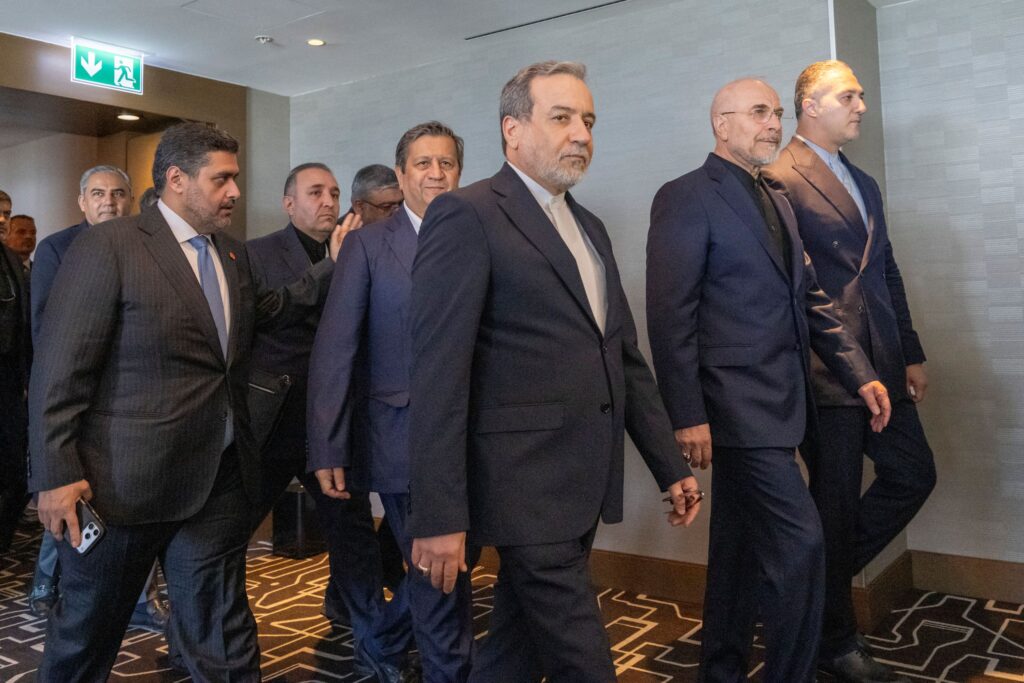
US warned Iran of Israeli plot to kill top diplomats
Translated from Malay, summarized and contextualized by DistantNews.
At a glance
News
Sources not specified
Context piece
- U.S. officials secretly warned Iran through intermediaries that Israel might target top Iranian negotiators, fearing such attacks could derail diplomatic efforts.
- The U.S. believed the alleged assassination plots against Foreign Minister Abbas Araghchi and Parliament Speaker Mohammad Bagher Ghalibaf could jeopardize talks aimed at ending conflict and reopening the Strait of Hormuz.
- Washington urged Israel to avoid targeting Iranian political leaders, shifting its strategy from regime change to diplomatic solutions as the conflict persisted.
U.S. officials secretly conveyed warnings to Iran via intermediaries early in the negotiations, expressing concern that Israel might target two of the country's top diplomats. The U.S. feared that such alleged assassination plans could undermine diplomatic efforts that ultimately led to the Islamabad Memorandum, according to a report.
The information revealed that Iran's Foreign Minister, Abbas Araghchi, and Parliament Speaker, Mohammad Bagher Ghalibaf, whom Washington viewed as crucial for maintaining communication channels with Tehran, were potential targets for Israel. U.S. officials believed that assassinating these two leaders would hinder efforts to end the conflict and reopen the Strait of Hormuz.
"If you kill them, you are also eliminating the pragmatists," a U.S. official was quoted as saying by The Wall Street Journal. The report also stated that American officials had urged their Israeli counterparts as early as March not to target Iran's political leadership after the White House shifted its approach toward a negotiated settlement.
If you kill them, you are also eliminating the pragmatists.
According to current and former U.S. officials cited in the report, Washington and Israel initially shared a goal of regime change in Iran after the conflict erupted on February 28. Israel focused on eliminating Iran's political and military leadership, while the U.S. military concentrated on weakening the country's naval and missile capabilities. However, as the conflict dragged on, U.S. officials concluded that Iran's military institutions and clerical leadership were likely to remain in power, prompting the Washington administration to place greater emphasis on diplomatic efforts.
This shift in approach became more pronounced after Israel assassinated Ali Larijani, a senior Iranian national security official, in mid-March. "The turning point was not the assassination of the supreme leader, but the assassination of Larijani," said an official familiar with the discussions. The report also noted that Ghalibaf had survived several alleged assassination attempts by Israel during the diplomatic process, including one incident that forced him to alter his travel plans after returning from Pakistan. The report also referenced statements by U.S. President Donald Trump during the negotiations, acknowledging that Israel's alleged assassination campaign had complicated diplomatic efforts.
The turning point was not the assassination of the supreme leader, but the assassination of Larijani.
DistantNews Editorial
Originally published by Utusan Malaysia in Malay. Translated, summarized, and contextualized by our editorial team with added local perspective. Read our editorial standards.
More Stories

From Our Blog

What Gets Lost (and Found) When News Is Translated

The Critical Role of Diaspora Media in Global News

What Travellers Should Know About Countries with Restricted Press

A Digital Nomad's Guide to Following Local News

How the Same Story Looks Different in Different Countries
