

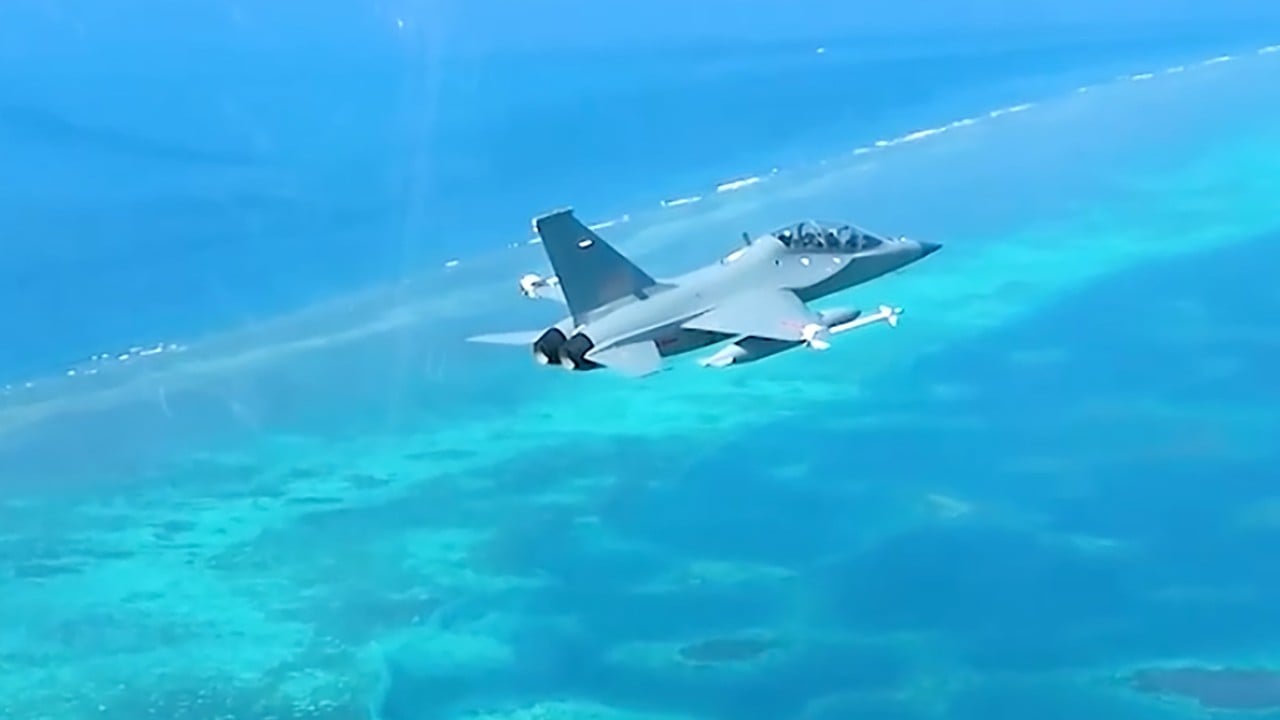

US weighs offensive space tactics as China satellite rivalry intensifies
Summarized by DistantNews. Read the original for the full story.
At a glance
News
Named sources
Context piece
- The U.S. is developing offensive space weapons to counter China's growing satellite capabilities.
- Analysts warn of a lack of communication channels between the U.S. and China to manage space risks.
- China's People's Liberation Army uses intelligence, surveillance, and reconnaissance satellites to target U.S. forces.
The United States is actively preparing to deploy offensive weapons capable of disabling China's military satellites in a potential conflict. This strategic shift comes amid escalating rivalry in orbit and a concerning lack of reliable communication channels between the two superpowers to manage space-related risks, according to defense analysts.
We’re now having to think … how do we, the United States, hold those assets at risk, so that they can’t use space to target us on the ground.
Kari Bingen, director of the Aerospace Security Project at the Centre for Strategic and International Studies (CSIS), highlighted that Washington is openly discussing how to "hold at risk" the satellites that support China's targeting of American forces in the Indo-Pacific. "We’re now having to think … how do we, the United States, hold those assets at risk, so that they can’t use space to target us on the ground," Bingen stated at a CSIS event. She added that this is "really starting to spur this much more public conversation on offence, or our ability to deny the other side the use of space."
That is really starting to spur this much more public conversation on offence, or our ability to deny the other side the use of space.
Bingen noted that China's People's Liberation Army (PLA) operates over 500 intelligence, surveillance, and reconnaissance (ISR) satellites. The PLA has been observed "practising out in the Gobi Desert, targeting our ports, our ships, our airfields" by integrating space sensors with battle networks to create "kill chains" against U.S. forces. The former U.S. deputy under secretary of defense for intelligence also expressed concern over the absence of basic safety dialogues between Washington and Beijing, contrasting it with existing U.S.-Russia communication. "If a U.S. satellite was on a collision course with a Chinese one, 'we send an email. We don’t know if it gets answered. The onus is on our side to take that evasive manoeuvre'," she explained.
practising out in the Gobi Desert, targeting our ports, our ships, our airfields
About this summary
Originally published by South China Morning Post. Summarized and contextualized automatically by DistantNews, with a note on how the source frames the story. Not individually reviewed before publishing. How this works.
More Stories
From Our Blog

Countries Without a Free Press: The 2026 List and What It Means for Readers

What Press Freedom Means for the News You Read

News in Translation: What Gets Lost, and How We Keep the Framing

Diaspora Media: How Communities Abroad Follow Home

Traveling Where the Press Is Not Free: How to Read the News There
