


Uzbekistan to raise electricity and gas rates
Summarized and contextualized by DistantNews.
At a glance
News
Named sources
Context piece
- Uzbekistan will increase electricity and gas rates starting June 1, 2026, with an average consumer increase of approximately 9.9%.
- Residential electricity rates will remain tiered, with prices increasing based on consumption levels, and the preferential gas tariff will also rise.
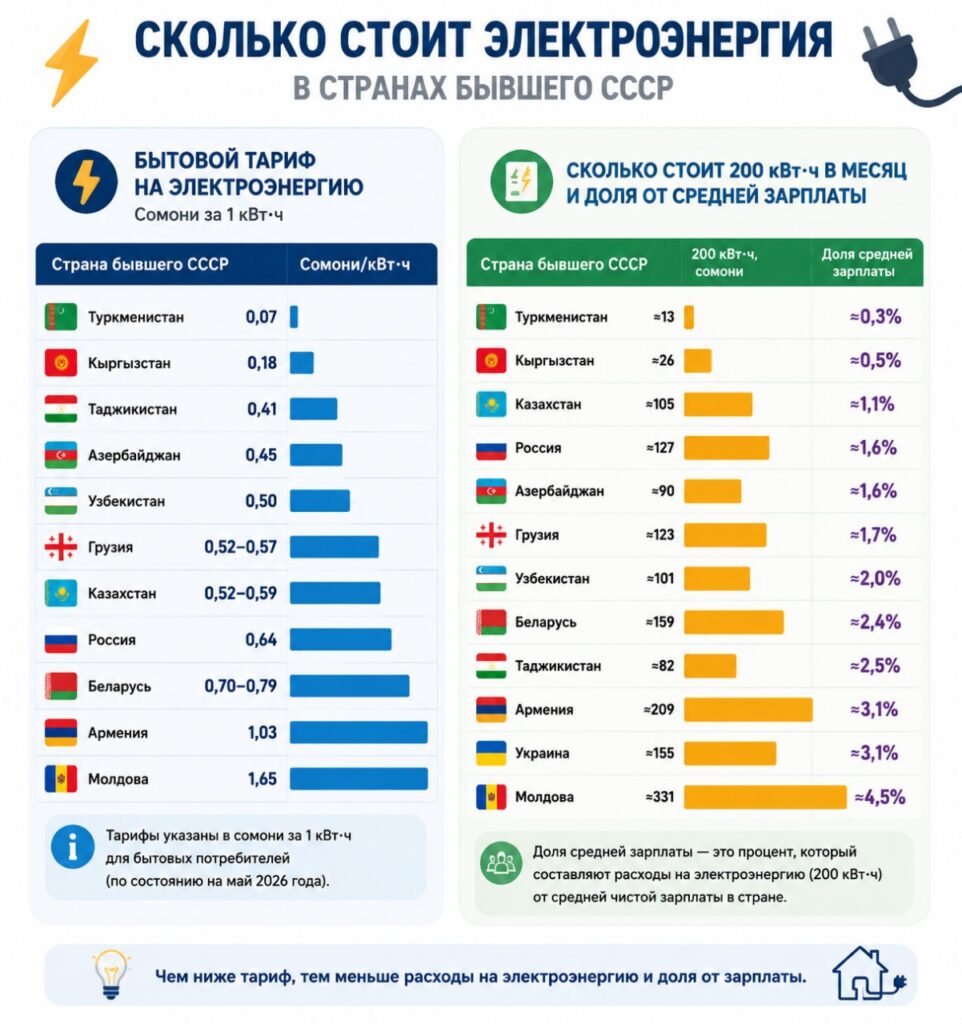
- Despite the increase, the relative cost of electricity for households in Uzbekistan, compared to average salaries, is expected to be lower than in Tajikistan.
Uzbekistan is set to implement a notable increase in its electricity and gas tariffs beginning June 1, 2026. This adjustment, averaging around 9.9% for consumers, signals a shift in the country's energy pricing policy. The government has opted to maintain a tiered system for residential electricity consumption, ensuring that higher usage incurs proportionally higher costs. This approach aims to encourage energy conservation while managing the financial implications of energy production and distribution.
The preferential gas tariff for the population will also see an upward revision, moving from 1000 to 1100 sum per cubic meter. This change, alongside the electricity rate hike, is expected to impact household budgets. However, an analysis comparing Uzbekistan's new tariffs with those in Tajikistan reveals a nuanced picture. While Uzbekistan's electricity rates will become more expensive than Tajikistan's in absolute terms (approximately 0.50 somoni per kWh versus 0.41 somoni per kWh), the burden relative to average incomes appears to be lower in Uzbekistan.
For instance, a family consuming 200 kWh per month in Uzbekistan is projected to spend about 2% of their average salary on electricity, compared to approximately 2.5% in Tajikistan. This suggests that while the nominal price of electricity is higher in Uzbekistan, its affordability, when considered against local earnings, might be more favorable. This perspective is crucial for understanding the real impact of the tariff changes on the population.
From a Central Asian viewpoint, Uzbekistan's decision to raise energy prices reflects broader trends in the region and globally, where energy costs are often adjusted to meet market demands, infrastructure investments, and subsidy reforms. The comparison with neighboring countries like Tajikistan, Turkmenistan, and Kyrgyzstan, which have some of the lowest electricity tariffs in the former USSR, provides valuable context. Uzbekistan's move positions it within this spectrum, balancing the need for revenue with the goal of maintaining relative affordability for its citizens.
DistantNews Editorial
Originally published by Asia-Plus. Summarized and contextualized by our editorial team with added local perspective. Read our editorial standards.
More Stories


From Our Blog

What Gets Lost (and Found) When News Is Translated

The Critical Role of Diaspora Media in Global News

What Travellers Should Know About Countries with Restricted Press

A Digital Nomad's Guide to Following Local News

How the Same Story Looks Different in Different Countries
