

Vance hopes US, Iran can turn 'new leaf' with talks
Summarized and contextualized by DistantNews.
At a glance
News
Named sources
Ongoing story
- U.S. Vice President JD Vance expressed hope for a "new leaf" in talks with Iran held in Switzerland, alongside Pakistani and Qatari mediators.
- Prospects for a permanent deal remain elusive due to renewed fighting in Lebanon and disagreements on key issues.
- Iran's state broadcaster reported that the nuclear program was not discussed, and it was unclear if talks would continue.
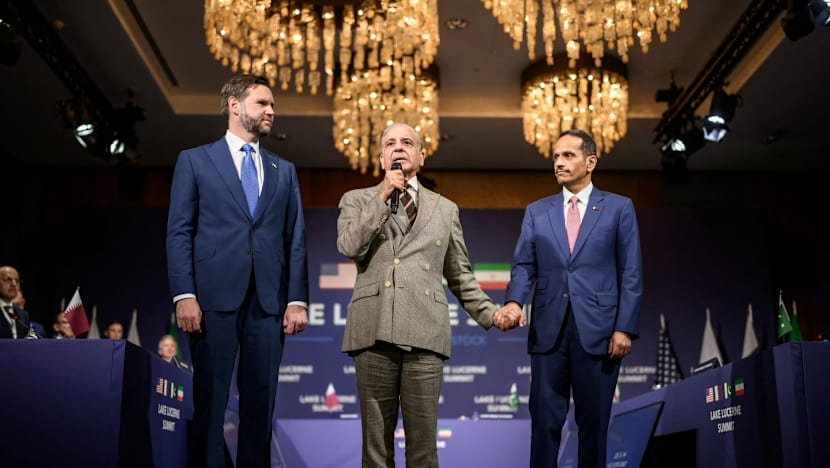
U.S. Vice President JD Vance voiced optimism about turning a "new leaf" in ongoing talks with Iran, held in Switzerland on Sunday. The high-level meeting, which included U.S. negotiators Jared Kushner and Steve Witkoff, along with Pakistani and Qatari mediators, took place at the luxury Burgenstock resort overlooking Lake Lucerne. Vance described the gathering as "a historic meeting," posing the question of future collaboration: "How much more can we accomplish together? Can we turn over a new leaf? Can we change relations in the Middle East permanently?"
The question before us now is how much more can we accomplish together? Can we turn over a new leaf? Can we change relations in the Middle East permanently?
Despite Vance's hopeful remarks, the path toward a permanent resolution appears fraught with challenges. The threat of escalating conflict in Lebanon and a lack of consensus on critical issues have dimmed prospects for a comprehensive agreement. Israeli Prime Minister Benjamin Netanyahu reiterated his stance that Israeli troops would remain in southern Lebanon "as long as necessary" to protect residents. Meanwhile, U.S. President Donald Trump issued a warning, threatening to strike Iran if its proxies in Lebanon continued to cause trouble.
Adding to the complexity, Netanyahu also reaffirmed his commitment to preventing Iran from acquiring nuclear weapons. However, Iran's state broadcaster reported that the country's nuclear program was not on the agenda for Sunday's discussions. The broadcaster stated that the 80-minute initial round of talks focused on implementing a memorandum of understanding between Tehran and Washington, as well as the situation in Lebanon. It remained unclear whether the negotiations would continue or be suspended.
We will remain in the security zone in southern Lebanon for as long as necessary to protect the cherished residents of the north and all the citizens of Israel.
The Iranian delegation reportedly refused to commence the meeting until journalists vacated the room. The talks aim to initiate a 60-day period to resolve broader issues that have long strained U.S.-Iranian relations, following a war that caused widespread chaos in the Middle East and impacted the global economy. Vance's closing remarks reflected the uncertainty, acknowledging that while a new path is preferred, a return to previous patterns of interaction remains a possibility.
No negotiations regarding Iran's nuclear programme took place during the 80-minute first round of talks.
DistantNews Editorial
Originally published by CNA. Summarized and contextualized by our editorial team with added local perspective. Read our editorial standards.
More Stories


From Our Blog

What Gets Lost (and Found) When News Is Translated

The Critical Role of Diaspora Media in Global News

What Travellers Should Know About Countries with Restricted Press

A Digital Nomad's Guide to Following Local News

How the Same Story Looks Different in Different Countries
