


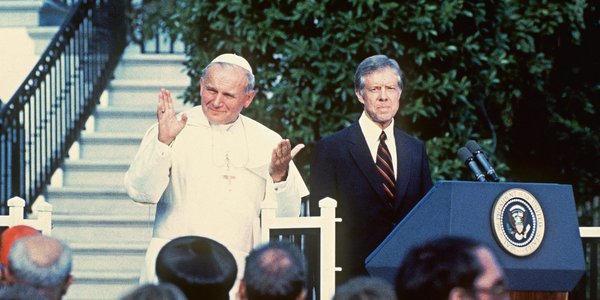
Vatican-US Relations: A Complex Dance of Influence, Not a Fixed Alliance
Translated from Polish, summarized and contextualized by DistantNews.
TLDR
- The relationship between the Vatican and the USA is complex, marked by neither permanent alliance nor lasting hostility.
- The Holy See's diplomatic network and moral authority are significant global forces.
- The US, with its military and economic power, is a key player the Vatican must consider.
- Diplomatic relations, frozen for over a century, were restored in 1984, with Pope John Paul II's 1979 visit marking a turning point.
The dynamic between the Holy See and the United States is a fascinating study in international relations, characterized by a delicate balance rather than a fixed alignment. As explored in Rzeczpospolita's "Plus Minus" section, this relationship is far from static, evolving with the shifting geopolitical landscape and the specific leaders at the helm of both entities. The Vatican, with its extensive diplomatic reach and profound moral influence, represents a unique power that no superpower can afford to ignore. Conversely, the U.S., with its unparalleled military, economic, and cultural might, is a constant factor in Rome's strategic considerations.
Historically, the diplomatic ties between the U.S. and the Holy See experienced a prolonged freeze, spanning over a century before being re-established in 1984. A pivotal moment in normalizing these relations was Pope John Paul II's groundbreaking visit in 1979, during which he became the first pontiff to visit the White House and meet with a sitting U.S. president, Jimmy Carter. This event symbolized a new era of engagement, acknowledging the distinct yet significant roles both institutions play on the global stage.
The article touches upon a seemingly paradoxical observation made by the author while in Albania: the visual representation of the Pope and the U.S. President as equals in dialogue, and the surprising realization that both could be considered 'citizens' of the U.S. in a broader sense, given the Vatican's global reach and the U.S.'s pervasive cultural influence. This juxtaposition highlights the intricate nature of their interactions – a blend of spiritual authority and temporal power, mutual respect and occasional tension. Understanding this relationship requires looking beyond simple political alliances and recognizing the enduring, albeit complex, dialogue between these two influential global actors.
DistantNews Editorial
Originally published by Rzeczpospolita in Polish. Translated, summarized, and contextualized by our editorial team with added local perspective. Read our editorial standards.
More Stories



From Our Blog

What Gets Lost (and Found) When News Is Translated

The Critical Role of Diaspora Media in Global News

What Travellers Should Know About Countries with Restricted Press

A Digital Nomad's Guide to Following Local News

How the Same Story Looks Different in Different Countries
