


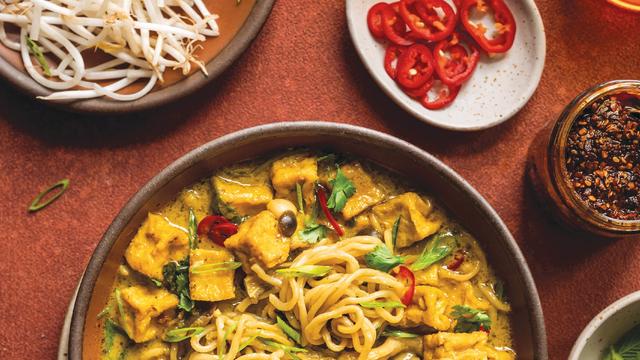
Vegan Laksa: A Taste of Asia in a Bowl
Translated from German, summarized and contextualized by DistantNews.
At a glance
In-depth
Sources not specified
Context piece
- A vegan version of the traditional Singaporean Laksa curry noodle soup offers a plant-based take on the Asian classic.
- The recipe adapts the original dish, which typically includes shrimp and fish cake, by using soy sauce, mushrooms, and kombu for umami depth.
- Flexibility is key, with suggestions to substitute ingredients like galangal with ginger and adjust spice levels for personal preference.
Singapore's vibrant culinary scene, a melting pot of Asian influences, is celebrated through its iconic Laksa soup. Traditionally a rich noodle dish featuring shrimp, fish cake, and tofu, Laksa originates from the Chinese-Malay Peranakan culture and is found everywhere from high-end restaurants to bustling hawker centers.
Traditionally, curry pastes are prepared in a mortar, but it also works with a food processor. It's no problem if it's not completely smooth; this gives the dish a rustic, homemade character.
Nisha Vora, inspired by her travels and cooking classes in Asia, has developed a vegan rendition of this beloved soup. Her adaptation achieves a deep umami flavor without animal products, relying instead on ingredients like soy sauce, mushrooms, and kombu seaweed to build a complex broth.
Vora emphasizes that while traditional curry pastes are often made with a mortar and pestle, a food processor works just as well. She notes that a slightly less smooth paste can lend a rustic, homemade character to the dish. For those with time, allowing the paste to cook longer can further enhance the flavors.
If you don't like mushrooms, you can omit them and add more tofu instead, or replace them with a quick-cooking vegetable like peas, snow peas, or bok choy.
The recipe champions flexibility, encouraging cooks to adapt it to their preferences and available ingredients. Vora suggests omitting mushrooms and adding more tofu, or incorporating quick-cooking vegetables like peas, snow peas, or bok choy. Ginger can stand in for galangal, and ground turmeric can replace fresh. Spice levels are also adjustable, allowing individuals to reduce chili if they prefer a milder soup. While substituting ginger for galangal subtly alters the paste's taste, it doesn't compromise the soup's overall deliciousness.
If you can't find galangal, use ginger, and instead of fresh turmeric, ground turmeric works too – and if you don't like it too spicy, simply reduce the amount of chili.
DistantNews Editorial
Originally published by Die Zeit in German. Translated, summarized, and contextualized by our editorial team with added local perspective. Read our editorial standards.
More Stories



From Our Blog

What Gets Lost (and Found) When News Is Translated

How the Same Story Looks Different in Different Countries

The Critical Role of Diaspora Media in Global News

What Travellers Should Know About Countries with Restricted Press

A Digital Nomad's Guide to Following Local News
