


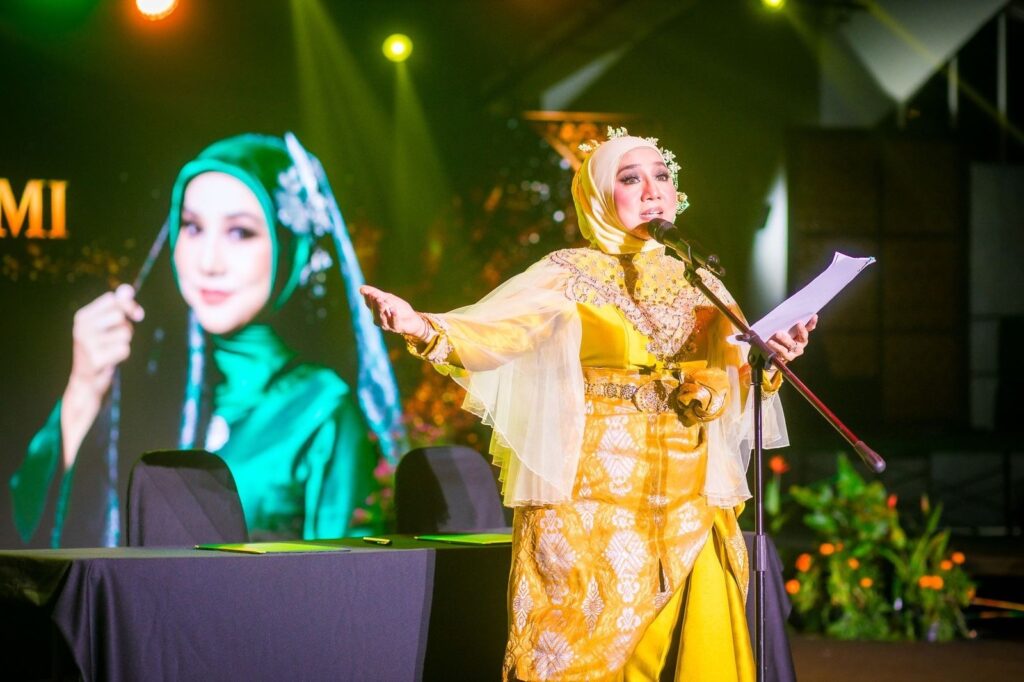
Veteran artist Noraniza Idris seeks successor for Malay ethnic arts preservation
Translated from Malay, summarized and contextualized by DistantNews.
At a glance
In-depth
Sources not specified
Context piece
- Malaysian ethnic arts icon Noraniza Idris has not yet found a successor dedicated to preserving traditional Malay arts, particularly Zapin dance.
- She emphasizes the need for individuals with genuine passion and sacrifice, not just those seeking fame, to continue her work in cultural education and promotion.
- Noraniza has established the Zapin Living Lab to focus on heritage education and knowledge transfer, aiming to ensure traditional arts remain relevant to younger generations.
Veteran Malaysian artist Noraniza Idris, renowned for her dedication to ethnic creative arts and Malay heritage for over three decades, admits she has yet to find a worthy successor to carry on her lifelong mission. Beyond her singing career, Noraniza has been a fervent advocate for traditional arts, actively organizing programs like the Zapin Living Lab and developing cultural education modules to keep heritage relevant for the youth.
Noraniza expressed that the deeper she delves into cultural preservation, the more challenging it becomes to identify individuals with the same level of soul and sacrifice required. "I haven't found one yet. The more you get into it, the harder it is to find successors or protégés with the same spirit as us," she stated. She observes that while many younger artists are drawn to the appeal of traditional arts, finding those willing to make significant personal sacrifices for the cause remains difficult.
I haven't found one yet. The more you get into it, the harder it is to find successors or protégés with the same spirit as us.
A significant hurdle, according to Noraniza, is the tendency for individuals to hoard their research and experiences rather than sharing knowledge with new generations. "Most people, if they do research, they keep it to themselves, they don't share. So how can our new generation get accurate input if we rely too much on TikTok, playing for content? But the real knowledge isn't accurate," she explained, underscoring the importance of structured programs.
Most people, if they do research, they keep it to themselves, they don't share. So how can our new generation get accurate input if we rely too much on TikTok, playing for content? But the real knowledge isn't accurate.
Despite these challenges, Noraniza remains optimistic about finding individuals with a similar passion, even if they pursue different paths. Her primary goal is no longer personal fame but ensuring the continuity of Malay artistic heritage through education and knowledge transfer. This commitment began in 2012 with the introduction of Zapin dance competitions, later expanding through national tours, television programs, and workshops focused on etiquette and understanding Zapin.
She acknowledged that the journey has been arduous, noting that many participants initially prioritized winning prizes over the learning process. "Many people go for the prize but don't want to attend the workshops. From there, I saw that something had to be done. That's why I finally focused on workshops and education," she said. This realization led her to establish the Zapin Living Lab, a platform dedicated to heritage education.
Many people go for the prize but don't want to attend the workshops. From there, I saw that something had to be done. That's why I finally focused on workshops and education.
DistantNews Editorial
Originally published by Utusan Malaysia in Malay. Translated, summarized, and contextualized by our editorial team with added local perspective. Read our editorial standards.
More Stories



From Our Blog

What Gets Lost (and Found) When News Is Translated

The Critical Role of Diaspora Media in Global News

What Travellers Should Know About Countries with Restricted Press

A Digital Nomad's Guide to Following Local News

How the Same Story Looks Different in Different Countries
