

Vienna's Secret Cold War Bunker: Built to Save Lives, Never Used
Translated from German, summarized and contextualized by DistantNews.
At a glance
In-depth
Named sources
Context piece
- A Cold War-era bunker system in Vienna, built to protect government employees, remains largely unknown to the public.
- The bunker, constructed between 1982 and 1987, was designed to house 1,242 people for approximately 14 days.
- Although intended to save lives during a nuclear threat, the bunker was never used for its intended purpose.
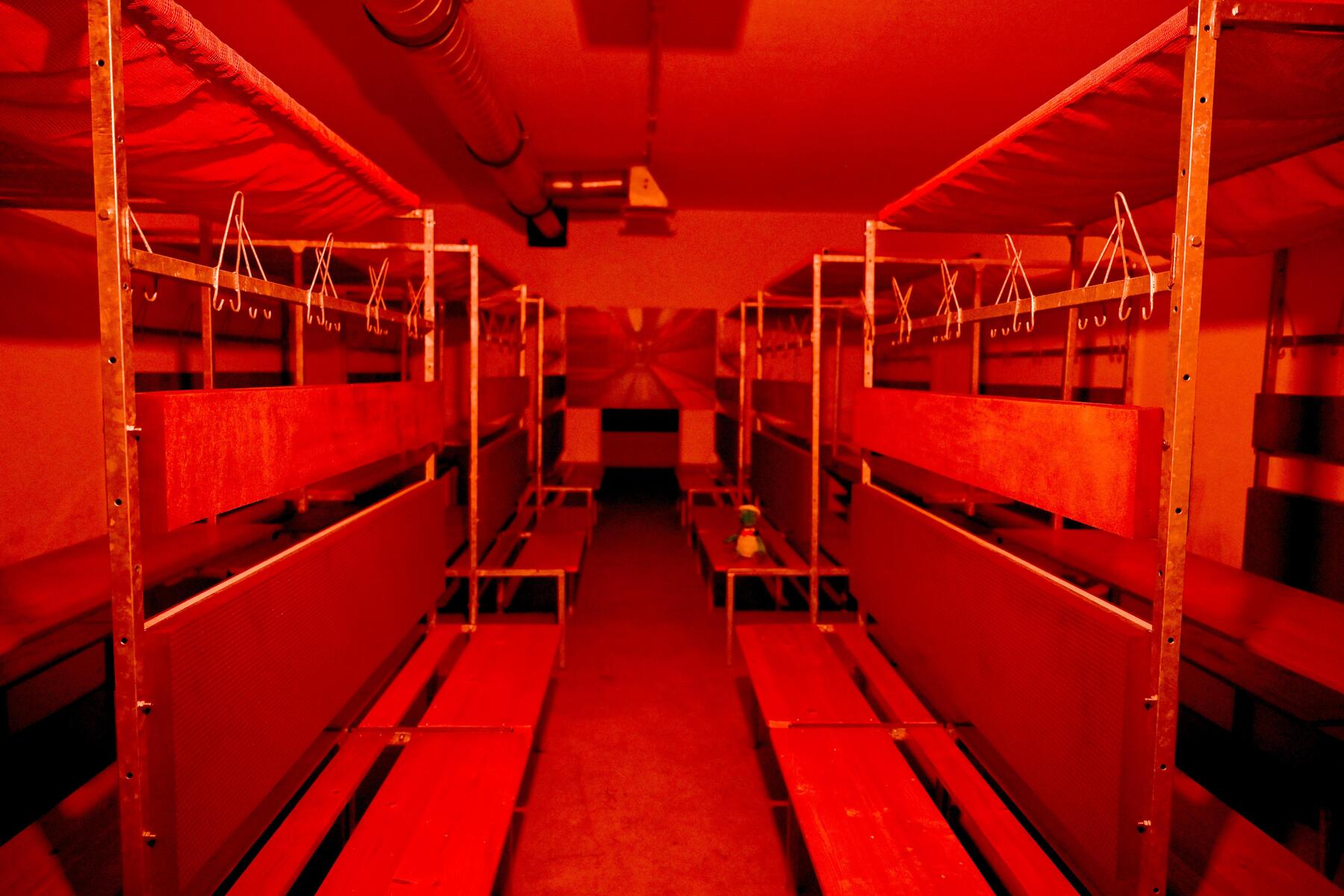
Deep beneath Vienna lies a largely unknown Cold War-era bunker system, a relic designed to protect government officials from nuclear fallout but which never served its intended purpose. The eerie underground complex, with its numerous corridors, rooms, and sealed concrete and steel doors, evokes a sense of unease, especially where old electrical systems fail, plunging areas into darkness.
Nobody hears you if you scream.
This subterranean structure, located centrally in Vienna's third district, gives no outward indication of its existence. Tucked away near the "Triiiple" towers and a former sports field, its secured entrance is accessible via tours offered by the association "Unter Wien."
Construction of the bunker began in 1982 and was completed around 1987, according to markings on its heavy exterior doors. Vereinsobmann Lukas Arnold, who leads "Unter Wien" and specializes in Vienna's underground structures, guides visitors through the facility. The bunker was designed to accommodate 1,242 individuals, with a planned stay of approximately 14 days, a measure conceived during the height of nuclear armament fears and the Cold War.
The facility can be defined as a place of contemporary history. A site for looking back at the time of the Cold War. And of nuclear arms buildup.
Despite the looming threat of nuclear attack or accidents like the Chernobyl disaster in April 1986, no one ever sought shelter in the bunker. It was not intended for the general public but specifically for civil servants, particularly employees from customs and finance departments, reflecting a priority to protect administrative personnel.
1242 people should be accommodated in the facility. Planned duration of stay: approximately 14 days.
For those exposed to radiation, the bunker included a "nuclear shower" system. Survivors would have had to endure 60 seconds of cold water dousing to prevent pores from opening with warm water, potentially allowing toxins to penetrate the skin. Subsequent radiation checks using a Geiger counter were planned, with options for decontamination using acids or bases.
Construction began in 1982, and it likely took until 1987 to complete.
DistantNews Editorial
Originally published by Die Presse in German. Translated, summarized, and contextualized by our editorial team with added local perspective. Read our editorial standards.
More Stories



From Our Blog

What Gets Lost (and Found) When News Is Translated

The Critical Role of Diaspora Media in Global News

What Travellers Should Know About Countries with Restricted Press

A Digital Nomad's Guide to Following Local News

How the Same Story Looks Different in Different Countries
