

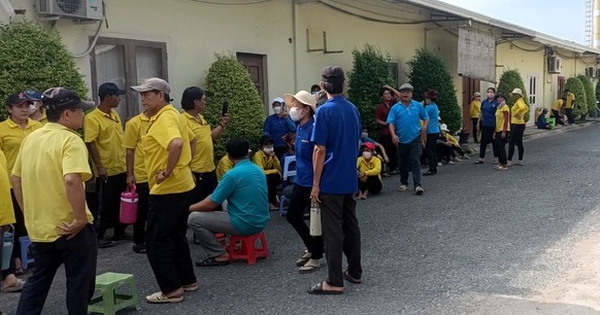

Vietnam discusses apartment time limits, protecting property rights
Translated from Vietnamese, summarized and contextualized by DistantNews.
At a glance
News
Sources not specified
Under investigation
- Vietnam's National Assembly is discussing amendments to the Housing Law, including regulations on 'limited-term apartments.'
- Prime Minister Le Minh Hung emphasized that no housing is permanent and buildings require periodic checks and reconstruction.
- The proposed regulations aim to clarify property rights and ensure safety standards for apartment buildings.
Vietnam's National Assembly is currently debating proposed amendments to the Housing Law, with a significant focus on the new concept of 'limited-term apartments.' This proposed regulation has sparked considerable discussion regarding property ownership and the lifespan of residential buildings.
Prime Minister Le Minh Hung stressed the principle that "no housing is permanent." He explained that ordinary buildings require regular inspections and must be rebuilt if they no longer meet technical standards. Similarly, apartments, if located on land zoned for residential use, would be subject to reconstruction after a certain period. The Prime Minister assured that property rights would be protected by law, provided owners fulfill financial obligations for reconstruction.
We must clarify with each other that no housing is permanent.
He further elaborated that while property rights are safeguarded, the technical standards of apartments must adhere to safety regulations. If an apartment building is deemed safe after inspection, its use can be extended. However, if safety is compromised, measures for renovation or reconstruction would be necessary for the safety of residents. The Prime Minister urged for clear legal provisions to reassure the public and the market, preventing misunderstandings that property rights would be entirely lost at the end of a term.
Property rights are protected, but the technical standards of apartment buildings must comply with safety regulations.
Delegates expressed concerns about the potential impact on citizens, noting that for many Vietnamese, an apartment represents a significant, long-term financial accumulation. The draft law introduces 'limited-term apartments,' distinct from the current law's 'apartment usage period.' The latter involves assessing a building's quality upon expiry of its design life, with continued use possible if safety is maintained. The new concept, however, could be misinterpreted as automatic loss of ownership after 50 or 70 years, causing anxiety.
National Assembly Chairman Tran Thanh Man and other delegates, like Truong Thi Bich Hanh, emphasized the need for clear regulations that protect citizens' long-term housing rights and financial investments. The discussion aims to balance safety requirements with the public's expectation of secure, inheritable property.
The law must clearly stipulate this content so that people and the market can rest assured, avoiding misunderstandings that at that time it will be demolished and all rights will be lost.
DistantNews Editorial
Originally published by Thanh Niên in Vietnamese. Translated, summarized, and contextualized by our editorial team with added local perspective. Read our editorial standards.
More Stories

From Our Blog

What Gets Lost (and Found) When News Is Translated

The Critical Role of Diaspora Media in Global News

What Travellers Should Know About Countries with Restricted Press

A Digital Nomad's Guide to Following Local News

How the Same Story Looks Different in Different Countries
