

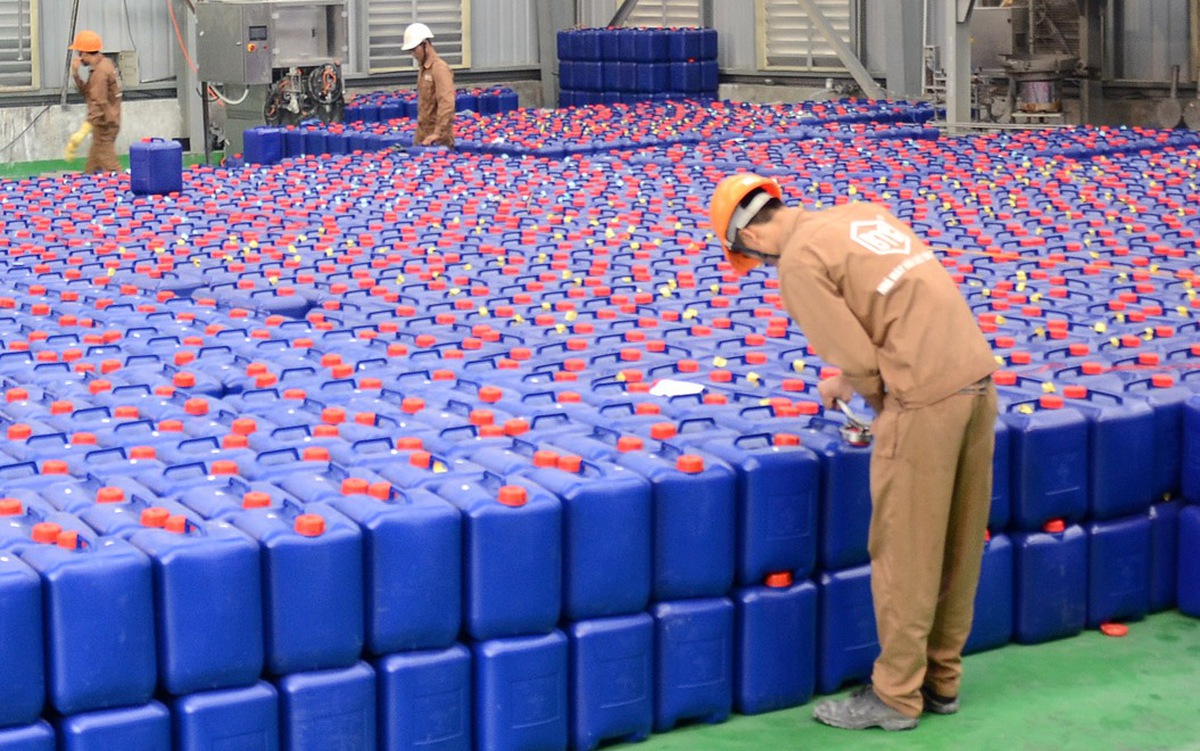

Vietnam must lead ASEAN value chains, moving beyond 'processing' role: RMIT expert
Translated from Vietnamese, summarized and contextualized by DistantNews.
At a glance
Analysis
Named sources
Context piece
- Vietnam aims to move beyond being a manufacturing hub and lead ASEAN's value chains, according to Dr. Chu Thanh Tuấn of RMIT University Vietnam.
- The region faces economic fragmentation due to global power competition, requiring increased intra-ASEAN integration.
- Vietnam needs to focus on retaining value within production chains, not just attracting FDI, by developing domestic capabilities in capital, data, and innovation.
Vietnam must transition from a low-value "processing" economy to actively leading and controlling ASEAN's value chains, according to Dr. Chu Thanh Tuấn from RMIT University Vietnam. He argues that in the context of global powers pushing for "economic decoupling," Vietnam and other ASEAN nations need to accelerate intra-regional integration to avoid becoming mere temporary stops for shifting foreign direct investment (FDI).
Dr. Tuấn identifies economic fragmentation as the primary challenge for ASEAN, driven by strategic competition among major powers. This forces businesses to re-evaluate their supply chain choices, green standards, and investment flows. To counter this, ASEAN needs to build self-reliance and collective bargaining power, measured by domestic firms' ability to raise capital, transfer data, and expand markets within the bloc before going global.
The ASEAN Framework Agreement on Digital Economy (DEFA) is seen as a crucial "backbone" for the region's digital economy, which is projected to reach $2 trillion by 2030. However, Dr. Tuấn emphasizes that ASEAN should view Artificial Intelligence (AI) not just as a commercial technology but as a development infrastructure. Establishing a common framework for AI governance, ensuring safety, and protecting data will enable businesses to scale products regionally without being hindered by disparate national regulations.
If we can master human resources, data, design, and innovation networks, Vietnam can become the value creation center of ASEAN.
He specifically highlights the need for AI to be paired with labor policies that focus on digital skills for small businesses and the general workforce, ensuring no one is left behind. Dr. Tuấn believes that to truly become a hub for innovation, Vietnam must move beyond growth models reliant solely on industrial land and tax incentives.
The strategic question for Vietnam over the next 5-10 years is not how many factories it attracts, but how much value it retains within its production chains. This shift is already underway with the semiconductor strategy, aiming to train over 50,000 engineers and establish at least 100 domestic design firms by 2030. Dr. Tuấn asserts that mastering human resources, data, design, and innovation networks is key for Vietnam to become ASEAN's value creation center, moving from a passive participant to an agenda-setting force.
The strategic question for 5 - 10 years from now is not how many factories are attracted, but how much value Vietnam retains in that production chain.
DistantNews Editorial
Originally published by Tuổi Trẻ in Vietnamese. Translated, summarized, and contextualized by our editorial team with added local perspective. Read our editorial standards.
More Stories


From Our Blog

What Gets Lost (and Found) When News Is Translated

The Critical Role of Diaspora Media in Global News

What Travellers Should Know About Countries with Restricted Press

A Digital Nomad's Guide to Following Local News

How the Same Story Looks Different in Different Countries
