


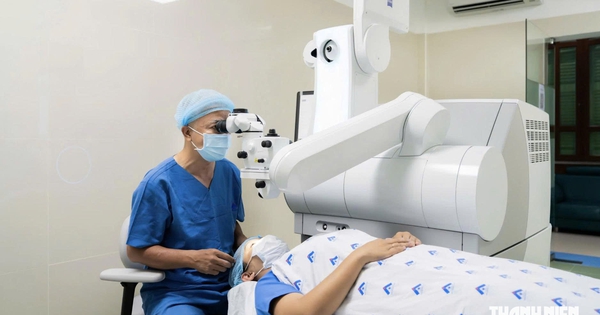
Vietnam Pushes Early Eye Disease Screening, Bringing Care to Grassroots Level
Translated from Vietnamese, summarized and contextualized by DistantNews.
At a glance
News
Named sources
New plan
- Vietnam's Ministry of Health is pushing for early screening and detection of eye diseases, integrating eye care into primary healthcare facilities.
- The ministry aims to shift focus from treating vision loss to preventative measures, especially for conditions like diabetic retinopathy.
- A recent ophthalmology conference in Ho Chi Minh City highlighted advancements in Vietnamese eye care but also pointed to gaps in screening and specialist availability.
Vietnam's Ministry of Health is advocating for a significant shift in eye care strategy, moving from reactive treatment of vision loss to proactive early screening and prevention. The ministry aims to integrate comprehensive eye care services into primary healthcare settings, ensuring that potential issues are identified and addressed before they lead to irreversible vision impairment.
This directive comes amid notable progress in the country's ophthalmology sector. In 2024, Vietnam performed approximately 370,000 cataract surgeries, a nearly 19% increase from the previous year, with about 80% of patients experiencing improved vision post-operation. However, a recent survey revealed critical gaps. Alarmingly, only about 2% of diabetic patients undergo retinal screening, despite the growing challenge of diabetic retinopathy, a complication linked to the rise in non-communicable diseases. Furthermore, around 16% of healthcare facilities lack specialized ophthalmologists.
Dr. Duong Huy Luong, Deputy Director of the Department of Medical Examination and Treatment Management, emphasized the need for a paradigm shift. "The ophthalmology sector needs to strongly transition from a treatment mindset to prevention, vigorously promoting early screening for eye diseases and bringing eye care activities deeper into grassroots healthcare, instead of waiting until patients' vision declines before intervening," he stated.
The ophthalmology sector needs to strongly transition from a treatment mindset to prevention, vigorously promoting early screening for eye diseases and bringing eye care activities deeper into grassroots healthcare, instead of waiting until patients' vision declines before intervening.
To bolster these efforts, the healthcare sector must strengthen diagnostic and treatment guidelines, standardize technical procedures, and establish clinical quality standards for eye care. Developing and equitably distributing ophthalmology human resources is also crucial. High-tech specialized hospitals are encouraged to train staff at lower-level facilities to broaden access to services for the public. The ministry also urged professionals to enhance research and share experiences, including failures, to continuously improve treatment quality.
Le Anh Tuan, Director of the Ho Chi Minh City Eye Hospital and organizer of the recent expanded ophthalmology conference, described the event as a key step in scientific collaboration, updating modern technology, and shaping health policies for the sector. "The conference series not only contributes to improving the quality of specialized eye treatment and meeting the eye health needs of the entire population but also aims for the long-term goal of reducing the burden of blindness in the community," Tuan said. The conference featured specialized sessions across various sub-fields of ophthalmology, including cornea, vitreoretinal, refractive, cataract, glaucoma, pediatric ophthalmology, oculoplastics, neuro-ophthalmology, nursing, and optometry.
The conference series not only contributes to improving the quality of specialized eye treatment and meeting the eye health needs of the entire population, but also aims for the long-term goal of reducing the burden of blindness in the community.
DistantNews Editorial
Originally published by Thanh Niên in Vietnamese. Translated, summarized, and contextualized by our editorial team with added local perspective. Read our editorial standards.
More Stories


From Our Blog

What Gets Lost (and Found) When News Is Translated

The Critical Role of Diaspora Media in Global News

What Travellers Should Know About Countries with Restricted Press

A Digital Nomad's Guide to Following Local News

How the Same Story Looks Different in Different Countries
