

Vietnam Questions How Foreign Capital Can Truly Boost Domestic Strength
Translated from Vietnamese, summarized and contextualized by DistantNews.
At a glance
News
Sources not specified
Context piece
- Vietnam's leader questioned how to effectively use foreign capital to boost domestic capabilities.
- Many foreign-invested enterprises operate as closed 'islands,' bringing their own suppliers and limiting local business integration.
- Low localization rates in key industries persist, with Vietnamese firms contributing mainly to low-value services.
Vietnam's top leader, Tô Lâm, has raised critical questions about the nation's strategy for foreign direct investment (FDI). At a recent conference discussing Politburo Resolution 10 on economic development with foreign capital, Lâm probed how to best leverage overseas resources to enhance domestic capabilities, technological prowess, economic competitiveness, and self-reliance.
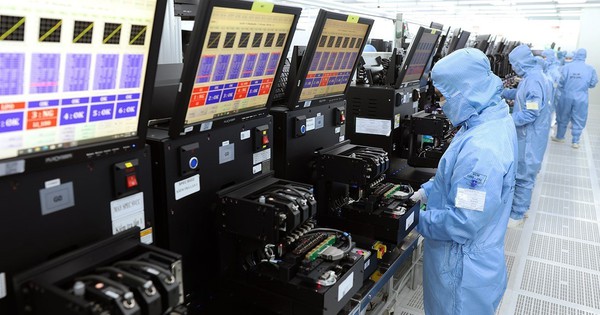
Despite nearly four decades of opening up and attracting over $549 billion in registered FDI, many foreign-invested enterprises in Vietnam operate as isolated entities. These companies often import their entire supply chains from their home countries, creating closed ecosystems that sideline local Vietnamese businesses. One entrepreneur, identified only as Mr. N.T.D., shared his experience of being a supplier for a major electronics firm, only to be replaced within a year due to the parent company's management changes, which favored familiar suppliers from their home country.
This reliance on foreign supply chains results in persistently low localization rates across key industries. While some large corporations report localization rates of 20-25%, the majority comes from foreign-owned Tier 1 suppliers. Purely Vietnamese firms contribute only 5-10%, typically in low-value services like packaging, printing, catering, or basic logistics. Core components remain entirely dependent on global supply chains imported from abroad. Phạm Văn Quân, deputy director of the Industrial Department under the Ministry of Industry and Trade, acknowledged that the spillover effect of technology and management knowledge from FDI firms to the domestic sector is lower than anticipated. He noted that past FDI attraction policies focused heavily on tax incentives, land, and cheap labor, lacking sufficiently stringent legal requirements for technology and knowledge transfer obligations.
Làm thế nào sử dụng hiệu quả nguồn lực nước ngoài để nâng cao nội lực, năng lực công nghệ, sức cạnh tranh và tự chủ của nền kinh tế?
DistantNews Editorial
Originally published by Thanh Niên in Vietnamese. Translated, summarized, and contextualized by our editorial team with added local perspective. Read our editorial standards.
More Stories


From Our Blog

What Gets Lost (and Found) When News Is Translated

The Critical Role of Diaspora Media in Global News

What Travellers Should Know About Countries with Restricted Press

A Digital Nomad's Guide to Following Local News

How the Same Story Looks Different in Different Countries
