


Vietnam's Railway 'Fire Keepers': A Legacy of Sacrifice and Resilience
Translated from Vietnamese, summarized and contextualized by DistantNews.
At a glance
In-depth
Named sources
Context piece
- The article highlights the dedication of Vietnamese railway workers who maintained crucial transport lines during the Vietnam War.
- It recounts the sacrifices of workers, including a bombing that killed 17 young women in 1967.
- The piece emphasizes the enduring legacy and renewed hope for the railway sector, with families having multiple generations involved.
The article honors the 'fire keepers' of the Vietnamese railways, workers who both produced and fought to keep vital rail lines operational during the war. These individuals ensured the continuous flow of supplies and personnel to the southern battlefield, embodying the spirit that "hearts may stop beating, but the arteries of transportation will never be blocked."
Hearts may stop beating, but the arteries of transportation will never be blocked.
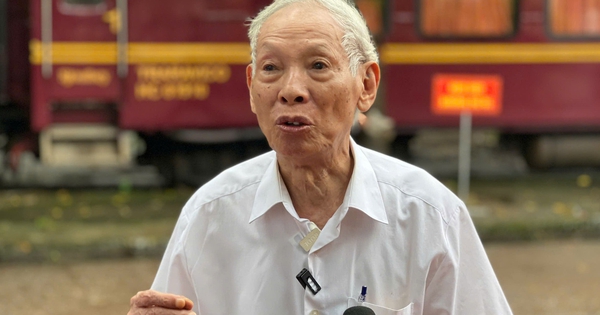
Nguyễn Thị Hồng Chiến, who joined the youth volunteer force at 17, recalls her service protecting the southern railway from Cầu Lèn to Cầu Cun. She and her comrades faced immense hardship, working to keep the tracks clear for crucial shipments. Sixty years later, Chiến, now nearly 80, remains deeply moved by the sacrifices made, particularly the tragic bombing on May 11, 1967, at Núi Nấp. That day, 13 young women from the volunteer force and four railway workers were killed after completing repairs on bomb-damaged tracks, just before a train was set to pass.
Chiến narrowly escaped the bombing, having been sent to a sports event. Upon her return, she found her close comrades gone. The memory of that day still brings her to tears. At a recent reunion for railway veterans, she reconnected with fellow witnesses of that heroic era. Trần Mạnh Trung, another veteran, also shared his emotional experience. He recounted how the Gia Lâm Railway Workshop in Hanoi was flattened by bombs in 1972. Despite the destruction, workers would evacuate during the day and return at night to repair engines and carriages amidst ongoing attacks, driven by the simple yet profound goal of keeping trains running.
After completing repairs on bomb-damaged tracks, preparing for the train to pass, enemy aircraft returned to drop bombs.
Trung, who began his railway career in 1954, participated in restoring lines in Lạng Sơn before dedicating his working life to the Gia Lâm workshop until his retirement in the late 1990s. He expressed joy at the railway sector's resurgence after periods of difficulty, seeing great hope for its future. The article also touches upon the unique characteristic of the railway industry, where many families have multiple generations dedicated to the service, exemplified by Nguyễn Thị Thanh Huyền, a fifth-generation railway worker.
During the day, workers evacuated, but at night, they returned to the workshop, operating machines, repairing locomotives and carriages under bombing and shelling. The goal at that time was simple yet great: how to keep the train rolling.
DistantNews Editorial
Originally published by Thanh Niên in Vietnamese. Translated, summarized, and contextualized by our editorial team with added local perspective. Read our editorial standards.
More Stories

From Our Blog

What Gets Lost (and Found) When News Is Translated

The Critical Role of Diaspora Media in Global News

What Travellers Should Know About Countries with Restricted Press

A Digital Nomad's Guide to Following Local News

How the Same Story Looks Different in Different Countries
