

Vietnam seeks to curb real estate speculation with proposed law amendments
Translated from Vietnamese, summarized and contextualized by DistantNews.
At a glance
News
Sources not specified
New plan
- Vietnam's National Assembly is discussing amendments to the Real Estate Business Law to curb speculation and lower housing prices.
- Lawmakers proposed stricter regulations on deposits, payments, and bank guarantees to protect buyers of future properties.
- Proposals include prohibiting misleading information and creating artificial scarcity to prevent market manipulation.
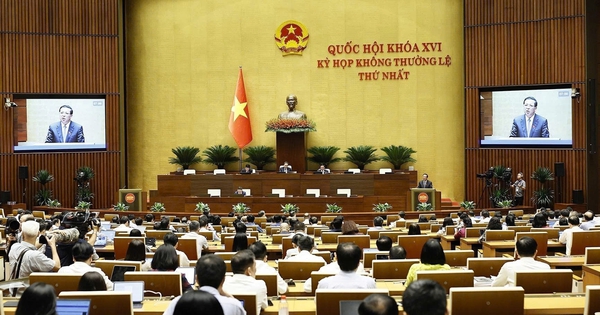
Vietnam's National Assembly is deliberating proposed amendments to the Real Estate Business Law, aiming to curb speculation and stabilize housing prices. Key discussions focus on enhancing customer protection in transactions involving properties yet to be completed.
Lawmaker Luong Thi Hoa from the Thanh Hoa delegation emphasized that protecting customers in future real estate transactions should be a core tenet of the law. She called for clear regulations on crucial aspects such as deposits, payment limits, escrow accounts, bank guarantees, and refund conditions, arguing these should be explicitly stated in the law rather than delegated to guiding documents. Hoa also stressed the need to prevent capital mobilization through various pre-sale schemes when projects lack the necessary conditions for business operations. She added that property handover should be linked to actual usability, not just the delivery of an apartment when essential infrastructure is inadequate for normal living.
the protection of customers in real estate transactions for future properties must be one of the core contents of the law.
Echoing these concerns, lawmaker Nguyen Khanh Vu from the Quang Tri delegation pointed out the draft law's lack of specific provisions to prevent real estate market manipulation and price inflation. He proposed adding prohibitions against disseminating false information about projects, zoning, or prices, as well as banning collusive transactions designed to artificially inflate prices or create fake scarcity. Such additions, he argued, would provide legal tools for authorities to effectively address current market manipulation issues.
Discussions also delved into differentiating between investment and speculation. Lawmaker Pham Trong Nhan from Ho Chi Minh City suggested using data systems to track transaction volumes, asset valuations, and price fluctuations. He proposed analyzing indicators like holding periods, transfer frequency, leverage levels, and actual property usage to provide early warnings. Nhan stressed the importance of identifying speculative behavior rather than labeling property owners with multiple assets as speculators. He advocated for policies that protect buyers, control speculation, and support genuine investment that adds value and meets market demand for housing.
It is not possible to arbitrarily consider owners of many real estate properties as speculators, but it is necessary to identify behavior and not label the subject.
DistantNews Editorial
Originally published by Thanh Niên in Vietnamese. Translated, summarized, and contextualized by our editorial team with added local perspective. Read our editorial standards.
More Stories


From Our Blog

What Gets Lost (and Found) When News Is Translated

The Critical Role of Diaspora Media in Global News

What Travellers Should Know About Countries with Restricted Press

A Digital Nomad's Guide to Following Local News

How the Same Story Looks Different in Different Countries
