


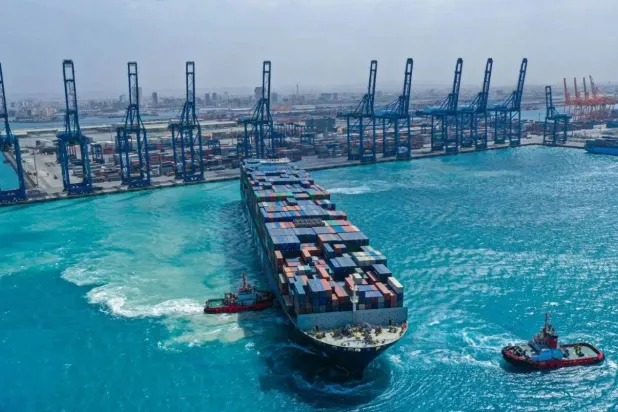
Vision 2030 Transforms Saudi Arabia into a Global Logistics Platform
Summarized and contextualized by DistantNews.
TLDR
- Saudi Arabia is positioning itself as a global logistics hub, leveraging its strategic location under the Vision 2030 initiative.
- Significant investments in infrastructure, including airports, railways, and logistics centers, are enhancing connectivity between the Arabian Gulf and the Red Sea.
- Reforms include reorganizing the transport ministry and empowering key entities like the Saudi Railway Company and new ventures like Riyadh Air to achieve "strategic certainty" in the sector.
Asharq Al-Awsat highlights Saudi Arabia's transformation into a global logistics platform, a key objective of its Vision 2030 plan. The article emphasizes the Kingdom's resilience in overcoming global supply chain disruptions and its proactive approach to development.
In a global landscape rocked by supply chain disruptions, Saudi Arabia has emerged as an indispensable pillar of stability on the international logistics map.
The strategic geographical location of Saudi Arabia, bridging continents and connecting vital waterways like the Arabian Gulf and the Red Sea, is presented as a dynamic asset. This advantage is being amplified through substantial investments in advanced air, rail, and sea transport infrastructure, solidifying the Kingdom's role as a crucial artery for international trade.
This systematic investment in "strengths" was not merely a response to local development requirements but also the construction of a cross-border economic defensive shield, transforming current challenges into a launching pad for global leadership.
The article details significant institutional reforms, such as the transformation of the Ministry of Transport into the Ministry of Transport and Logistics Services, to enhance efficiency and integration. Empowering entities like the Saudi Railway Company (SAR) and establishing new strategic ventures, including Riyadh Air, are crucial steps towards achieving "strategic certainty" in the logistics sector.
The Kingdom's geostrategic location has transformed from a static comparative advantage into a dynamic tool that has shaped a new economic reality.
From the perspective of Asharq Al-Awsat, this development is a testament to Saudi Arabia's forward-thinking strategy and its ability to convert geopolitical challenges into opportunities for global leadership and prosperity. The focus is on the successful implementation of Vision 2030, showcasing the nation's ambition and its capacity to reshape the global economic landscape. This narrative of transformation and strategic positioning is central to the Kingdom's self-representation and its aspirations on the international stage.
National strategies for transport, logistics services, and aviation have contributed to creating a state of "strategic certainty" regarding the sector's future, supported by colossal infrastructure projects that ensure sustainable growth.
DistantNews Editorial
Originally published by Asharq Al-Awsat. Summarized and contextualized by our editorial team with added local perspective. Read our editorial standards.
More Stories


From Our Blog

What Gets Lost (and Found) When News Is Translated

The Critical Role of Diaspora Media in Global News

What Travellers Should Know About Countries with Restricted Press

A Digital Nomad's Guide to Following Local News

How the Same Story Looks Different in Different Countries
