


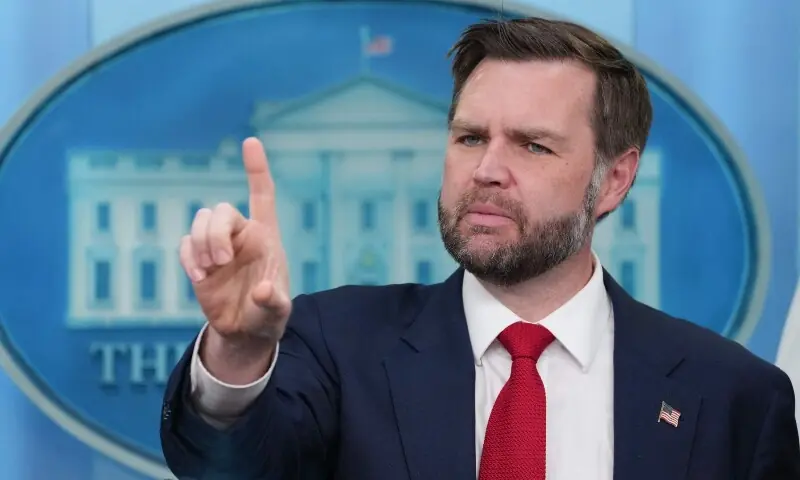
'Wake up': US VP Vance rebukes Israeli critics of Iran deal
Summarized and contextualized by DistantNews.
At a glance
News
Sources not specified
Ongoing story
- US Vice President J.D. Vance criticized Israeli lawmakers for opposing a US-Iran memorandum of understanding.
- Vance stated that Israel should not attack its main ally, the United States, and urged them to "wake up and smell the reality."
- The memorandum outlines a framework for ending the war, reopening the Strait of Hormuz, and initiating 60 days of further talks, with Iran needing to perform to receive benefits.
U.S. Vice President J.D. Vance issued a rare rebuke to Israel on Thursday, criticizing Israeli lawmakers who opposed a memorandum of understanding between the United States and Iran. The agreement aims to establish a framework for ending the conflict, reopening the Strait of Hormuz, and setting a 60-day timeline for additional negotiations.
If I was in the cabinet of the Israeli government, I might not be attacking the only powerful ally that I have anywhere left in the entire world.
Vance's remarks came amidst heightened tensions between U.S. President Donald Trump and Israeli Prime Minister Benjamin Netanyahu. "If I was in the cabinet of the Israeli government, I might not be attacking the only powerful ally that I have anywhere left in the entire world," Vance told reporters. He urged those in Israel critical of the U.S. president to "wake up and smell the reality of the situation."
Anybody in Israel who thinks their biggest problem is the president of the United States needs to wake up and smell the reality of the situation.
Regarding the memorandum itself, Vance emphasized that Iran must fulfill its obligations. "If they don’t perform as we’ve said before, they don’t get any of the benefits of the bargain," he stated. Vance, who has become a prominent figure for the deal, rejected claims that it rewards Iran without achieving U.S. war aims. He noted that Iran would only receive benefits if it complied with terms to be finalized over the next 60 days, a period that began Thursday.
If they don’t perform as we’ve said before, they don’t get any of the benefits of the bargain.
Vance also indicated plans to travel to Switzerland for technical discussions on a long-term agreement, though the arrangements were not yet finalized. This new role as the U.S. point person on Iran represents a political gamble for Vance, who is widely expected to run for president in 2028. The success or failure of the deal could significantly impact his political future.
Words don’t matter, ladies and gentlemen, we’re about verification.
DistantNews Editorial
Originally published by Dawn. Summarized and contextualized by our editorial team with added local perspective. Read our editorial standards.
More Stories
From Our Blog

What Gets Lost (and Found) When News Is Translated

The Critical Role of Diaspora Media in Global News

What Travellers Should Know About Countries with Restricted Press

A Digital Nomad's Guide to Following Local News

How the Same Story Looks Different in Different Countries
