


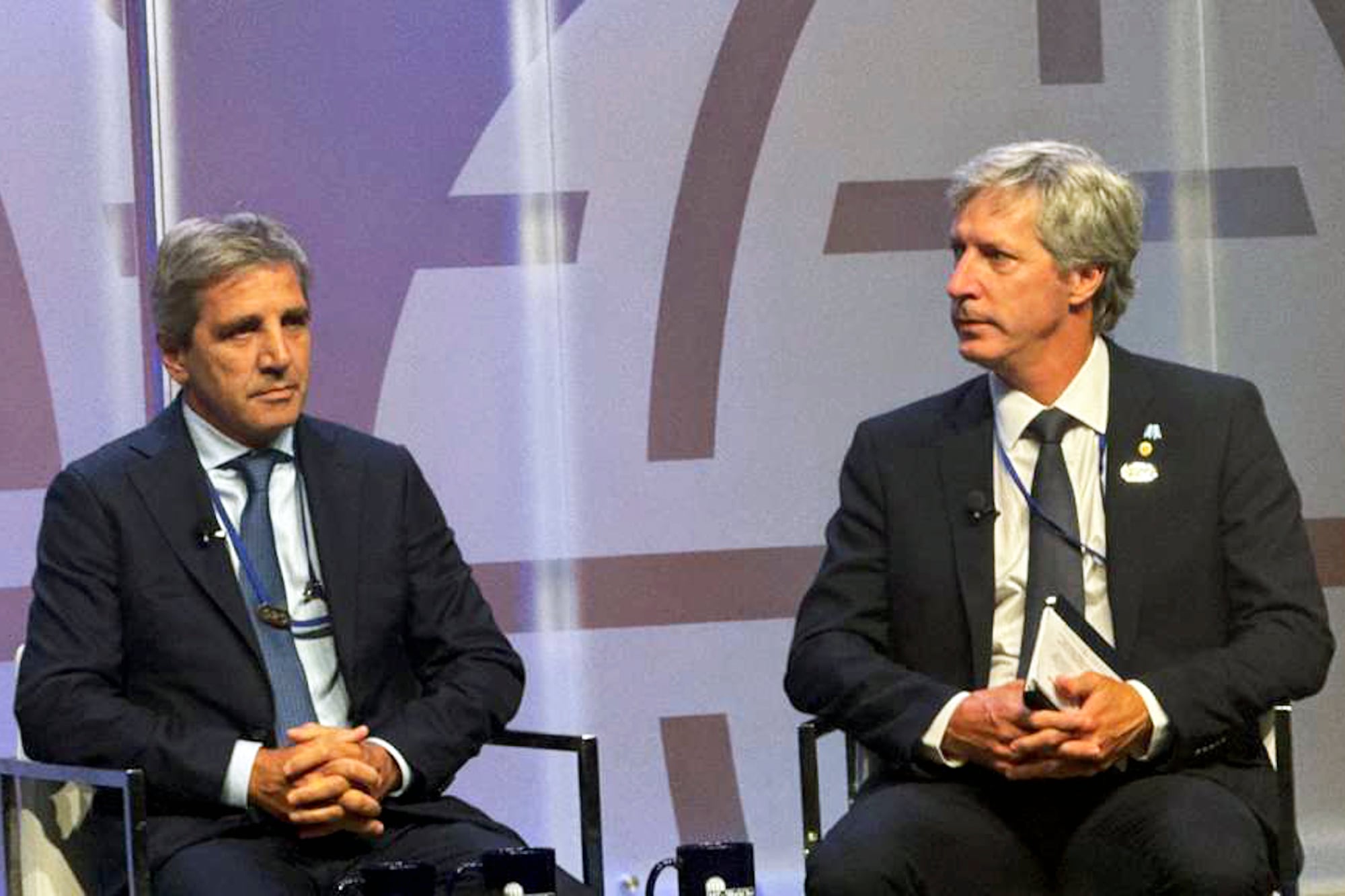
Wall Street buys into Argentina's 2026 promise, but key doubt remains about the country's path to 2027
Translated from Spanish, summarized and contextualized by DistantNews.
TLDR
- Argentine Economy Minister Luis Caputo's recent visit to Washington yielded a dual reception from international investors, with some validating the government's 2026 economic outlook while others expressed concerns about the bridge to 2027.
- Investors acknowledged Argentina's technical agreement with the IMF, fiscal balance, improved reserves, and search for alternative financing, but questioned the solidity of the plan leading into a 2027 electoral year with significant foreign currency debt maturities.
- The dominant global theme during the meetings was the Middle East conflict and its impact on oil prices, inflation, interest rates, and emerging market risk appetite.
Argentina's Economy Minister Luis Caputo and his team garnered a mixed reaction from international investors during their recent Washington D.C. trip. While the government's projections for a stable 2026 were met with validation by some, a significant underlying concern remains regarding the country's ability to navigate the economic landscape until 2027, a year marked by elections and substantial foreign currency debt obligations. This sentiment was echoed in private reports from international banks and investment funds following the spring meetings of the IMF and World Bank.
Despite the cautious outlook, investors acknowledged positive developments such as the technical agreement with the International Monetary Fund (IMF), the achievement of fiscal balance, an increase in foreign reserves, and the government's strategy to secure alternative financing rather than immediately tapping international markets. However, the persistent question revolves around the sustainability of these measures and the robustness of the economic bridge to 2027. The prevailing global narrative, dominated by the Middle East conflict, also cast a shadow, influencing oil prices, inflation, interest rates, and the overall appetite for emerging market risk.
Reports from institutions like UBS highlighted the Argentine economic team's "extremely optimistic" stance, describing a favorable environment characterized by a balanced budget, a stable currency, and structural transformations in the energy and mining sectors. Yet, a point of "official frustration" was noted regarding the persistently wide spreads, or risk premiums, which make external debt issuance unattractive at current rates nearing 9%. This suggests that the market's perception of Argentina's risk has not fully aligned with the perceived macroeconomic improvements, leading the government to postpone a return to voluntary debt markets.
From a local perspective, as reported by La Nación, the government's efforts to stabilize the economy are evident, but the international market's skepticism, particularly concerning the long-term outlook and electoral cycles, remains a significant hurdle. The focus on fiscal discipline and reserve accumulation is crucial, but the market's pricing of risk, reflected in the high spreads, indicates a need for further confidence-building measures. The ongoing acceleration of foreign currency purchases by the Central Bank (BCRA), exceeding US$6.3 billion for the year, is closely watched as a key indicator of the program's progress. The debate among rating agencies about potentially upgrading Argentina's sovereign rating from CCC to B is also a significant point of interest, with sustainability of the balance of payments, reserve accumulation, and financial flexibility being key variables.
DistantNews Editorial
Originally published by La Nación in Spanish. Translated, summarized, and contextualized by our editorial team with added local perspective. Read our editorial standards.
More Stories


From Our Blog

What Gets Lost (and Found) When News Is Translated

The Critical Role of Diaspora Media in Global News

What Travellers Should Know About Countries with Restricted Press

A Digital Nomad's Guide to Following Local News

How the Same Story Looks Different in Different Countries
