


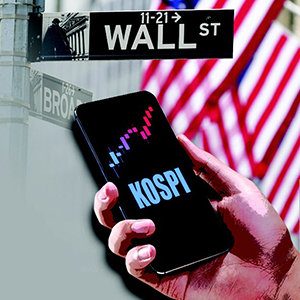
Wall Street's Morning Ritual: Checking the KOSPI
Translated from Korean, summarized and contextualized by DistantNews.
At a glance
Analysis
Sources not specified
Context piece
- Global financial markets, particularly in New York and London, are now closely monitoring South Korea's KOSPI index before their trading sessions begin.
- This shift in focus is driven by the significant influence of Samsung Electronics and SK Hynix, key players in the global AI supply chain, on the KOSPI.
- The KOSPI's volatility, especially concerning AI-related stocks like High Bandwidth Memory (HBM), is seen as a barometer for the global AI industry's health and investor sentiment.
The morning ritual for many in the financial world, particularly on Wall Street, now includes checking the KOSPI index. What was once a one-way street, where a downturn in the U.S. market would inevitably impact South Korea, has reversed. Now, the fluctuations of the KOSPI, which closes at 3:30 PM Korean time, create tension in the early hours of trading in New York, London, and Tokyo.
Foreign media outlets, including Bloomberg, report that fund managers in these global financial hubs have adopted a new routine: monitoring the KOSPI before commencing their own trading. Urgent meetings are being convened to analyze the intraday volatility of the South Korean market. One London-based portfolio manager noted, "We are all Korean investors now," emphasizing the daily practice of reviewing the KOSPI to gauge investment sentiment in AI-related stocks.
This heightened attention stems from the pivotal role of Samsung Electronics and SK Hynix, which together constitute half of the KOSPI's market capitalization. These companies are central to the global AI supply chain, particularly in the production of High Bandwidth Memory (HBM). Consequently, the KOSPI's movements are interpreted as an early indicator of demand and investor confidence in the broader AI industry.
Now we are all Korean investors.
Recent events underscore this influence. A nearly 10% plunge in the KOSPI on a specific day, triggered by profit-taking, sent shockwaves across global markets, leading to sharp declines in the Nasdaq and the Philadelphia Semiconductor Index. Similarly, a significant drop in the KOSPI due to skepticism about AI demand caused a concurrent fall in SK Hynix's U.S. depositary receipts and impacted major semiconductor stocks like Nvidia and Micron.
While the KOSPI's central role highlights the strength of South Korea's semiconductor industry, it also exposes the vulnerability of its capital market, which is heavily concentrated in a single sector. Foreign media have likened the KOSPI's dramatic swings to the high-stakes survival game in "Squid Game," raising concerns that global investors may view the South Korean market not as an attractive investment destination, but primarily as a testing ground for measuring the risks associated with the AI bubble.
We must now closely watch the KOSPI's movements.
DistantNews Editorial
Originally published by Dong-A Ilbo in Korean. Translated, summarized, and contextualized by our editorial team with added local perspective. Read our editorial standards.
More Stories


From Our Blog

What Gets Lost (and Found) When News Is Translated

The Critical Role of Diaspora Media in Global News

What Travellers Should Know About Countries with Restricted Press

A Digital Nomad's Guide to Following Local News

How the Same Story Looks Different in Different Countries
