

War of 1812: Westward Expansion
Translated from German, summarized and contextualized by DistantNews.
At a glance
In-depth
Sources not specified
Context piece
- Tensions between the United States and Great Britain escalated into war in 1812, with Native Americans suffering the most significant losses.
- The Battle of the Thames River in October 1813 resulted in the death of Tecumseh, a prominent Shawnee leader.
- The article recounts the bombardment of Fort McHenry in Baltimore in September 1814, which inspired Francis Scott Key to write "The Star-Spangled Banner."
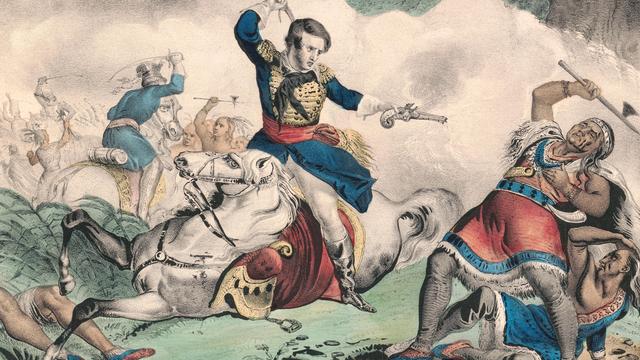
The War of 1812 saw escalating tensions between the United States and Great Britain culminate in armed conflict, a war where Native American populations bore the brunt of the losses. The conflict significantly impacted westward expansion efforts. A pivotal moment occurred in October 1813 at the Battle of the Thames River, where Tecumseh, the influential leader of the Shawnee, was killed. This loss marked a severe blow to the unified Native American resistance against American expansion. The war also saw dramatic events on the East Coast. In September 1814, British warships relentlessly bombarded Fort McHenry in Baltimore for over 24 hours. Hundreds of American soldiers defended the fort. Observing the intense bombardment from a British ship, American lawyer Francis Scott Key was involved in organizing a prisoner exchange. As dawn broke on September 14, 1814, an eerie silence fell over the scene. When the mist cleared, Key scanned the horizon. Instead of the expected British flag, he saw the American Stars and Stripes flying triumphantly over the fort, signifying that Baltimore had held and the Americans had achieved victory.
DistantNews Editorial
Originally published by Die Zeit in German. Translated, summarized, and contextualized by our editorial team with added local perspective. Read our editorial standards.
More Stories


From Our Blog

What Gets Lost (and Found) When News Is Translated

How the Same Story Looks Different in Different Countries

The Critical Role of Diaspora Media in Global News

What Travellers Should Know About Countries with Restricted Press

A Digital Nomad's Guide to Following Local News
