


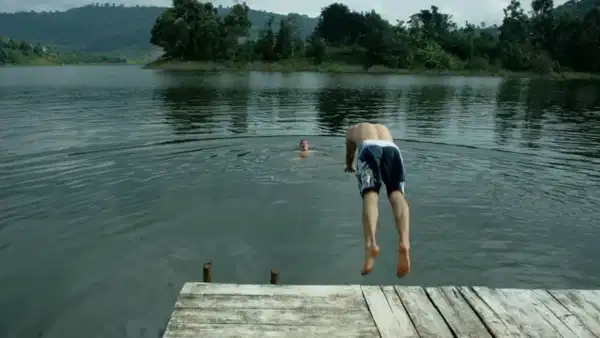
Warning: Diving into unknown waters can lead to paralysis and death
Translated from Turkish, summarized and contextualized by DistantNews.
At a glance
News
Named sources
Context piece
- Diving into unknown waters like seas, lakes, and canals carries significant risks, especially for young people, according to a medical expert.
- Spinal cord injuries, paralysis, and death can result from uncontrolled jumps from heights into water with unknown depths.
- Parents are urged to supervise children near water, and individuals with heart conditions should be cautious with extreme sports.
Prof. Dr. Ahmet Sebe, Chief Physician and Faculty Member at Çukurova University's Balcalı Hospital, warns of severe health risks associated with diving into bodies of water with unknown depths during the summer season. He highlights that uncontrolled jumps from heights, particularly the "balıklama" (headfirst dive), pose a significant danger, especially to young individuals.
The most dangerous consequence is the fracture of the neck vertebrae or damage to the medulla spinalis behind the spine. In this case, the person can be paralyzed, unable to use both arms and legs. Especially with headfirst dives, we encounter such severe injuries as a result of the head hitting the ground.
The most critical threat identified is spinal cord injury. Sebe explains that impacts on the head or spine from such dives can lead to fractures of the neck vertebrae or damage to the medulla spinalis. This can result in paralysis, leaving individuals unable to use their arms and legs. While these severe cases may occur a few times a year, they can cause permanent disability or even death.
One should never dive headfirst or feetfirst into waters of unknown depth. These cases, although seen a few times a year, can leave patients permanently disabled or even cause loss of life.
Beyond spinal injuries, Sebe notes that uncontrolled jumps can also cause head, arm, and leg trauma, internal organ damage, rib fractures, and collapsed lungs. He strongly advises against diving headfirst or feetfirst into waters of unknown depth. Even playful shoves or slips near the water's edge can lead to serious injuries due to slippery surfaces and loss of balance.
Slipping on the ground during a jump can also lead to internal organ injuries. Moreover, momentary horseplay near the water can result in serious injuries and deaths. Children must always be kept under supervision in areas with pools. Otherwise, we may face irreversible losses.
Parents are particularly cautioned to maintain constant supervision of children around pools and other water bodies to prevent accidental falls or injuries. Furthermore, Sebe advises individuals with pre-existing heart conditions to exercise extreme caution with extreme sports, as the adrenaline rush can strain the heart, potentially causing arrhythmias and sudden blood pressure spikes.
Adrenaline can be exciting to a certain extent for people without structural heart disease or congenital heart conditions. However, for individuals with coronary artery disease or heart problems, high adrenaline can strain the heart, causing rhythm disturbances and sudden increases in blood pressure. Therefore, people with health problems need to be very careful with extreme sports.
DistantNews Editorial
Originally published by Cumhuriyet in Turkish. Translated, summarized, and contextualized by our editorial team with added local perspective. Read our editorial standards.
More Stories


From Our Blog

What Gets Lost (and Found) When News Is Translated

The Critical Role of Diaspora Media in Global News

What Travellers Should Know About Countries with Restricted Press

A Digital Nomad's Guide to Following Local News

How the Same Story Looks Different in Different Countries
