


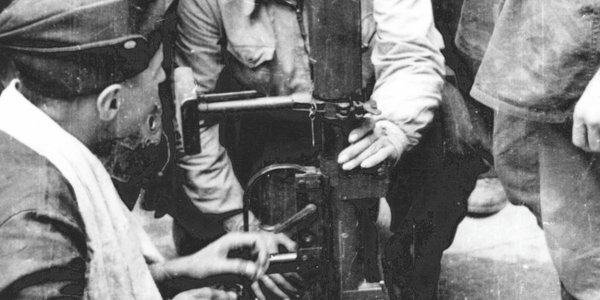
Warsaw Uprising Aid: A Strategic Mission Treated as Secondary?
Translated from Polish, summarized and contextualized by DistantNews.
At a glance
Analysis
Sources not specified
Context piece
- Jan Nowak-Jeziorański argued that Allied air drops of weapons and ammunition to the Warsaw Uprising were strategically more significant than many bombing raids on Germany.
- He suggested that the prolonged fighting by insurgents tied down a crucial Eastern Front sector, delaying Soviet advances.
- Despite this, Nowak-Jeziorański felt the operation was treated as a secondary mission by British and American authorities, citing Gen. Kazimierz Sosnkowski's complaints about the lack of aid.
Jan Nowak-Jeziorański, a prominent figure in Polish history, asserted that Allied air drops of weapons and ammunition to the Warsaw Uprising held far greater strategic importance than many bombing missions directed at Germany. He contended that the longer the insurgents fought, the more they secured a vital sector of the Eastern Front, significantly delaying Soviet progress and preventing them from occupying larger parts of Germany before the Western Allies.
Despite the critical strategic implications, Nowak-Jeziorański observed that the operation involving aid to Warsaw appeared to be treated as a third-rate mission by British and American authorities. This perception is underscored by the sentiments expressed by Gen. Kazimierz Sosnkowski, the commander-in-chief, in an address in early September 1944.
The lack of help for Warsaw is explained to us by experts with reasons of a technical nature. Arguments of losses and gains are put forward. But if we must calculate, we must remember that Polish airmen suffered over 40 percent losses in the air battle for London, and 15 percent of planes and crews were lost during attempts to help Warsaw.
Sosnkowski questioned the justifications provided for the lack of assistance, which were often attributed to technical reasons or calculations of losses versus gains. He countered these arguments by highlighting the significant sacrifices made by Polish forces. "The lack of help for Warsaw is explained to us by experts with reasons of a technical nature. Arguments of losses and gains are put forward. But if we must calculate, we must remember that Polish airmen suffered over 40 percent losses in the air battle for London, and 15 percent of planes and crews were lost during attempts to help Warsaw," Sosnkowski stated.
He further emphasized the disproportionate cost, noting that the loss of 27 aircraft over Warsaw within a month was negligible for the Allied air forces, which possessed tens of thousands of aircraft of all types. This comparison aimed to illustrate the perceived disparity in resource allocation and commitment to supporting the Warsaw Uprising.
The loss of 27 machines over Warsaw, sustained within a month, is nothing for the Allied aviation, which has tens of thousands of aircraft of all types and kinds.
DistantNews Editorial
Originally published by Rzeczpospolita in Polish. Translated, summarized, and contextualized by our editorial team with added local perspective. Read our editorial standards.
More Stories

From Our Blog

What Gets Lost (and Found) When News Is Translated

The Critical Role of Diaspora Media in Global News

What Travellers Should Know About Countries with Restricted Press

A Digital Nomad's Guide to Following Local News

How the Same Story Looks Different in Different Countries
