

Washington concerned over China's expanding spy bases in Cuba
Translated from Romanian, summarized and contextualized by DistantNews.
At a glance
News
Named sources
Context piece
- Washington is concerned about China's expanding electronic eavesdropping facilities in Cuba, located about 160 kilometers from the U.S. coast.
- A report suggests up to 12 Chinese listening posts may operate in Cuba, with a key facility near Havana potentially covering over 8,000 kilometers.
- Experts warn that while sensitive U.S. communications are encrypted, the collected data could reveal critical aspects of military plans and potentially be shared with adversaries like Russia and Iran.
Major security concerns have arisen in Washington regarding China's network of electronic eavesdropping facilities in Cuba. These installations, situated approximately 160 kilometers from the U.S. coast, pose a significant threat to American military communications, according to a report by the Center for Strategic and International Studies (CSIS).
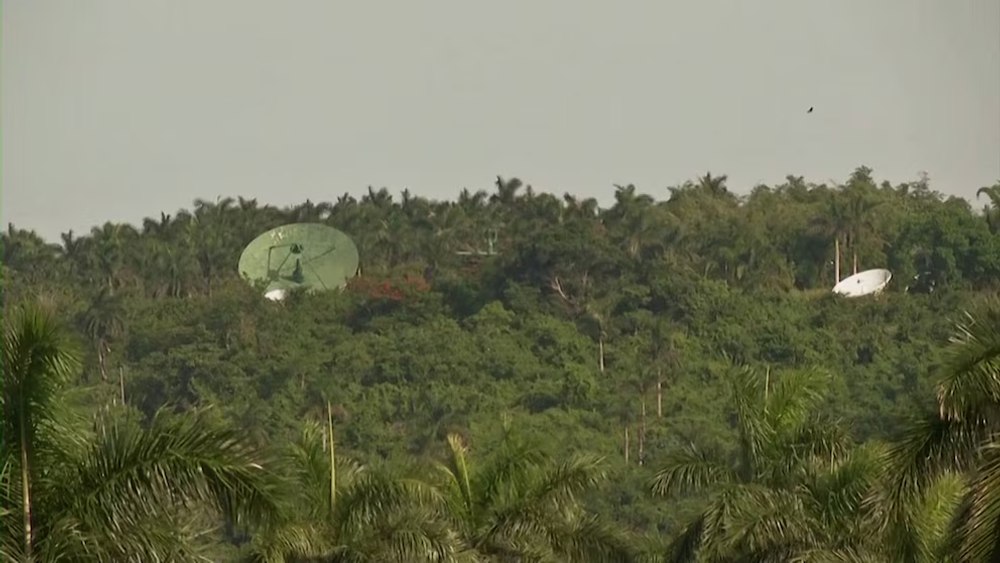
The report indicates that as many as 12 Chinese listening posts might be operational on Cuban territory. The most significant of these is located in the hills near Bejucal, on the outskirts of Havana. This facility, developed over decades and continuously receiving substantial investment, reportedly has a coverage radius exceeding 8,000 kilometers.
China menține o prezență istorică în aceste baze de spionaj din apropierea Havanei, deoarece locația este extrem de valoroasă pentru monitorizarea traficului naval al SUA, a mișcărilor de trupe și a lansărilor spațiale.
Security experts emphasize Cuba's strategic geographic value for intelligence gathering. Dr. Alan Mendoza of the Henry Jackson Society explained that China maintains a long-standing presence at these spy bases near Havana because the location is invaluable for monitoring U.S. naval traffic, troop movements, and space launches. Satellite imagery and Pentagon reports suggest the Bejucal complex is equipped with numerous high-power antennas, enabling operators to focus signals on specific U.S. military bases, warships, or aircraft, including those within the U.S. Central Command's area of operations.
Beyond signal interception, U.S. intelligence analysts believe Chinese firms with military ties are supporting Cuba's digital infrastructure. These firms allegedly provide tools for communication control and the potential to block internet access during internal crises. While sensitive U.S. government and military communications are heavily encrypted, experts like Evan Ellis, a professor at the U.S. Army War College, caution that even encrypted traffic can reveal critical details about U.S. plans, intentions, and military movements through signal frequency, intensity, and direction analysis. There are fears that these electronic warfare capabilities could be used to jam or mislead U.S. radar and defense systems in a conflict scenario, and that the collected data could be shared with close allies of Cuba, such as Russia and Iran.
chiar dacă conținutul mesajelor este securizat, analiza frecvențelor, a intensității și a direcției traficului de semnale poate dezvălui aspecte critice ale planurilor americane, intențiile și amploarea mișcărilor militare.
DistantNews Editorial
Originally published by Adevărul in Romanian. Translated, summarized, and contextualized by our editorial team with added local perspective. Read our editorial standards.
More Stories


From Our Blog

What Gets Lost (and Found) When News Is Translated

The Critical Role of Diaspora Media in Global News

What Travellers Should Know About Countries with Restricted Press

A Digital Nomad's Guide to Following Local News

How the Same Story Looks Different in Different Countries
